Dumpster Rental Prices: Average Costs by Size, Project, and Location (2026 Guide)
If you’ve started looking up dumpster rental prices, you’ve probably noticed one thing right away: the numbers are all over the place. One company advertises a dumpster for a few hundred dollars, while another quotes nearly twice as much for what appears to be the same size. It’s easy to wonder whether you’re comparing the same service—or whether you’ll end up paying extra fees after the dumpster is picked up.
For many homeowners, this is also their first time renting a dumpster. Whether you’re cleaning out a garage, remodeling a kitchen, replacing a roof, or preparing a property for sale, it’s difficult to know what a fair price looks like, what affects the total cost, or which dumpster size will actually fit your project.
One pattern becomes clear when reviewing pricing across different providers: the advertised price is only part of the total cost. Weight limits, rental periods, delivery distance, disposal fees, and local regulations can all influence the final amount you pay. Understanding these factors before you book is one of the best ways to avoid unexpected charges.
This guide brings together current pricing trends, common industry practices, and practical cost-saving advice to help you compare dumpster rental prices with confidence. By the end, you’ll know what influences the price, what you can expect to pay for different projects, and how to choose a dumpster that fits both your needs and your budget.
Dumpster Rental Prices at a Glance
If you’re looking for a quick estimate, the table below summarizes the average cost of renting a dumpster for common projects.
| Project | Average Cost | Recommended Dumpster |
| Garage Cleanout | $300–$450 | 10-Yard |
| Bathroom Remodel | $300–$500 | 10–15 Yard |
| Kitchen Remodel | $400–$650 | 20-Yard |
| Roof Replacement | $350–$700 | 20–30 Yard |
| Large Home Renovation | $550–$800 | 30-Yard |
| Construction Project | $700–$1,000 | 40-Yard |
These are national averages, and your final price may vary depending on your location, debris type, rental company, and included weight allowance.
Who This Guide Is For
This guide is designed for:
- Homeowners planning cleanouts or renovations
- First-time dumpster renters
- DIY remodelers
- Roofing projects
- Property managers
- Contractors
- Small business owners
Whether you’re tackling a weekend cleanup or managing a large renovation, this guide will help you understand pricing and choose the right dumpster.
Key Takeaways
- Most dumpster rental prices range from $300 to $800.
- A 20-yard dumpster is the most popular option for home projects.
- Dumpster size, weight limits, rental length, and location all affect the final price.
- Most rentals include delivery, pickup, and a standard rental period.
- Comparing quotes from local companies can help you save money.
Methodology
The prices in this guide are based on publicly available pricing from national and regional dumpster rental companies across the United States, along with a review of recent market trends used to estimate average costs for common residential and small commercial projects.
Price ranges represent a standard rental that typically includes:
- Delivery
- Pickup
- A 7–10 day rental period
- A standard weight allowance
Actual costs may vary depending on your location, local landfill fees, and the type of debris you dispose of.
The prices in this guide are based on publicly available pricing from national and regional dumpster rental companies across the United States, along with recent industry pricing trends and waste management guidance. Estimates reflect a standard rental that typically includes delivery, pickup, a 7–10 day rental period, and a standard weight allowance. Because landfill fees, transportation costs, and local regulations vary by location, all prices are intended as national averages rather than fixed rates.
Average Dumpster Rental Prices
Most homeowners spend between $300 and $800 to rent a dumpster. Smaller containers are ideal for garage cleanouts or yard projects, while larger dumpsters are better suited to remodeling, roofing, and construction work.
The table below shows average rental prices by dumpster size.
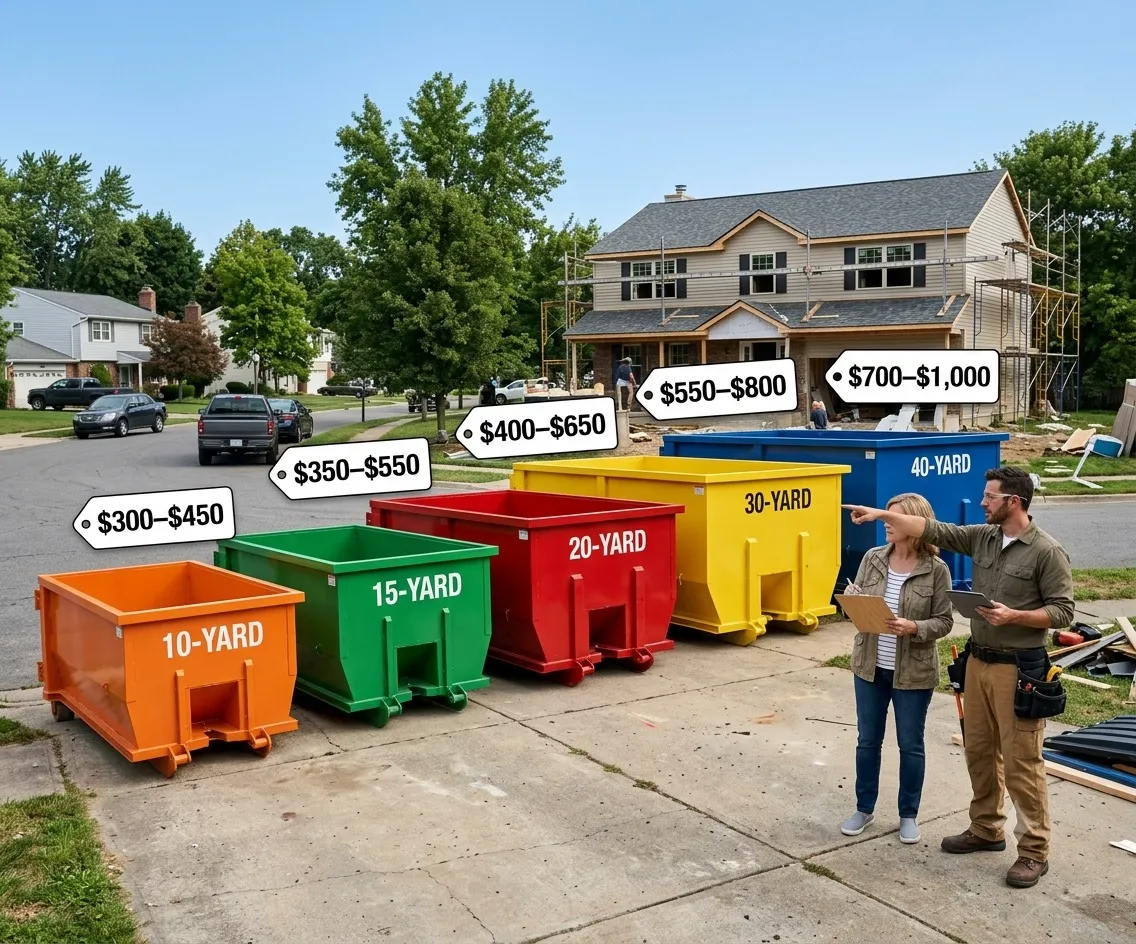
| Dumpster Size | Average Price | Best For |
| 10-Yard | $300–$450 | Small cleanouts, yard waste |
| 15-Yard | $350–$550 | Flooring removal, small remodels |
| 20-Yard | $400–$650 | Kitchen remodels, roofing, moving |
| 30-Yard | $550–$800 | Large renovations, estate cleanouts |
| 40-Yard | $700–$1,000 | Construction and demolition |
First time renting a dumpster? Choose the correct size, understand the weight allowance, and ask about included fees before booking to avoid the most common mistakes.
Dumpster Rental Prices by Dumpster Size
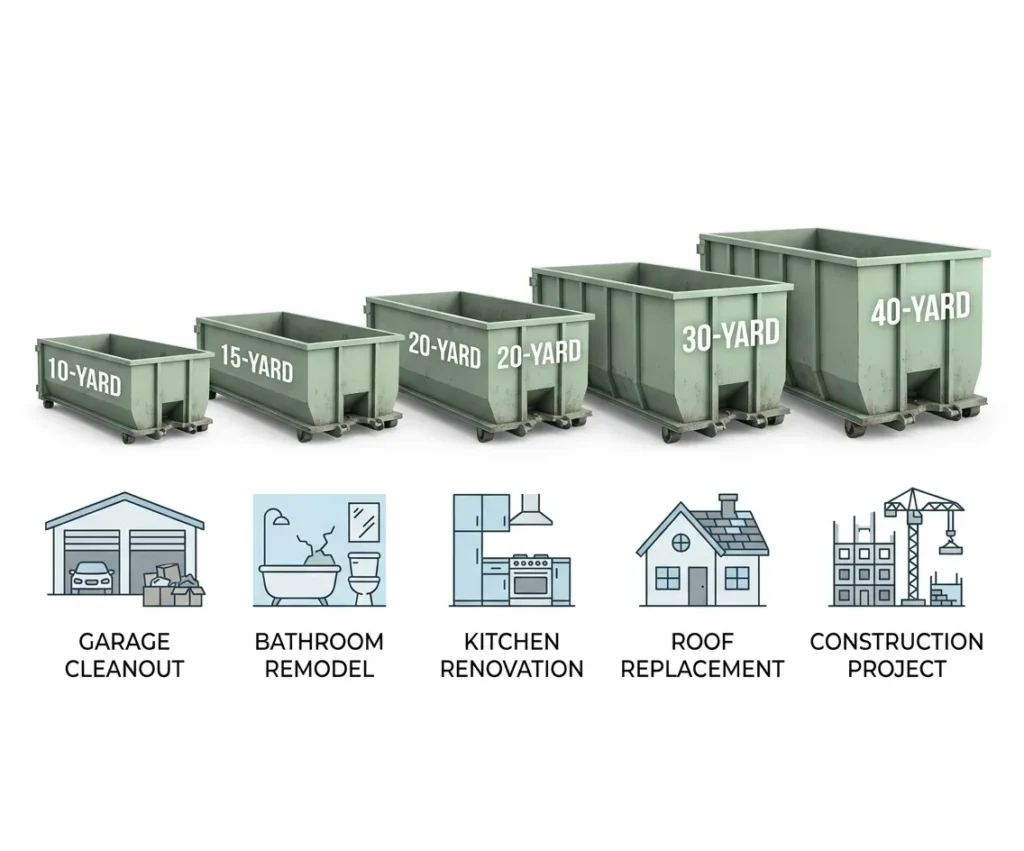
Choosing the right dumpster size can help you avoid paying for extra pickups or unused space. Below is a quick overview of the most common dumpster sizes.
10-Yard Dumpster
Average Cost: $300–$450
A 10-yard dumpster is ideal for small projects that produce a limited amount of waste. It fits in most driveways and is usually the most affordable option.
Best for:
- Garage cleanouts
- Small bathroom remodels
- Yard debris
- Basement cleanouts
15-Yard Dumpster
Average Cost: $350–$550
A 15-yard dumpster offers more space without taking up much additional room, which makes it a solid fit for medium-sized home improvement projects.
Best for:
- Flooring replacement
- Deck removal
- Small kitchen remodels
- Landscaping projects
20-Yard Dumpster
Average Cost: $400–$650
The 20-yard dumpster is the most commonly rented size because it offers a good balance of price and capacity for a wide range of home projects.
Best for:
- Kitchen renovations
- Roof replacement
- Whole-home cleanouts
- Moving projects
- Large garage cleanouts
30-Yard Dumpster
Average Cost: $550–$800
A 30-yard dumpster is designed for larger residential and commercial projects that create a significant amount of debris.
Best for:
- Home additions
- Estate cleanouts
- Large remodeling projects
- Commercial renovations
Contractors working on remodeling, demolition, or commercial projects often choose 30-yard or 40-yard dumpsters because they provide enough capacity for ongoing debris without requiring multiple pickups.
40-Yard Dumpster
Average Cost: $700–$1,000
A 40-yard dumpster is the largest standard roll-off container, and it’s mainly used for construction, demolition, and large commercial jobs.
Best for:
- Building demolition
- New construction
- Industrial cleanups
- Major home renovations
Small businesses renovating offices, retail stores, or warehouses often choose larger dumpsters to manage construction debris, old furniture, shelving, and packaging materials efficiently.
Dumpster Size Comparison
| Dumpster Size | Average Cost | Typical Project |
| 10-Yard | $300–$450 | Small cleanouts |
| 15-Yard | $350–$550 | Flooring and deck removal |
| 20-Yard | $400–$650 | Roofing and remodeling |
| 30-Yard | $550–$800 | Large renovations |
| 40-Yard | $700–$1,000 | Construction and demolition |
For most homeowners, a 20-yard dumpster offers the best value, since it provides enough space for common remodeling and cleanup projects while remaining affordable. If you’re only disposing of a small amount of debris, a 10-yard or 15-yard dumpster may be enough. Choosing the correct size from the beginning can help you avoid extra rental costs and keep your project on budget.
Key Factors That Affect Dumpster Rental Prices
The size of the dumpster is only one part of the total cost. Several other factors can increase or decrease your final bill, and understanding them will help you compare quotes and avoid unexpected charges.
Dumpster Size and Capacity
The larger the dumpster, the higher the rental price, since larger containers hold more debris and usually include a higher weight allowance. For example, a 10-yard dumpster is ideal for small cleanouts, while a 30-yard or 40-yard dumpster is better for large renovations or construction projects.
Rental Duration
Most dumpster rentals include 7 to 10 days in the base price, and if you keep the dumpster longer, you may have to pay an extra daily fee.
To avoid additional costs:
- Schedule delivery when your project starts.
- Fill the dumpster as you work.
- Arrange pickup as soon as the project is complete.
Good planning can help you stay within the included rental period.
Weight Limits and Disposal Fees
Every dumpster comes with a weight allowance, and if your debris exceeds that limit, you will pay an overage fee.
Heavy materials include:
- Concrete
- Brick
- Dirt
- Asphalt
- Roofing shingles
These materials reach the weight limit much faster than household junk or yard waste. Exceeding the included weight allowance may result in additional disposal charges, because landfill operators typically charge tipping fees based on the total weight of the load.
Always ask your rental company how much weight is included before booking.
Type of Debris
The type of waste you throw away also affects the rental price, since light materials usually cost less to dispose of than heavy construction debris.
| Debris Type | Cost Impact |
| Household junk | Low |
| Furniture | Low to Moderate |
| Yard waste | Low |
| Drywall | Moderate |
| Roofing shingles | High |
| Concrete or dirt | High |
If your project includes heavy materials, let the rental company know so they can recommend the right dumpster.
Location
Dumpster rental prices vary across the country. Several local factors influence the cost, including:
- Landfill fees
- Fuel prices
- Transportation distance
- Local labor costs
- City regulations
Rentals in large cities often cost more than those in smaller towns because operating expenses are higher.
Permit Fees
You may need a permit if the dumpster is placed on a public street or sidewalk. If the dumpster stays on your driveway or private property, a permit is usually not required.
Permit fees vary by city, so check with your local government or ask your rental company before scheduling delivery. Permit requirements vary by city. If the dumpster will be placed on a public street or sidewalk, check with your local municipality before scheduling delivery. so if the dumpster will be placed on a public street or sidewalk, it’s worth checking with your local public works or transportation department before scheduling delivery.
Expert Insight
One of the most common misconceptions is that dumpster size alone determines the rental price. In reality, weight allowance, disposal costs, rental duration, and local landfill fees often have just as much impact on the final bill. Comparing quotes based only on the advertised starting price can lead to unexpected charges later.
What’s Included in a Dumpster Rental Price?
Most dumpster rental companies include several services in their standard pricing, but the exact details vary by provider. Reviewing what is included before booking makes it easier to compare quotes and avoid unexpected charges.
| Usually Included | May Cost Extra |
| Dumpster delivery | Permit fees |
| Dumpster pickup | Extra rental days |
| Standard rental period | Overweight charges |
| Included weight allowance | Special disposal fees |
| Basic landfill disposal | Restricted item handling |
Before booking, ask for a written quote that clearly explains what is included and whether additional fees may apply.
Flat-Rate vs. Variable Dumpster Pricing
Dumpster rental companies generally use one of two pricing models.
| Flat-Rate Pricing | Variable Pricing |
| One fixed price that includes most standard services | Final cost depends on weight or disposal charges |
| Easier to budget | May cost less for lightweight loads |
| Fewer unexpected fees | Total cost is calculated after pickup |
Dumpster Pricing by Project Type
The type of project you are working on is a good way to estimate your dumpster rental cost.
| Project | Average Cost | Recommended Dumpster |
| Garage Cleanout | $300–$450 | 10-Yard |
| Bathroom Remodel | $300–$500 | 10–15 Yard |
| Kitchen Remodel | $400–$650 | 20-Yard |
| Roofing Project | $350–$700 | 20–30 Yard |
| Home Renovation | $450–$700 | 20–30 Yard |
| Estate Cleanout | $500–$800 | 30-Yard |
| Construction Project | $600–$1,000 | 30–40 Yard |
| Rental Property Cleanout | $450–$700 | 20–30 Yard |
These estimates vary by debris weight and location. For DIY remodeling projects, a 10-yard or 20-yard dumpster is usually the best choice for single-room renovations,choosing the right dumpster size before you begin can save both time and money — most single-room renovations fit comfortably in a 10-yard or 20-yard dumpster, depending on the amount of debris generated.
Regional Dumpster Rental Prices
Where you live has a direct impact on dumpster rental prices. States with lower landfill and transportation costs generally have lower rental rates, while large metropolitan areas often have higher prices.
Here is a general overview of average pricing by region.
| Region | Average Price Range |
| Northeast | $400–$850 |
| Midwest | $300–$650 |
| South | $325–$700 |
| West | $400–$900 |
Requesting quotes from local providers is the best way to compare pricing in your area.
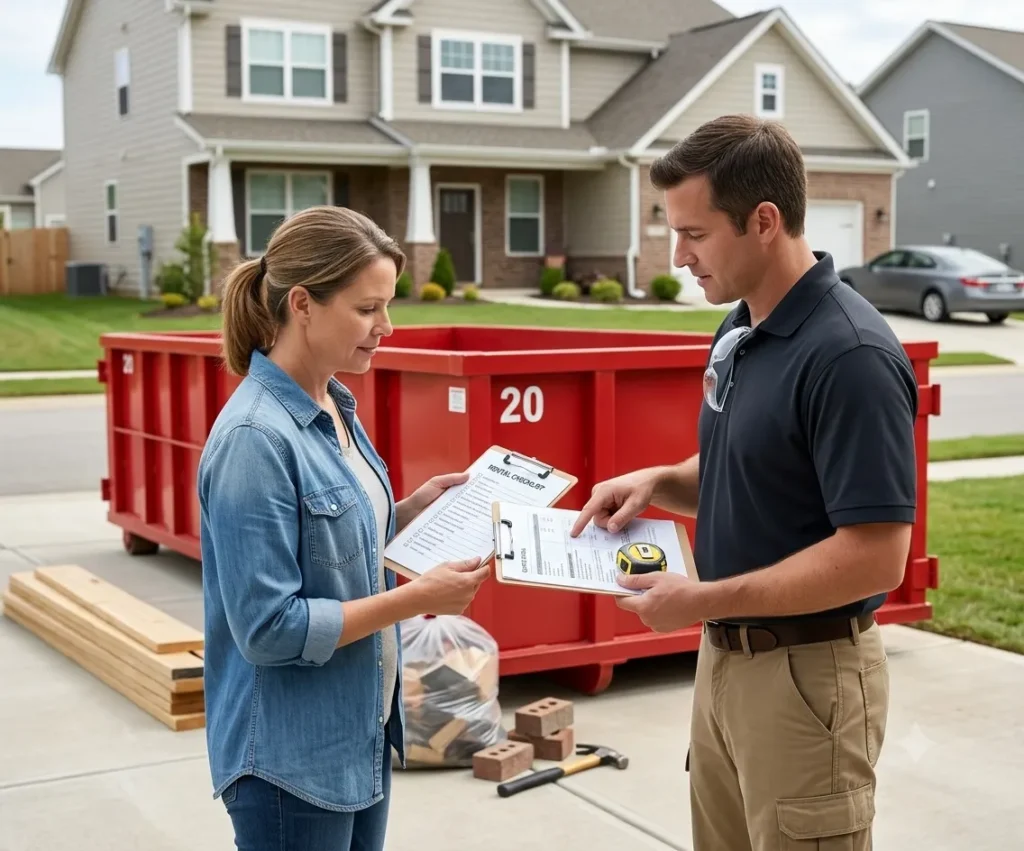
How to Save on Dumpster Rental Prices
A few simple steps can help reduce your total rental cost.
- Choose the right dumpster size.
- Compare quotes from several local companies.
- Ask for flat-rate pricing.
- Stay within the included weight limit.
- Avoid prohibited items.
- Return the dumpster on time.
- Place the dumpster on private property if possible to avoid permit fees.
If you’re comparing dumpster rental prices, don’t choose the lowest quote automatically. A slightly higher price that includes delivery, pickup, disposal, and a generous weight allowance may offer better overall value than a lower quote with multiple extra fees.
Common Hidden Fees to Watch For
Some dumpster rental companies advertise a low starting price, but additional charges can increase your final bill. Understanding these fees before booking can help you compare quotes more accurately.
Common extra charges include:
- Overweight fees
- Extra rental days
- Fuel surcharges
- Mattress disposal fees
- Tire disposal fees
- Appliance recycling fees
- Electronics disposal fees
- Dry-run fees if pickup cannot be completed
- Trip charges caused by blocked access
Always request a detailed quote and ask your provider to explain any fees that are not included in the advertised rental price.
Common Mistakes That Increase Dumpster Rental Costs
Many unexpected charges happen because of avoidable mistakes. To keep your project on budget:
- Renting a dumpster that is too small and needing a second rental.
- Exceeding the included weight allowance with heavy materials.
- Keeping the dumpster longer than the included rental period.
- Throwing away prohibited items that require special disposal.
- Comparing prices without checking what is included.
A few minutes spent reviewing the rental agreement can often save hundreds of dollars in additional fees.
Conclusion
Dumpster rental prices are about more than choosing the lowest quote. In practice, the best value often comes from understanding what is included, selecting the right dumpster size for your project, and comparing providers on more than price alone.
After reviewing pricing patterns across different markets and rental companies, one trend is consistent: many unexpected costs can be avoided with a little planning. Asking about weight limits, rental periods, included services, and possible extra fees before booking helps you make a more informed decision and reduces the risk of paying more than expected.
Whether you’re tackling a weekend cleanout, a home renovation, or a larger construction project, use the information in this guide as a starting point—not just to compare prices, but to compare overall value. A clear quote, transparent pricing, and a provider that explains its terms upfront will usually lead to a smoother rental experience than simply choosing the cheapest option.
By understanding how dumpster rental pricing works, you’ll be in a stronger position to budget your project, avoid common mistakes, and choose a rental solution that fits your needs with confidence.
FAQs
How much does it cost to rent a dumpster?
Most dumpster rental prices range from $300 to $800 for a standard residential rental. The final cost depends on the dumpster size, rental period, debris type, weight allowance, and your location, and larger dumpsters or projects involving heavy materials may cost more.
What size dumpster do I need?
The right dumpster size depends on your project. A 10-yard dumpster is suitable for small cleanouts, while a 20-yard dumpster is ideal for most home renovations and roofing projects. Larger construction or demolition jobs typically require a 30-yard or 40-yard dumpster. If you’re unsure, ask your rental provider for a recommendation based on the type and amount of debris.
How long can I keep a dumpster rental?
Most dumpster rental companies include a 7 to 10-day rental period in the base price. If your project takes longer, many providers allow you to extend the rental for an additional daily or weekly fee, so it’s worth confirming the rental period before booking to avoid unexpected charges.
What is included in the rental price?
Most dumpster rental quotes include delivery, pickup, a standard rental period, and a weight allowance. Some companies also offer flat-rate pricing that combines these services into one price. Before renting, ask whether taxes, disposal fees, fuel surcharges, or permit costs are included.
Do I need a permit for a dumpster rental?
A permit is usually not required if the dumpster is placed on your driveway or other private property. However, if it will be placed on a public street, sidewalk, or alley, your city may require a permit. Check with your local municipality or ask your dumpster rental company about permit requirements in your area.
How can I save money on dumpster rental prices?
The best way to save money is to choose the correct dumpster size, compare quotes from several local providers, and stay within the included weight limit. You can also avoid extra charges by returning the dumpster on time, asking for flat-rate pricing, and avoiding prohibited items that require special disposal.