
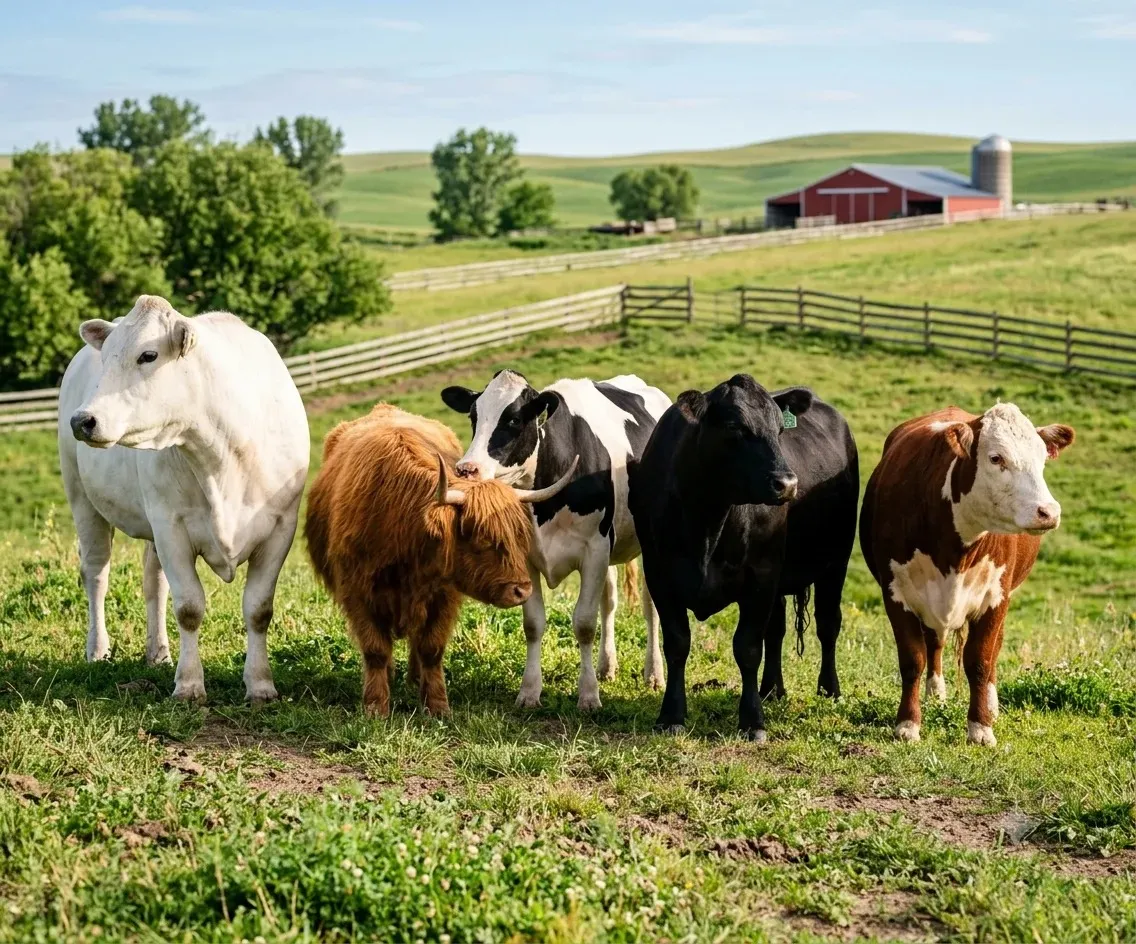
How Much Does a Cow Weigh? Average Cow Weight by Breed (lbs & kg)
If you’ve searched “how much does a cow weigh?”, chances are you need more than just a number. Maybe you’re buying your first cow, comparing cattle breeds, planning feed costs, estimating beef yield, or simply trying to understand how large cattle really are. The challenge is that you’ll often find different answers online, with some sources saying a cow weighs 1,200 pounds while others mention 1,500 pounds or more.
The truth is that there isn’t a single weight that applies to every cow. Breed, age, sex, genetics, nutrition, and whether the animal is raised for beef or dairy all play an important role. Without that context, a simple number can be misleading and lead to poor decisions, especially for farmers, livestock buyers, and first-time cattle owners.
In this guide, you’ll find practical weight ranges for different types of cattle, comparisons between popular breeds, explanations of the factors that influence body weight, and simple methods farmers use to estimate weight when a livestock scale isn’t available. The information is based on agricultural extension publications, breed associations, and established livestock management practices, making it useful for both beginners and experienced cattle producers.
Whether you’re researching for a school project, managing a herd, or preparing to purchase cattle, this guide is designed to give you clear, accurate, and easy-to-understand answers in one place.
Weight ranges in this guide are compiled from agricultural extension publications, cattle breed associations, and livestock management resources. Actual weights vary by genetics, nutrition, age, and farm management
Cow Weight at a Glance
| Question | Short Answer |
| Average cow weight | 1,200–1,500 lbs |
| Heaviest breed | Chianina |
| Smallest breed | Vechur |
| Average bull weight | 1,800–2,500 lbs |
| Average calf weight | 60–100 lbs |
| Average dairy cow | 900–1,700 lbs |
| Average beef cow | 1,200–1,500 lbs |
What Does Average Cow Weight Mean?
If you’re studying animal science or agriculture, it helps to remember that published weight ranges represent healthy averages, not fixed values. Individual animals may weigh more or less depending on genetics, nutrition, management practices, and environmental conditions.
When people ask “how much does a cow weigh?”, they’re usually referring to the average live weight of a healthy adult cow before slaughter — in other words, the animal’s body weight while it’s still alive, not including any processing losses.
Because live weight can shift with breed, age, sex, genetics, and diet, it should always be treated as a guideline rather than an exact figure. It’s also worth understanding whether the cow is being raised for beef or dairy production, since that alone creates significant differences in typical weight.
Keeping these distinctions in mind helps you compare cattle more accurately, and avoids the common mistake of confusing live weight with hanging weight or the final packaged beef you’d bring home.
According to the U.S. Department of Agriculture (USDA), cattle weights vary considerably depending on breed, age, sex, genetics, and production purpose. For this reason, average weight figures should be used as general guidelines rather than exact values for every animal.
How Much Does a Cow Weigh?
The average adult cow weighs between 1,200 and 1,500 pounds (544–680 kg). Beef cows tend to be heavier than dairy cows because they’re specifically bred to build muscle rather than produce milk. At the younger end of the spectrum, calves typically weigh just 60 to 100 pounds (27–45 kg) at birth, while on the other end, mature bulls can weigh 1,800 to 2,400 pounds (816–1,089 kg) or more, depending on the breed.
Key Takeaways
Key Takeaways
- Most adult cows weigh 1,200–1,500 lbs (544–680 kg).
- Weight depends on breed, age, sex, genetics, and nutrition.
- Beef cattle usually weigh more than dairy cattle.
- Bulls are significantly heavier than cows.
- Farmers use livestock scales or heart-girth measurements to estimate weight.
- Live weight is different from hanging (carcass) weight.
Average Cow Weight by Breed
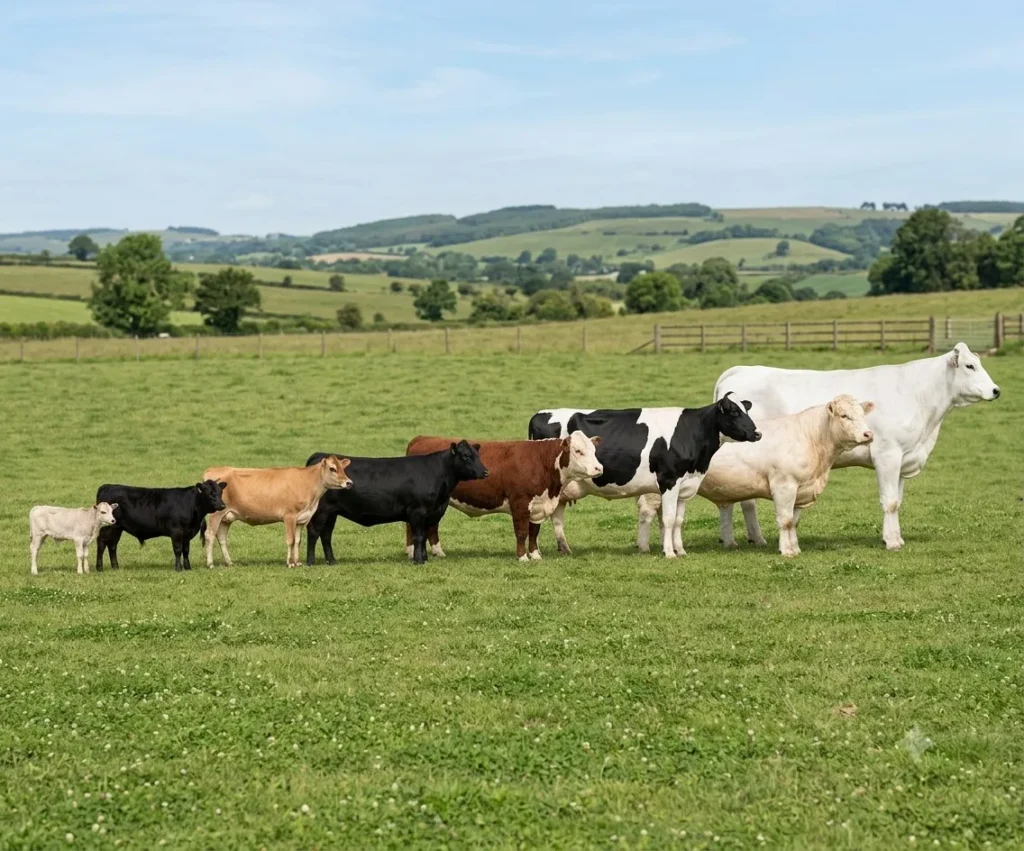
Cow weight varies significantly by breed. Beef breeds are generally heavier than dairy breeds because they are bred for muscle development, while dairy breeds prioritize milk production. The table below compares the average weight of popular cattle breeds.
The table below shows the average weight of several popular cattle breeds found in the United States.
| Breed | Type | Female Weight (lbs) | Female Weight (kg) | Male Weight (lbs) | Male Weight (kg) |
| Holstein | Dairy | 1,500–1,700 | 680–770 | 2,200–2,400 | 998–1,089 |
| Jersey | Dairy | 800–900 | 363–408 | 1,300–1,500 | 590–680 |
| Brown Swiss | Dairy | 1,300–1,400 | 590–635 | Up to 2,000 | Up to 907 |
| Guernsey | Dairy | 1,000–1,100 | 454–499 | 1,300–1,500 | 590–680 |
| Ayrshire | Dairy | 990–1,320 | 450–600 | 1,400–1,980 | 635–900 |
| Black Angus | Beef | 1,150–1,250 | 520–567 | 1,850–2,300 | 839–1,043 |
| Hereford | Beef | 1,190–1,320 | 540–600 | 1,800–1,875 | 816–850 |
| Charolais | Beef | 1,540–2,650 | 700–1,200 | 2,200–3,600 | 1,000–1,650 |
| Simmental | Beef | 1,540–2,000 | 700–907 | 2,300–2,860 | 1,043–1,298 |
| Texas Longhorn | Beef | 900–1,200 | 408–544 | 1,200–1,500 | 544–680 |
| Highland | Beef | 900–1,200 | 408–544 | 1,500–2,000 | 680–907 |
| Chianina | Beef | 1,800–2,200 | 816–998 | Up to 3,500 | Up to 1,588 |
Pounds to Kilograms Conversion Table
Many readers search for cow weight in both pounds and kilograms, especially when comparing sources from different countries. The table below offers quick conversions for the cattle weights referenced most often throughout this guide.
| Pounds (lbs) | Kilograms (kg) |
| 500 | 227 |
| 800 | 363 |
| 1,000 | 454 |
| 1,200 | 544 |
| 1,400 | 635 |
| 1,500 | 680 |
| 2,000 | 907 |
| 2,500 | 1,134 |
| 3,000 | 1,361 |
| 3,500 | 1,588 |
Which Cow Breed Weighs the Most?
The Chianina is widely recognized as the world’s largest cattle breed, and it’s easy to see why once you consider the numbers. A fully grown Chianina bull can weigh up to 3,500 pounds (1,588 kg), thanks to its tall frame, powerful muscling, and notably fast growth rate.
Beef Cows vs. Dairy Cows: Which Weigh More?
Many people assume all cows weigh roughly the same, but in reality, beef and dairy cattle have very different body types shaped by generations of selective breeding.
Beef cows are bred to build muscle and produce high-quality meat, which naturally makes them heavier and broader through the body. Dairy cows, on the other hand, are bred primarily for milk production, so they tend to carry a leaner frame more of their daily energy intake goes toward making milk rather than adding muscle.
| Feature | Beef Cow | Dairy Cow |
| Main Purpose | Meat Production | Milk Production |
| Average Weight | 1,200–1,500 lbs | 900–1,700 lbs |
| Body Type | Muscular | Lean |
| Common Breeds | Angus, Hereford, Charolais | Holstein, Jersey, Guernsey |
| Growth Focus | Muscle | Milk Yield |
How Much Does a Calf Weigh?
A calf is considered a young cow from birth until roughly one year of age. Most calves weigh between 60 and 100 pounds (27–45 kg) at birth, though the exact birth weight depends heavily on breed, genetics, and whether the calf is male or female.
Beef calves tend to arrive slightly heavier than dairy calves, and within any breed, bull calves usually outweigh heifer calves from day one. From there, growth happens fast — during the first year of life, calves gain weight rapidly, and with proper nutrition and good health, many will add several hundred pounds before their first birthday.
Average Calf Weight by Age
| Age | Average Weight (lbs) | Average Weight (kg) |
| Birth | 60–100 | 27–45 |
| 1 Month | 80–140 | 36–64 |
| 3 Months | 150–280 | 68–127 |
| 6 Months | 260–480 | 118–218 |
| 9 Months | 370–700 | 168–318 |
| 12 Months | 500–850 | 227–386 |
Average Calf Weight by Popular Dairy Breeds
Different dairy breeds grow at noticeably different rates. Larger breeds, such as Holstein calves, generally outweigh smaller breeds like Jersey calves at every stage of early development.
Regardless of breed, healthy calves need enough milk, clean water, quality feed, and attentive care to reach their expected weight targets on schedule.
How Fast Do Calves Gain Weight?
Healthy calves grow rapidly throughout their first year of life, though the exact pace of that growth depends on genetics, nutrition, overall health, and whether the calf is being raised for beef or dairy purposes.
Under good management conditions, beef calves typically gain 1.5 to 3 pounds (0.7–1.4 kg) per day, while dairy calves generally grow at a somewhat slower rate during their early months. Tracking this weight gain closely helps farmers spot health issues early and fine-tune feeding programs to keep development on track.
How Much Does a Dairy Cow Weigh?
Dairy cows are bred to produce milk rather than meat, which is why they typically carry a leaner body than their beef counterparts. Their exact weight still varies by breed, age, and nutrition, but most adult dairy cows fall between 800 and 1,700 pounds (363–770 kg).
Among dairy breeds, the Holstein stands out as both the largest and most common in the United States, while the much smaller Jersey makes up for its size with milk that’s especially high in butterfat.
How Much Does a Beef Cow Weigh?
Beef cattle are raised primarily for meat production, and it shows in their build — broader bodies, heavier muscling, and sturdier bone structure set them apart from dairy cattle. Most adult beef cows weigh between 1,200 and 1,500 pounds (544–680 kg), while mature bulls of beef breeds can easily exceed 2,000 pounds (907 kg).
Cow vs. Bull vs. Steer vs. Heifer Weight
These cattle terms often get used interchangeably in everyday conversation, but they actually describe different animals — and their average weights reflect those differences clearly.
| Cattle Type | Average Weight |
| Newborn Calf | 60–100 lbs (27–45 kg) |
| Heifer | 800–1,200 lbs (363–544 kg) |
| Mature Cow | 1,200–1,500 lbs (544–680 kg) |
| Steer | 1,200–1,800 lbs (544–816 kg) |
| Mature Bull | 1,800–2,400+ lbs (816–1,089+ kg) |
What Is the Difference?
- Calf: A young cow under one year old.
- Heifer: A young female that has not yet had a calf.
- Cow: An adult female that has given birth.
- Steer: A castrated male raised mainly for beef.
- Bull: An adult male used for breeding.
Because bulls naturally develop more muscle than any other category, they’re almost always the heaviest animals you’ll find on a farm.
Average Cow Weight by Life Stage
A cow’s weight shifts considerably throughout its life, with the fastest growth happening during the first two years before the animal settles into its mature size.
| Life Stage | Average Weight |
| Newborn Calf | 60–100 lbs (27–45 kg) |
| Weaned Calf | 400–600 lbs (181–272 kg) |
| Yearling | 600–900 lbs (272–408 kg) |
| Heifer | 800–1,200 lbs (363–544 kg) |
| Mature Cow | 1,200–1,500 lbs (544–680 kg) |
| Mature Bull | 1,800–2,400+ lbs (816–1,089+ kg) |
Growth at each stage depends on several interacting factors, including:
- Breed
- Genetics
- Feed quality
- Health
- Farm management
- Climate
Farmers track cattle weight through each of these life stages to guide feeding, breeding, and health decisions. Consistent weight checks also make it easier to spot problems early and keep overall herd performance on track.
What Factors Affect How Much a Cow Weighs?
A cow’s weight is never determined by breed alone. Many factors work together to shape how large or small an individual animal becomes, and genetics, nutrition, age, sex, and day-to-day management all play a meaningful role.
Understanding how these factors interact helps farmers improve animal health, feed efficiency, and overall herd productivity.
Age
Age is one of the single biggest factors influencing a cow’s weight. Calves are born weighing only 60 to 100 pounds (27–45 kg), and they grow quickly during that first year while their bones and muscles are still developing rapidly.
Growth naturally slows as cattle reach adulthood, with most cows hitting their mature weight somewhere between 2 and 4 years of age, although some larger breeds continue filling out for several more years beyond that. Older cows can sometimes lose weight later in life if they run into health problems, poor nutrition, or dental issues that make eating more difficult.
Breed
Breed has a major impact on how large an animal ultimately becomes. Some breeds are naturally large because they were developed specifically for beef production, while others remain smaller because they were bred for efficient milk output instead. A mature Charolais, for instance, weighs far more than a Jersey simply because the two breeds were developed with completely different purposes in mind.
Large Cattle Breeds
- Chianina
- Charolais
- Simmental
- Limousin
- Holstein
Smaller Cattle Breeds
- Jersey
- Dexter
- Vechur
- Mini Highland
- Lowline Angus
Ultimately, the genetic traits passed down from parents to calves play a large role in determining how heavy an animal can eventually become.
Gender
Male and female cattle grow along noticeably different paths. Bulls typically weigh far more than cows because higher testosterone levels help build additional muscle and increase overall bone size. Female cows, meanwhile, develop less muscle mass since more of their energy goes toward reproduction and milk production instead.
Steers, which are castrated males raised specifically for beef, often grow even larger than cows because they’re typically kept on high-energy feeding programs designed to maximize growth.
Pregnancy
Pregnancy naturally adds to a cow’s body weight as the calf grows and body fluid volume increases. Depending on the stage of pregnancy and the size of the developing calf, a pregnant cow may weigh 100 to 200 pounds (45–91 kg) more than she would if she weren’t carrying a calf. Farmers factor this in when monitoring body condition, adjusting feed rations, and estimating an animal’s live weight.
Genetics
Even within a single breed, genetics can create noticeable differences from one animal to the next. Some bloodlines are naturally predisposed to produce larger cattle, while others are selected for traits like easier calving, higher milk output, or better feed efficiency.
Many cattle breeders rely on selective breeding programs to improve:
- Growth rate
- Mature body size
- Muscle development
- Fertility
- Feed conversion
- Carcass quality
Over the past several decades, these genetic improvements have steadily increased average cattle weights while also boosting overall production efficiency.
Diet and Nutrition
Nutrition is one of the most important factors affecting how much weight cattle gain over time, since a balanced diet supplies the energy and nutrients required for healthy growth. Most cattle diets draw from a combination of:
- Grass
- Hay
- Silage
- Corn
- Grains
- Protein supplements
- Minerals and vitamins
Cattle that receive consistently high-quality feed tend to grow faster and reach a higher mature weight than animals raised primarily on poor-quality forage. That said, balance matters — too much feed can lead to excess fat, while too little slows growth and cuts into overall productivity.
University extension research consistently shows that balanced nutrition is one of the most important factors affecting cattle growth. Providing adequate protein, energy, minerals, vitamins, and clean water supports healthy weight gain throughout every stage of development.
Activity Level
A cow’s daily activity level also plays into its overall body weight. Cattle that walk long distances while grazing burn considerably more energy than animals confined to smaller feeding areas, which tends to keep active cattle leaner overall. Animals with limited movement, by contrast, may gain weight more quickly if their feed intake stays the same.
Several factors influence how active cattle actually are, including:
- Pasture size
- Terrain
- Weather
- Grazing system
- Stocking density
Beyond weight management, regular movement also supports healthier muscles and better overall fitness.
Health
Healthy cattle generally maintain a steady, predictable body weight, while illness, parasites, infections, or digestive problems can quickly reduce appetite and slow growth. Some of the most common health issues that affect weight include:
- Internal parasites
- Respiratory disease
- Foot problems
- Digestive disorders
- Mineral deficiencies
Routine veterinary care, regular vaccinations, and consistent parasite control all help cattle reach their expected growth potential without unnecessary setbacks.
Weight alone doesn’t always tell the full story of a cow’s health, which is why many farmers also use the Body Condition Score (BCS) to evaluate fat reserves and overall physical condition. For beef cattle, the BCS scale typically runs from 1, representing a very thin animal, up to 9, representing a very fat one.
Maintaining an appropriate body condition score helps improve fertility, milk production, calving performance, and overall herd health.
Environment and Climate
The environment an animal is raised in plays a significant role in its growth. Cattle raised in regions with abundant grass tend to gain weight more easily than those living in dry areas with limited forage available.
Extreme temperatures can also shift weight patterns noticeably. During very hot weather, cattle often eat less, while in cold weather they require more energy simply to maintain body temperature. Because of this, farmers regularly adjust feeding programs throughout the year to match seasonal conditions.
Farm Management
Good management practices improve both cattle health and overall weight gain. Successful cattle producers keep a close eye on:
- Feed intake
- Water supply
- Body condition
- Growth rate
- Disease prevention
- Breeding performance
Regular weighing allows farmers to catch problems early and adjust feeding or health programs before they start affecting production.
Why Do Modern Cows Weigh More Than They Did Years Ago?
Today’s cattle are, on the whole, noticeably heavier than cattle raised several decades ago, and that shift didn’t happen by accident.
Research presented by Dr. Ken Olson, Range Beef Cow Specialist at South Dakota State University Extension, shows that today’s beef cattle are significantly heavier than cattle raised several decades ago. Improvements in genetics, nutrition, and feed efficiency have increased average finishing weights while maintaining carcass quality.
This long-term increase can largely be traced back to improvements in:
- Genetics
- Animal nutrition
- Veterinary care
- Breeding programs
- Feed efficiency
- Farm management
Research from U.S. beef production programs has shown that modern cattle reach market weight faster while using feed more efficiently than previous generations did. Even so, producers continue to prioritize meat quality, animal health, and sustainable production practices alongside these size gains.
Key Takeaways
Several factors work together to determine how much a cow weighs, including:
- Breed
- Age
- Gender
- Genetics
- Nutrition
- Health
- Activity level
- Environment
- Farm management
- Whether the animal is raised for beef or dairy
No single factor tells the whole story on its own — instead, all of these influences combine to shape an animal’s size, growth rate, and overall condition.
How Much Meat Does a Cow Yield?
If you’re planning to buy a whole or half cow directly from a farmer, understanding the difference between live weight and hanging weight is essential. Farmers typically sell beef based on hanging weight rather than an animal’s live weight, so knowing the distinction helps you estimate how much packaged beef you’ll actually take home.
Many people who search “how much does a cow weigh” are really trying to figure out how much beef they can expect from an animal, and that answer depends on live weight, breed, age, body condition, and how the meat is processed.
It’s worth remembering that a cow’s live weight is never the same as the amount of meat you take home. During processing, the hide, head, internal organs, bones, and excess fat are all removed, which means the final amount of packaged beef ends up considerably lower than the animal’s live weight. A 1,200-pound (544 kg) cow, for example, does not produce 1,200 pounds of beef.See the detailed explanation of Live Weight vs. Hanging Weight below.
Live Weight vs. Hanging Weight vs. Packaged Beef
Understanding these three terms makes it much easier to estimate realistic meat yield from any given animal.
Live Weight
Live weight refers to the animal’s weight before slaughter, and it’s the figure farmers measure directly using livestock scales or weight tapes. For most mature beef cattle, live weight falls somewhere between 1,200 and 1,500 pounds (544–680 kg).
Hanging Weight (Hot Carcass Weight)
After slaughter, the hide, head, internal organs, blood, and lower legs are all removed, leaving behind what’s known as the hanging weight, or hot carcass weight (HCW). Hanging weight typically comes out to 60% to 65% of the animal’s original live weight.
| Live Weight | Hanging Weight |
| 1,000 lbs | 600–650 lbs |
| 1,200 lbs | 720–780 lbs |
| 1,400 lbs | 840–910 lbs |
The exact percentage varies depending on the breed, fat cover, muscle development, and the specific dressing practices used at processing.
Packaged Beef (Take-Home Meat)
After aging, trimming, deboning, and cutting the carcass into retail-ready cuts, the final amount of packaged beef drops even further. Most cattle produce roughly 40% to 45% of their live weight as packaged, take-home beef.
| Live Weight | Packaged Beef |
| 1,000 lbs | 400–450 lbs |
| 1,200 lbs | 480–540 lbs |
| 1,400 lbs | 560–630 lbs |
The exact final amount depends on several variables, including:
- Bone size
- Fat trimming
- Cutting preferences
- Boneless vs. bone-in cuts
Beef Yield by Primal Cuts
Once processing is complete, the carcass is divided into several large sections known as primal cuts, which are later broken down further into steaks, roasts, and ground beef.
| Primal Cut | Typical Share of Carcass |
| Chuck | 26–29% |
| Round | 20–23% |
| Loin | 15–17% |
| Rib | 8–10% |
| Brisket | 4–6% |
| Plate | 8–10% |
| Flank | 3–5% |
| Shank | 2–4% |
These percentages can shift slightly depending on the breed involved and the individual butcher’s cutting style.
How Much Does a Cow Weigh at Slaughter?
Not all cattle are processed at the same weight — most beef cattle are sent to slaughter only after reaching their ideal market size, which varies somewhat by animal type.
| Animal | Average Slaughter Weight |
| Beef Steer | 1,200–1,500 lbs |
| Beef Heifer | 1,100–1,350 lbs |
| Cull Cow | 1,000–1,400 lbs |
Modern beef cattle are, on average, considerably heavier at slaughter than they were several decades ago, thanks to ongoing improvements in genetics, nutrition, and herd management practices. Even so, total herd numbers have fallen, which is a major reason beef prices have climbed in recent years.
How Do Farmers Measure a Cow’s Weight?
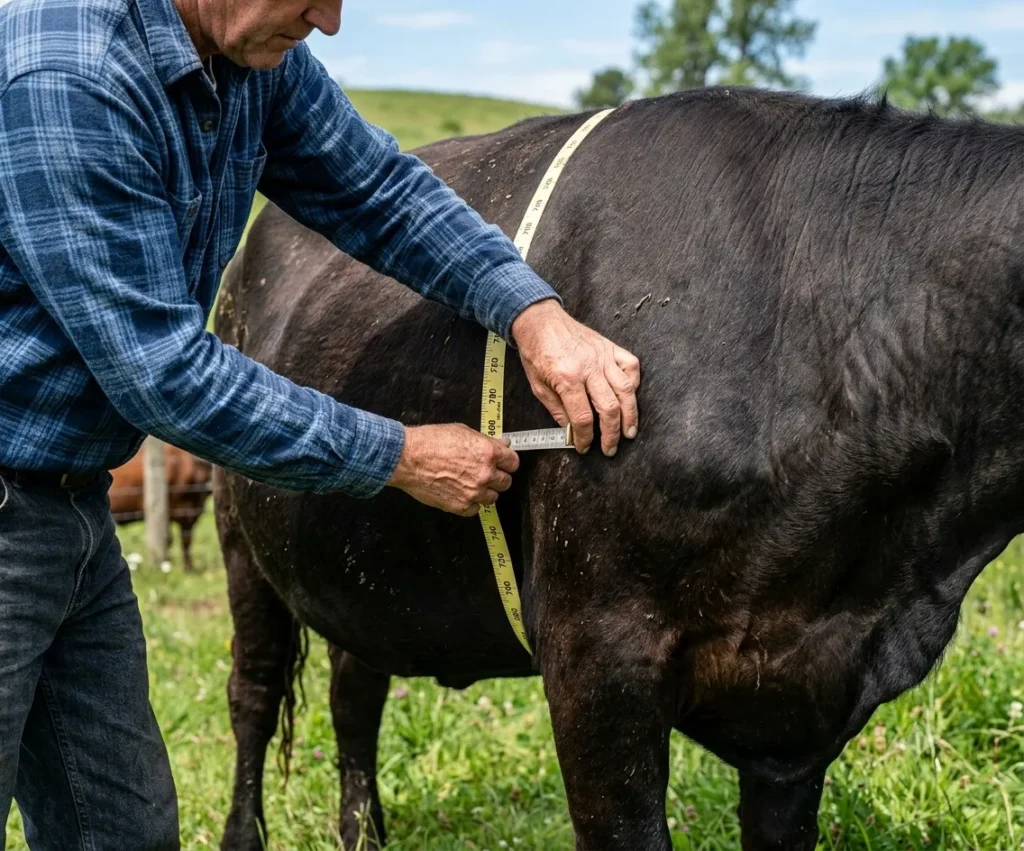
Large livestock scales offer the most accurate way to measure a cow’s weight, but not every farm has one on hand. Fortunately, farmers have developed several simple estimation methods over the years that are surprisingly accurate when a scale isn’t available.
Livestock Scale
A livestock scale provides the single most reliable weight measurement available to farmers. It’s commonly used to:
- Adjust feed rations
- Calculate medication doses
- Monitor growth
- Prepare animals for sale
- Track herd performance
This method consistently produces the most accurate results of any weighing technique.
Weight Tape
A weight tape is a measuring tape designed specifically for cattle, and it works by estimating body weight based on the animal’s heart girth — the distance measured around the chest, just behind the front legs.
Weight tapes are:
- Affordable
- Easy to use
- Portable
- Suitable for routine farm checks
While a weight tape isn’t quite as precise as a full scale, it still provides a solid estimate for most day-to-day management decisions.
Heart Girth Formula
Some farmers prefer to estimate cattle weight using body measurements instead of a tape or scale. The most common approach combines two measurements: heart girth and body length.
A commonly used formula is:
Estimated Weight (lbs) = (Heart Girth² × Body Length) ÷ 300
This calculation offers a genuinely useful estimate whenever a livestock scale isn’t within reach.
Example: Estimating a Cow’s Weight
Suppose a cow has:
- Heart Girth: 75 inches
- Body Length: 65 inches
Using the formula above:
Estimated Weight = (75 × 75 × 65) ÷ 300 Estimated Weight ≈ 1,219 pounds
While this method won’t be as precise as weighing the animal directly on a scale, it’s accurate enough to support most routine farm management decisions.
Visual Body Condition Assessment
Experienced farmers can often estimate whether a cow is underweight, healthy, or overweight simply by observing certain physical cues, including:
- Rib visibility
- Muscle development
- Fat cover
- Hip bones
- Spine
- Tail head
This method won’t give you an exact number, but it remains a valuable way to monitor body condition throughout the year without any specialized equipment.
Pro Tip
If you don’t have access to a livestock scale, use a heart-girth weight tape for routine monitoring. It’s not as precise as a scale, but it’s accurate enough for many day-to-day management decisions when used correctly.
Why Is Knowing a Cow’s Weight Important?
For cattle producers, knowing a cow’s weight is more than just a number. It helps determine the correct feed ration, calculate medication dosages, monitor herd performance, and decide the best time for breeding or marketing animals. Regular weight monitoring also helps identify health issues before they affect productivity.
Accurate weight tracking gives farmers the information they need to:
- Feed cattle correctly
- Prevent overfeeding or underfeeding
- Calculate medicine and vaccine doses
- Monitor growth
- Improve breeding decisions
- Estimate market value
- Predict beef yield
- Track herd performance
Regular weight checks also make it far easier to identify emerging health problems before they turn into serious, costly issues.
Common Mistakes When Estimating Cow Weight
Estimating weight by appearance alone often leads to errors, and a few mistakes tend to come up again and again among newer producers.
Assuming Every Breed Weighs the Same
A Jersey cow naturally weighs much less than a Charolais or Chianina, so breed always needs to be part of the equation.
Ignoring Age
Young cattle are still actively growing, and comparing them directly to mature animals will almost always produce a misleading estimate.
Confusing Bulls with Cows
Bulls typically outweigh adult female cows by several hundred pounds, so mixing up the two categories can throw off calculations significantly.
Forgetting Seasonal Weight Changes
Cattle can gain or lose weight throughout the year depending on pasture quality, weather conditions, and overall feed availability.
Not Accounting for Pregnancy
Pregnant cows naturally weigh more than non-pregnant cows, since they’re carrying both a developing calf and additional body fluids.
Interesting Facts About Cow Weight
- The Chianina is one of the largest cattle breeds in the world and can exceed 3,500 pounds (1,588 kg).
- The Vechur is one of the smallest cattle breeds and may weigh only 300–400 pounds (136–181 kg).
- Holstein cows are the heaviest dairy breed commonly raised in the United States.
- Beef cattle generally have more muscle than dairy cattle, making them heavier overall.
- Modern cattle reach market weight faster than previous generations thanks to improvements in breeding and nutrition.
Key Takeaways
A cow’s live weight is only the starting point when estimating beef yield. As the animal moves through processing, its weight steadily decreases across three stages:
- Live weight
- Hanging weight
- Packaged beef
Farmers rely on livestock scales, weight tapes, body measurements, and visual assessments to monitor cattle weight throughout an animal’s life. Accurate measurements at every stage improve feeding, health management, breeding decisions, and overall farm profitability. Because cattle are among the world’s most important farm animals, understanding their average weight remains a common topic in agriculture, biology, and veterinary education.
Did You Know?
- A mature bull can weigh more than twice as much as some miniature cattle breeds.
- Modern beef cattle are generally heavier than they were several decades ago due to advances in genetics and nutrition.
- Holsteins are among the heaviest dairy cattle, while Jerseys are among the lightest.
- Chianina cattle are one of the largest cattle breeds in the world.
Frequently Asked Questions (FAQs)
How much does an average cow weigh?
The average adult cow weighs between 1,200 and 1,500 pounds (544–680 kg). However, weight varies by breed, age, sex, and whether the cow is raised for beef or dairy production.
How much does a full-grown cow weigh?
A full-grown cow typically weighs 1,200 to 1,500 pounds (544–680 kg). Some smaller breeds weigh less than 1,000 pounds, while large breeds such as Charolais and Chianina can weigh well over 2,000 pounds.
How much does a cow weigh in kilograms?
Most mature cows weigh 544 to 680 kilograms. Large bulls can exceed 1,000 kilograms, while miniature cattle breeds may weigh less than 250 kilograms.
How much does a newborn calf weigh?
Most newborn calves weigh between 60 and 100 pounds (27–45 kg). Birth weight depends on several factors, including:
- Breed
- Genetics
- Nutrition of the mother
- Sex of the calf
Bull calves are usually slightly heavier than heifer calves.
How much does a beef cow weigh?
Most beef cows weigh 1,200 to 1,500 pounds (544–680 kg). Popular beef breeds include:
- Angus
- Hereford
- Charolais
- Simmental
- Limousin
- Highland
Some mature beef bulls can weigh more than 3,000 pounds.
Which cow breed weighs the most?
The Chianina is widely recognized as one of the world’s largest cattle breeds. A mature Chianina bull can weigh up to 3,500 pounds (1,588 kg), making it much heavier than most other cattle breeds.
Which cow breed is the smallest?
The Vechur from India is one of the smallest cattle breeds in the world. Adult Vechur cows usually weigh around 300 to 400 pounds (136–181 kg). Other small breeds include:
- Dexter
- Mini Highland
- Lowline Angus
How much does a bull weigh?
Most mature bulls weigh between 1,800 and 2,400 pounds (816–1,089 kg). Large beef breeds, such as Charolais and Chianina, can exceed 3,000 pounds under ideal conditions.
How much does a steer weigh?
Steers raised for beef generally weigh 1,200 to 1,800 pounds (544–816 kg) before processing. The exact weight depends on breed, age, feeding program, and production goals.
How much does a cow weigh before slaughter?
Most beef cattle weigh between 1,200 and 1,500 pounds (544–680 kg) before slaughter. After processing, the hanging carcass usually weighs 60% to 65% of the live weight.
How much meat do you get from a 1,200-pound cow?
A 1,200-pound cow generally produces:
- 720–780 pounds of hanging carcass weight
- 480–540 pounds of packaged beef
The exact amount depends on bone size, fat trimming, and the cuts requested.
Why do beef cows weigh more than dairy cows?
Beef cattle are bred to produce muscle and meat, while dairy cattle are bred to produce milk. Because of this difference, beef breeds usually have:
- More muscle
- Wider frames
- Higher body weight
Dairy breeds tend to be leaner and lighter by comparison.
Conclusion
Understanding how much a cow weighs is about more than satisfying curiosity. Accurate weight estimates help farmers manage feed costs, monitor animal health, calculate medication dosages, estimate beef yield, and make better breeding and marketing decisions. For buyers and hobby farmers, knowing the expected weight of different breeds can also make it easier to choose cattle that match their land, budget, and management goals.
While average weight ranges provide a useful starting point, every animal is different. Genetics, nutrition, age, environment, and overall management all influence how much a cow will weigh throughout its life. That’s why experienced livestock producers rely on regular monitoring and body condition assessments rather than assumptions alone.
This guide brings together practical information from agricultural extension services, government resources, and cattle breed organizations to help you make informed decisions with confidence. Whether you’re raising cattle, studying animal science, or simply looking for a reliable answer, understanding the factors behind cow weight will always be more valuable than relying on a single average figure.