

What Is Administrative Experience? A Complete Guide With Examples, Skills, and Resume Tips
If you’ve ever looked at a job posting and wondered, “Do I actually have administrative experience?”, you’re not alone. It’s one of the most common questions job seekers ask when updating a resume or applying for a new role. Many people assume administrative experience only comes from working as an administrative assistant or in a traditional office. As a result, they often underestimate the valuable skills they’ve already developed in customer service, retail, healthcare, education, hospitality, or volunteer positions.
I’ve reviewed hundreds of job descriptions and career resources while researching administrative roles, and one pattern appears repeatedly: employers care far more about what you did than what your job title was. If you’ve organized schedules, maintained records, coordinated meetings, communicated with customers, or supported daily business operations, you’ve likely built administrative experience—even if your previous role had a completely different title.
This guide is designed to remove the confusion. You’ll learn exactly what administrative experience means, what employers look for, which skills matter most, what jobs count as administrative experience, and how to present your experience effectively on your resume and during interviews. By the end, you’ll have a much clearer understanding of how to position yourself for administrative roles with confidence.
What Is Administrative Experience?
Administrative experience refers to the practical knowledge and workplace administrative skills gained through organizing, coordinating, and supporting the daily operations of a business or organization. It typically involves managing schedules, maintaining records, handling business communication, preparing documents, coordinating meetings, and helping teams stay organized and productive.
Unlike technical or highly specialized job experience, administrative experience is really about keeping business operations running efficiently behind the scenes. Every organization, regardless of size or industry, depends on people who can organize information, communicate clearly, solve problems on the fly, and support employees across different departments.
What makes administrative experience so valuable is that it demonstrates far more than the ability to complete routine office tasks. It signals to employers that you can manage your time well, prioritize competing responsibilities, adapt when situations change, and stay accurate even while juggling multiple assignments at once.
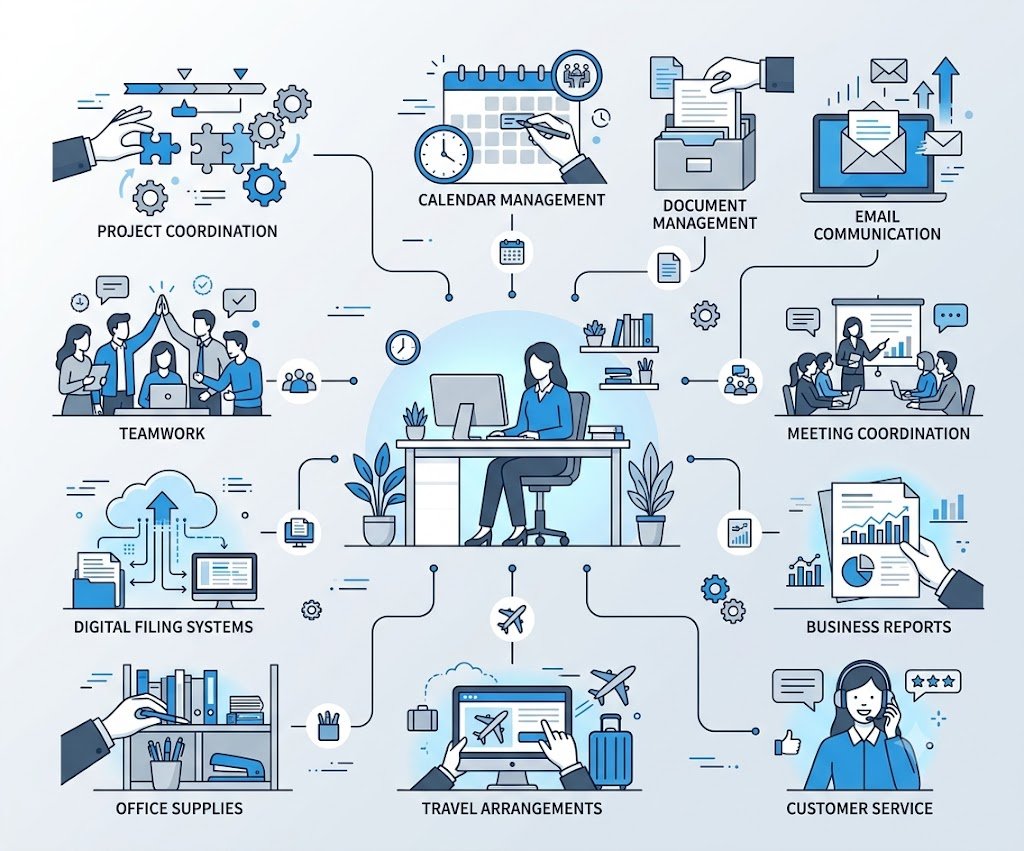
Consider a few real-world examples. An administrative assistant might schedule executive meetings, prepare reports, manage digital files, and coordinate travel arrangements. An office manager might oversee office supplies, supervise administrative staff, and improve workplace procedures. A receptionist might greet visitors, answer phone calls, maintain appointment calendars, and update customer records. Even though these job titles differ, each one is rooted in the same core administrative experience.
Modern workplaces also lean heavily on digital tools, and administrative professionals are expected to keep up. Software such as Microsoft Word, Microsoft Excel, Microsoft Outlook, Google Workspace, CRM systems, and project management platforms are now part of everyday administrative work. As more businesses shift toward digital workflows, these technical skills have become just as essential as traditional organizational abilities.
Why Administrative Experience Matters
Administrative professionals play an important role in nearly every industry, helping businesses stay organized, improve communication, and keep daily operations moving without unnecessary delays.
Employers value administrative experience because it demonstrates that a candidate can:
- Stay organized while managing multiple responsibilities.
- Communicate professionally with employees, customers, and vendors.
- Maintain accurate records and business documents.
- Coordinate meetings, schedules, and projects.
- Solve everyday workplace problems.
- Adapt to changing priorities and deadlines.
These transferable skills apply just as well in healthcare, education, finance, government, legal services, technology, hospitality, manufacturing, and nonprofit work as they do in a traditional office.
Administrative experience also opens the door to long-term career growth. Many professionals start out as receptionists or office assistants and gradually move into roles such as executive assistant, office manager, operations coordinator, project coordinator, or human resources specialist.
What Employers Look for in Administrative Experience
When employers review resumes, they look beyond job titles to find evidence that candidates can stay organized, communicate professionally, solve problems, manage competing priorities, and support day-to-day business operations.
Hiring managers also pay close attention to comfort with office software, attention to detail, and the ability to work independently while still collaborating well across teams. Highlighting these strengths with measurable achievements, rather than a simple list of duties, can make your application noticeably more competitive.
What Counts as Administrative Experience?
One of the most common questions job seekers ask is whether their previous work actually qualifies as administrative experience. The honest answer is that it depends on the responsibilities you performed, not the title printed on your paycheck.
If your day-to-day work has involved organizing information, supporting coworkers, coordinating schedules, maintaining records, or communicating with customers or employees, you’ve very likely built real administrative experience already.
Administrative Responsibilities That Count as Experience
The following responsibilities are widely recognized by employers as genuine administrative experience:
- Scheduling meetings and appointments
- Managing calendars
- Answering phone calls and emails
- Preparing reports and presentations
- Organizing paper and digital filing systems
- Maintaining business records
- Entering and updating data
- Ordering office supplies
- Coordinating travel arrangements
- Preparing business correspondence
- Supporting managers or executives
- Organizing meetings and events
- Maintaining confidential information
- Assisting customers and clients
- Coordinating communication between departments
Generally speaking, the more of these responsibilities you’ve handled, the stronger your administrative background will look on paper.
Administrative Experience From Different Jobs
Administrative experience isn’t limited to office-based positions. Plenty of careers build the same transferable skills that employers look for in dedicated administrative roles, as shown below.
| Job Role | Administrative Experience Gained |
| Receptionist | Scheduling appointments, answering calls, maintaining visitor records, managing calendars |
| Customer Service Representative | Updating customer information, responding to emails, preparing reports, documenting interactions |
| Retail Supervisor | Creating employee schedules, managing inventory records, preparing sales reports, handling documentation |
| Teacher | Maintaining student records, organizing meetings, preparing reports, coordinating communication with parents |
| Healthcare Worker | Managing patient appointments, maintaining medical records, processing documentation |
| Volunteer Coordinator | Scheduling volunteers, organizing events, maintaining records, communicating with community members |
| Project Assistant | Tracking deadlines, preparing reports, coordinating meetings, organizing project files |
As the table shows, administrative experience can take root in a wide range of professional settings, not just a corporate office.
Administrative Experience vs. Clerical Experience
Many people use “administrative experience” and “clerical experience” interchangeably, but the two aren’t quite the same thing.
Clerical work tends to focus on completing routine office tasks, while administrative work includes those same tasks but goes further, adding planning, coordination, communication, and broader support for business operations.
| Administrative Experience | Clerical Experience |
| Coordinates daily operations | Performs routine office tasks |
| Manages schedules and meetings | Files documents |
| Supports managers and departments | Handles data entry |
| Solves scheduling and workflow issues | Sorts paperwork |
| Organizes projects and communication | Maintains filing systems |
| Helps improve office efficiency | Follows established procedures |
In short, clerical experience can absolutely be part of administrative experience, but administrative roles usually demand a bit more decision-making, coordination, and organizational judgment on top of the basics.
Administrative Duties and Responsibilities
Administrative professionals handle a wide range of duties that keep businesses running efficiently, with some tasks completed daily and others supporting longer-term projects or organizational goals.
While the exact responsibilities shift from role to role, employers consistently look for candidates who can manage multiple tasks at once, stay organized under pressure, and communicate clearly with everyone around them.
Managing Schedules and Calendars
Time management sits at the heart of nearly every administrative role. Administrative professionals often coordinate schedules for managers, executives, teams, and clients so that meetings and appointments run smoothly without last-minute chaos.
Effective calendar management does more than keep a calendar tidy — it improves overall productivity and frees employees to focus on their real priorities instead of logistics.
Managing Documents and Records
Every business depends on accurate, accessible information, and administrative professionals are typically the ones who keep that information organized, secure, and current.
Strong document management reduces costly errors, improves collaboration across teams, and helps organizations stay on the right side of regulatory compliance.
Handling Business Communication
Administrative professionals often act as the communication hub of an organization, making sure information reaches the right people quickly and professionally.
When communication is handled well, businesses tend to deliver better customer service and enjoy smoother internal collaboration.
Preparing Reports, Letters, and Presentations
Administrative professionals frequently produce the documents that support day-to-day decisions and ongoing operations.
Because these documents often represent the organization to clients, partners, or leadership, attention to detail here really is critical.
Supporting Meetings and Events
Planning a meeting takes a lot more than reserving a conference room, and administrative professionals typically coordinate every stage of the process from start to finish.
Handled well, these tasks keep meetings organized, on-topic, and genuinely productive.
Coordinating Travel Arrangements
Many administrative professionals are also responsible for managing business travel on behalf of executives and employees.
Well-organized travel planning saves both time and money while cutting down on unnecessary disruptions to the traveler’s schedule.
Managing Office Supplies and Resources
Administrative staff help keep the workplace productive by making sure employees always have the equipment and supplies they actually need; everything from printer paper to knowing how much a book of stamps costs when postage runs low.
Solid resource management helps organizations control costs while keeping day-to-day efficiency high.
Supporting Business Operations
Beyond individual tasks, administrative professionals often provide broader operational support that spans multiple departments.
This kind of support allows other departments to focus on strategic priorities while administrative staff manage the day-to-day coordination in the background.
Essential Skills Required for Administrative Roles
Administrative professionals need a mix of technical and soft skills to support daily business operations, communicate effectively, and stay organized.
Technical Administrative Skills
Most administrative roles require proficiency with:
- Microsoft Word
- Microsoft Excel
- Microsoft Outlook
- Microsoft PowerPoint
- Google Docs
- Google Sheets
- Google Calendar
- Microsoft Teams
- Zoom
- Slack
- CRM software
- Project management software
- Database management
- Data entry
- Document management systems
These tools improve productivity and support modern digital workflows.
Organizational Skills
Strong organizational skills help administrative professionals:
- Prioritize tasks
- Manage schedules
- Meet deadlines
- Maintain filing systems
- Track projects
- Coordinate multiple assignments
Communication Skills
Effective communication supports collaboration with employees, managers, customers, and vendors.
Key skills include:
- Professional email writing
- Active listening
- Clear verbal communication
- Business correspondence
- Customer service
- Team collaboration
Time Management
Good time management helps professionals:
- Prioritize work
- Meet deadlines
- Handle multiple responsibilities
- Increase productivity
Attention to Detail
Attention to detail is essential for:
- Accurate reports
- Reliable records
- Scheduling accuracy
- Proofreading
- Managing confidential information
Problem-Solving Skills
Administrative professionals often resolve:
- Schedule conflicts
- Missing documents
- Travel disruptions
- Customer concerns
- Technology issues
- Competing priorities
Customer Service and Interpersonal Skills
Successful professionals demonstrate:
- Professionalism
- Patience
- Empathy
- Conflict resolution
- Positive attitude
- Relationship building
Adaptability and Teamwork
Administrative professionals should be able to:
- Learn new software
- Work across departments
- Support changing priorities
- Collaborate on projects
- Adapt to workplace changes
Administrative Software Employers Expect You to Know
Administrative professionals use technology every single day to stay organized and support business operations. While no employer expects a candidate to master every platform out there, becoming familiar with common office software can meaningfully strengthen your resume.
| Software | Primary Purpose |
| Microsoft Word | Creating reports, letters, and business documents |
| Microsoft Excel | Tracking data, budgets, and spreadsheets |
| Microsoft Outlook | Email communication and calendar management |
| Google Workspace | Collaborative documents, spreadsheets, and file sharing |
| Microsoft Teams | Team communication and virtual collaboration |
| Zoom | Video meetings and webinars |
| Slack | Internal messaging and team communication |
| Trello | Task and workflow management |
| Asana | Project planning and collaboration |
| Monday.com | Workflow and project tracking |
| Salesforce | Customer relationship management (CRM) |
| DocuSign | Electronic document signing |
| Adobe Acrobat | Creating and editing PDF files |
| SharePoint | Document storage and collaboration |
Learning even a handful of these tools can boost your productivity and show employers that you’re genuinely prepared for today’s digital workplace. Even basic proficiency with Microsoft Office, Google Workspace, and common collaboration software can make your application far more competitive.
Administrative Experience Examples by Industry
Administrative responsibilities exist in nearly every industry, and while the daily tasks vary, the underlying skills remain highly transferable from one field to the next.
| Industry | Examples of Administrative Responsibilities |
| Healthcare | Scheduling appointments, maintaining patient records, processing insurance forms, coordinating referrals |
| Education | Managing student records, organizing meetings, preparing reports, coordinating school events |
| Finance | Maintaining client files, preparing financial reports, scheduling consultations, managing confidential documents |
| Legal | Organizing case files, preparing legal documents, managing court schedules, communicating with clients |
| Technology | Supporting project teams, organizing digital documentation, coordinating virtual meetings, tracking project milestones |
This kind of industry-wide demand is exactly what makes administrative experience one of the most transferable qualifications in today’s job market.
Common Jobs That Require Administrative Experience
Administrative experience remains one of the most requested qualifications in job postings today. Employers frequently hire candidates who’ve shown strong organizational, communication, and problem-solving abilities, regardless of which industry that experience came from.
Below are some of the most common careers built around administrative experience.
Administrative Assistant
An administrative assistant provides general office support and helps departments run smoothly, making this one of the most popular entry points into an administrative career.
Typical responsibilities include:
- Managing calendars
- Scheduling meetings
- Preparing reports
- Handling emails and phone calls
- Organizing office documents
- Coordinating travel arrangements
- Supporting managers and executives
Many professionals start their administrative careers in this exact role before moving on to leadership positions.
Executive Assistant
Executive assistants provide high-level support to company executives and senior leadership, which means these positions demand excellent organization, discretion, and sound decision-making.
Responsibilities often include:
- Managing executive calendars
- Coordinating business travel
- Preparing presentations
- Organizing executive meetings
- Handling confidential information
- Managing correspondence
- Coordinating communication between departments
Because executive assistants work so closely with leadership, this role often becomes a stepping stone into management and operations careers.
Office Manager
Office managers oversee the daily operations of an office while supervising administrative staff and looking for ways to improve overall workplace efficiency.
Their responsibilities may include:
- Managing office operations
- Supervising administrative employees
- Coordinating vendors
- Managing office budgets
- Ordering office supplies
- Developing office procedures
- Supporting multiple departments
Other common administrative jobs include:
- Receptionist
- HR Assistant
- Project Coordinator
- Office Administrator
- Virtual Assistant
- Records Clerk
How to Gain Administrative Experience
If you’re new to the workforce, you may be wondering how to build administrative experience before applying for office jobs in the first place. The good news is that these skills can be developed in several different ways.
You can gain administrative experience by:
- Working in entry-level office jobs
- Volunteering
- Completing internships
- Learning Microsoft Office
- Earning certifications
Note: Most entry-level office jobs are paid hourly and classified as non-exempt, so it helps to understand how overtime pay is calculated before agreeing to extra hours.
Career Growth Path for Administrative Professionals
A typical career progression looks like this:
| Career Stage | Typical Position | Primary Focus |
| Entry Level | Receptionist, Office Assistant | Office support and administrative tasks |
| Early Career | Administrative Assistant | Department support and coordination |
| Mid-Level | Executive Assistant, Office Manager | Leadership support and office operations |
| Advanced | Operations Coordinator, Project Coordinator | Process improvement and cross-functional coordination |
| Senior Level | Operations Manager, Administrative Manager | Strategic planning and team leadership |
Ultimately, career growth depends on your experience, technical skills, communication abilities, and willingness to keep learning as the role evolves.
Administrative careers can also lead into higher-level positions in operations, project management, and human resources. According to the U.S. Bureau of Labor Statistics, professionals who continue developing technical, communication, and organizational skills often find opportunities to move into supervisory or specialized business support roles as their organizations evolve.
Tips for Advancing Your Administrative Career
Building a successful administrative career takes continuous improvement, and employers tend to promote professionals who consistently show reliability, initiative, and leadership potential.
You can improve your career prospects by:
- Learning advanced Microsoft Excel skills.
- Becoming proficient with project management software.
- Improving business writing and communication.
- Volunteering to lead projects.
- Taking leadership training.
- Earning professional certifications.
- Building strong relationships across departments.
- Staying organized and meeting deadlines consistently.
- Learning industry-specific software.
- Keeping your resume updated with measurable achievements.
Many employers fund these through internal learning and development programs, so it’s worth asking what training your company already offers. Small, steady improvements like these can add up to significant career opportunities over time.”
Why Administrative Experience Is Valuable Across Industries
One of the biggest advantages of administrative experience is just how transferable it is. Nearly every organization needs professionals who can organize information, manage communication, coordinate schedules, and support daily operations.
Administrative skills are valuable in:
- Healthcare
- Education
- Finance
- Government
- Legal services
- Manufacturing
- Technology
- Construction
- Hospitality
- Nonprofit organizations
- Real estate
- Insurance
This flexibility makes administrative experience an excellent foundation for long-term career growth, even if you eventually decide to change industries entirely.
These expectations line up with guidance from the U.S. Bureau of Labor Statistics (BLS), which notes that administrative support professionals are responsible for scheduling appointments, preparing documents, managing records, and supporting communication within organizations. As workplaces continue leaning on digital tools and collaboration platforms, employers increasingly value administrative professionals who combine strong organizational skills with genuine technology proficiency.
How to Highlight Administrative Experience on a Resume
Your resume should show the value you brought to previous employers, not simply list your daily responsibilities. Hiring managers often spend only a few seconds scanning each resume, so your accomplishments need to stand out immediately.
Rather than writing generic statements, describe your responsibilities using action verbs and measurable results wherever possible.
Focus on Achievements Instead of Duties
Many resumes simply describe what a person was responsible for, when a stronger resume would explain what was actually accomplished.
Weak Example: Responsible for answering phones and scheduling meetings.
Stronger Example: Managed executive calendars, coordinated more than 30 meetings each month, and improved scheduling efficiency by reducing appointment conflicts.
The second version demonstrates ownership, organization, and measurable impact rather than just a job description.
Use Strong Action Verbs
Action verbs make your experience sound more professional and highlight the leadership you brought to the role.
Examples include:
- Managed
- Coordinated
- Organized
- Scheduled
- Implemented
- Maintained
- Improved
- Streamlined
- Prepared
- Supported
- Monitored
- Processed
- Communicated
- Assisted
- Facilitated
These words help employers see exactly how you contributed to workplace operations, rather than just what your job title implied.
Include Quantifiable Results
Numbers make your accomplishments more credible and far easier for hiring managers to evaluate at a glance.
Whenever possible, include measurable achievements, such as:
- Scheduled 40+ appointments each week without scheduling conflicts.
- Managed calendars for five department managers.
- Organized 300+ digital records, improving document retrieval time.
- Processed 150 customer inquiries weekly while maintaining high service standards.
- Coordinated company meetings involving 25 team members.
Even small numbers go a long way toward helping employers understand the real scope of your work.
Career experts generally recommend focusing on measurable accomplishments instead of simply listing responsibilities, since quantifying your achievements helps hiring managers understand the impact of your work and makes your resume noticeably more competitive.
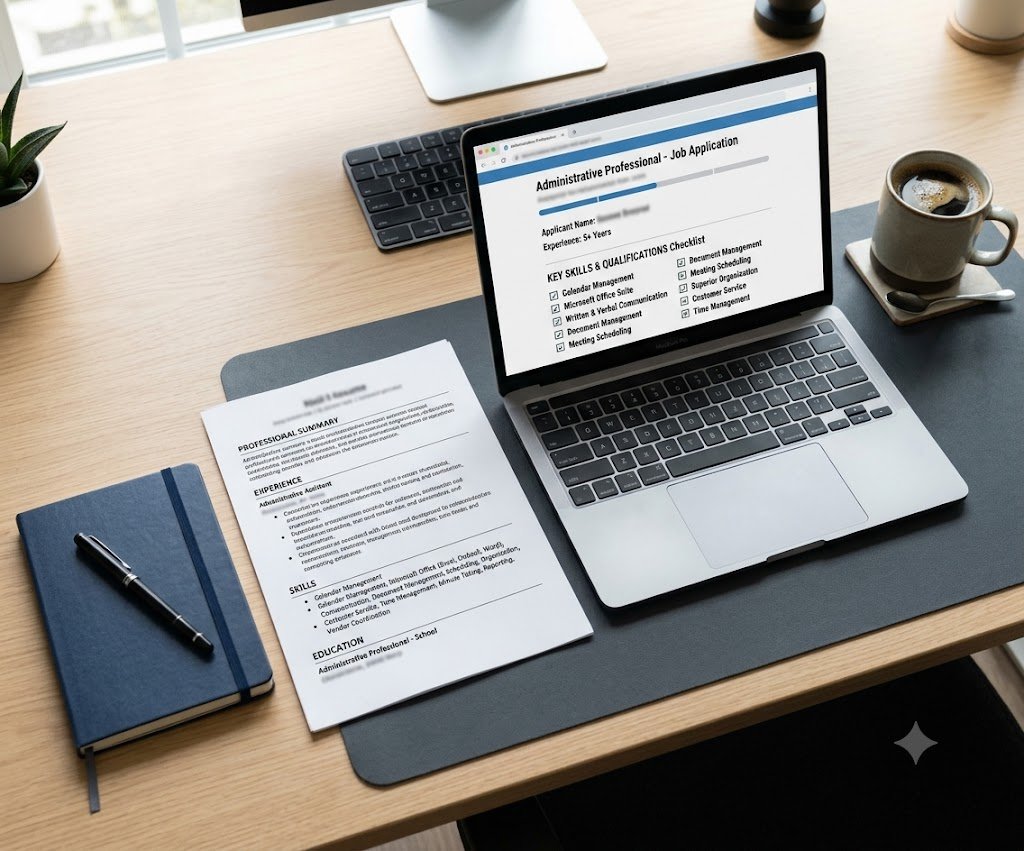
Highlight Relevant Administrative Skills
Most employers now use Applicant Tracking Systems (ATS) to screen resumes before a hiring manager ever sees them, so including relevant keywords can meaningfully improve your chances of getting through.
Examples of resume skills include:
- Administrative support
- Calendar management
- Scheduling
- Microsoft Office
- Google Workspace
- Data entry
- Document management
- Records management
- Customer service
- Business communication
- Meeting coordination
- Travel coordination
- Time management
- Organization
- Problem-solving
- Attention to detail
Just be sure to only include skills you’ve genuinely used in a professional setting.
Design Your Resume for Each Job
Administrative roles vary quite a bit from employer to employer, so it’s worth avoiding the temptation to send the exact same resume to every company.
Before applying:
- Read the job description carefully.
- Identify important skills and responsibilities.
- Match your experience to those requirements.
- Include relevant keywords naturally throughout your resume.
- Highlight accomplishments that relate directly to the position.
A customized resume shows the employer that you actually understand what they need, rather than sending a generic application.
How to Explain Administrative Experience in an Interview
Interviewers often ask candidates to describe their administrative experience as a way to evaluate communication skills, organization, and workplace problem-solving all at once.
Preparing a few solid examples in advance can help you answer these questions with much more confidence.
Use the STAR Method
A simple, reliable way to structure interview answers is the STAR method:
- Situation: Explain the background.
- Task: Describe your responsibility.
- Action: Explain what you did.
- Result: Share the outcome.
This structure keeps your answers organized and clearly demonstrates the impact you had in the role.
Sample Interview Answer
Question: Describe your administrative experience.
Example Answer: “In my previous role, I supported a department of 15 employees by managing calendars, scheduling meetings, maintaining digital records, preparing weekly reports, and coordinating communication between departments. I also introduced a shared filing system that reduced document retrieval time and improved collaboration across the team. These responsibilities strengthened my organizational, communication, and time management skills.”
This kind of answer explains your responsibilities while also demonstrating measurable value to the interviewer.
Common Administrative Interview Questions
Employers frequently ask questions such as:
- Describe your administrative experience.
- How do you prioritize multiple tasks?
- Tell me about a time you solved an office problem.
- How do you manage confidential information?
- Which office software programs are you most comfortable using?
- How do you stay organized during busy periods?
- Describe a difficult scheduling conflict and how you resolved it.
- How do you communicate with different departments?
Preparing thoughtful examples for these questions ahead of time can significantly improve your confidence during the actual interview.
Interview Tips for Administrative Roles
Before your interview:
- Review the job description.
- Research the company.
- Prepare examples of your achievements.
- Practice explaining your administrative responsibilities.
- Bring copies of your resume.
- Be ready to discuss the software you have used.
- Demonstrate professionalism and confidence.
Employers consistently value candidates who communicate clearly and stay organized even under pressure.
Frequently Asked Questions About Administrative Experience
What is an example of administrative experience?
Administrative experience includes responsibilities such as managing calendars, scheduling appointments, maintaining business records, preparing reports, organizing meetings, handling emails, coordinating travel arrangements, and supporting daily office operations.
Does customer service count as administrative experience?
Yes. Customer service roles often involve scheduling appointments, maintaining customer records, responding to emails, preparing reports, and coordinating communication, which develops many of the same skills employers look for in administrative hires.
Does retail experience count as administrative experience?
It can. Retail supervisors and store managers often create employee schedules, maintain inventory records, prepare reports, process paperwork, and coordinate daily operations, all of which count as valuable administrative experience.
Can volunteer work be considered administrative experience?
Yes. Volunteer work can build real administrative skills if you organize events, manage schedules, maintain records, coordinate communication, prepare documents, or support organizational operations in any capacity.
How do I get administrative experience with no experience?
You can start by:
- Applying for entry-level office jobs.
- Completing internships.
- Volunteering with nonprofit organizations.
- Learning Microsoft Office and Google Workspace.
- Taking online administrative courses.
- Building organizational and communication skills.
Each of these paths can help you qualify for your first administrative position, even without prior formal experience.
What skills do employers look for in administrative professionals? The most common skills include:
- Organization
- Communication
- Time management
- Attention to detail
- Microsoft Office proficiency
- Problem-solving
- Customer service
- Teamwork
- Adaptability
- Record management
- Calendar management
Developing these skills steadily over time can meaningfully improve your job opportunities.
Is administrative experience the same as office experience? Not always. Office experience simply means you’ve worked in an office environment, while administrative experience specifically involves supporting business operations through tasks like scheduling, communication, record management, document preparation, and organizational support.
Conclusion
Administrative experience is much more than answering phones or filing paperwork. At its core, it is the ability to keep people, information, and daily business operations organized so that an organization can work efficiently. Whether your experience comes from an office, a retail store, a school, a hospital, or a customer-facing role, the skills you’ve developed are often far more transferable than you might realize.
One thing becomes clear after reviewing employer expectations across industries: hiring managers consistently value organization, communication, reliability, problem-solving, and the ability to support teams effectively. Your job title matters far less than the responsibilities you’ve handled and the results you’ve achieved. That’s why presenting your experience with specific examples and measurable accomplishments can make a significant difference during the hiring process.
If you’re updating your resume or preparing for interviews, take time to identify the administrative tasks you’ve already performed instead of focusing only on your official position. You may have more relevant experience than you think. Continue building your technical skills, stay comfortable with modern workplace software, and keep documenting your achievements. Those small improvements can strengthen your resume today while creating opportunities for career growth in the future.