
Does Polyester Shrink? How to Shrink Polyester Safely Without Damaging It
You pull your favorite polyester shirt out of the dryer and suddenly wonder, “Did this just shrink?” Or maybe you bought a hoodie that’s just a little too big and are hoping you can shrink it for a better fit.
It’s a common question, and it’s easy to see why there’s so much conflicting advice online. Some people say polyester never shrinks, while others claim one hot wash can ruin it. The truth lies somewhere in between.
If you’ve washed polyester clothing for years, you’ve probably noticed that most garments keep their shape surprisingly well. However, after repeated exposure to high heat or a mistake like using the hottest dryer setting you may notice slight shrinkage, loss of shape, or damage to the fibers. In our experience reviewing garment care recommendations and comparing different polyester fabrics, the biggest problem isn’t that polyester shrinks easily. It’s that many people accidentally expose it to more heat than it was designed to handle.
The good news is that polyester is one of the most shrink-resistant fabrics available. With the right washing and drying methods, most garments will maintain their original fit for years. And if you actually want to make an oversized polyester garment slightly smaller, there are safe ways to do that too.
In this guide, you’ll learn when polyester shrinks, why it happens, how much shrinkage you can realistically expect, and the safest ways to wash, dry, and care for polyester clothing without damaging it.
Our research process: To prepare this guide, we reviewed textile manufacturing principles, fiber science references, garment care recommendations, and advice from recognized textile organizations. We also compared how leading apparel brands instruct customers to wash and dry polyester garments to ensure the recommendations reflect real-world care practices.
| Question | Answer |
| Does polyester shrink? | Yes, but only when exposed to high heat. |
| Does 100% polyester shrink? | Rarely. It is highly resistant to shrinkage. |
| Does polyester shrink in hot water? | Sometimes, especially after repeated exposure to high temperatures. |
| Does polyester shrink in the dryer? | Yes. High dryer heat is the most common cause of polyester shrinkage. |
| Does polyester shrink in cold water? | No. Cold water is the safest option for washing polyester. |
| Can you intentionally shrink polyester? | Yes, but results vary depending on the fabric blend and heat used. |
Key Takeaways
✅ Polyester can shrink, but only when exposed to high heat.
✅ 100% polyester is much more shrink-resistant than polyester blends.
✅ High dryer temperatures are more likely to cause shrinkage than washing alone.
✅ Polyester-cotton and polyester-rayon blends shrink more easily than pure polyester.
✅ Washing in cold or warm water and drying on low heat helps preserve the garment’s original fit.
What Is Polyester?
Polyester is a synthetic fabric made from petroleum-based polymers, and the most common type used in clothing is polyethylene terephthalate (PET). Unlike natural fibers such as cotton, wool, or linen, polyester is manufactured through a chemical process instead of being grown or harvested.
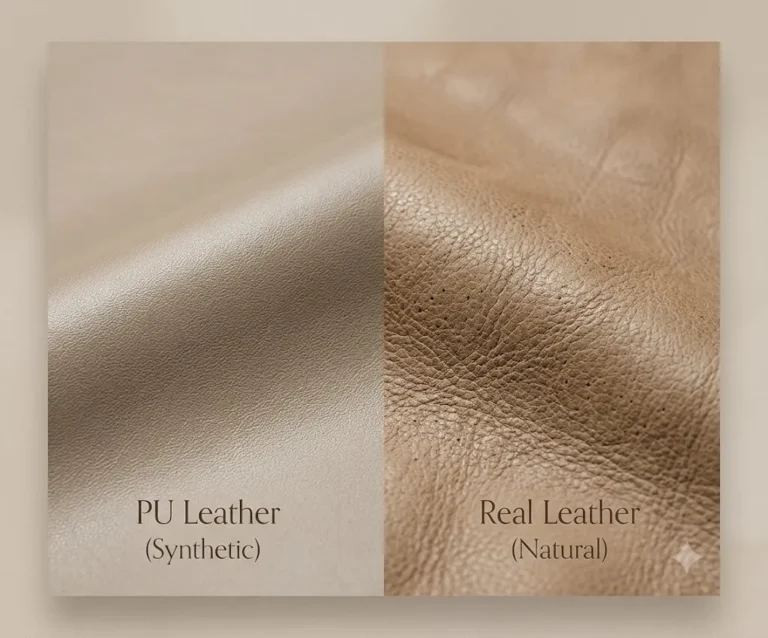
The fabric first became popular in the 1940s because it was durable, wrinkle-resistant, and easy to maintain, and today, polyester is the most widely used textile fiber in the world. According to Textile Exchange’s Materials Market Report, polyester remains the world’s most widely produced fiber, accounting for more than half of global fiber production. Its popularity comes from its durability, affordability, and ability to retain its shape after repeated use, and it’s commonly found in everyday clothing, activewear, uniforms, blankets, curtains, upholstery, and home textiles. Polyester fabric is also the most common backing layer in PU leather, where a polyurethane coating is applied over the woven base.
One reason polyester is so popular is its ability to hold its shape. The fibers are heat-set during manufacturing, making them more stable than many natural fabrics, and as a result, polyester resists shrinking, stretching, and wrinkles under normal washing conditions.
Many manufacturers also blend polyester with other fibers such as cotton, rayon, or spandex. These blends combine polyester’s durability with the comfort, softness, or flexibility of other materials.
Some common properties of polyester include:
- Strong and durable
- Resistant to wrinkles
- Dries quickly
- Lightweight
- Resistant to mildew and most insects
- Holds color well after repeated washing
- Less likely to shrink than natural fabrics
Although polyester is highly resistant to shrinkage, it’s not completely immune, and understanding how heat affects the fibers is the key to caring for polyester correctly.
Did You Know? Polyester is often blended with natural fibers such as cotton or rayon to improve softness and comfort while maintaining wrinkle resistance and durability. In many cases, it’s the natural fiber in the blend, not the polyester that contributes most to fabric shrinkage.
Does Polyester Shrink?
Yes, polyester can shrink under certain conditions, though it doesn’t shrink as easily as natural fabrics like cotton, wool, or rayon.
Textile care experts generally agree that polyester is much more resistant to shrinkage than natural fibers such as cotton or wool because the fibers are heat-set during manufacturing. However, excessive heat from washing, drying, or ironing can still affect the fabric over time.
Under normal washing conditions, polyester keeps its original size and shape. Washing with cold or warm water and drying on low heat usually causes little to no shrinkage, since polyester fibers are designed to remain stable after they’re heat-set during manufacturing.
However, high temperatures can still affect polyester. Repeated exposure to hot water, high dryer settings, steam, or direct ironing may cause the fibers to contract slightly, and in some cases, excessive heat can also warp or damage the fabric instead of shrinking it evenly.
Several factors determine whether polyester will shrink.
Fabric Composition
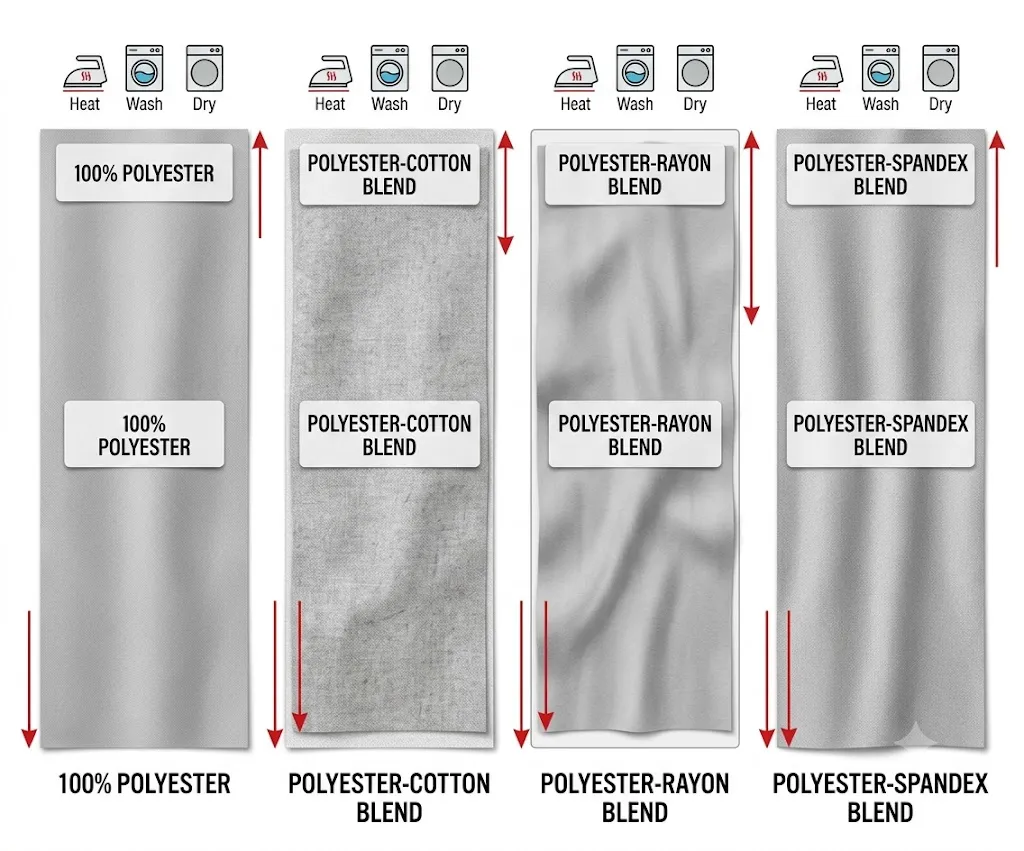
The fiber content plays a major role in shrinkage. 100% polyester has the highest resistance to shrinking. Polyester-cotton blends are more likely to shrink because cotton naturally contracts when exposed to heat and moisture, and polyester-rayon blends may shrink even more because rayon is less dimensionally stable. Polyester-spandex blends usually resist shrinking, but excessive heat can damage the elastic fibers and affect the garment’s fit. In general, the higher the percentage of polyester, the lower the chance of noticeable shrinkage.
Fabric Construction
How the fabric is made also affects shrinkage. Woven polyester fabrics are tightly constructed and usually hold their size well, while knitted polyester fabrics have more stretch and flexibility. Because of this, knits may experience slightly more shrinkage or shape changes when exposed to high heat.
Heat Exposure
Heat is the biggest factor that causes polyester to shrink. Polyester usually remains stable when washed in cool or warm water, but repeated washing in hot water or drying on high heat can gradually reduce the size of some garments. If the temperature becomes too high, polyester is more likely to lose its shape or become damaged before it experiences significant shrinkage.
How Much Does Polyester Shrink?
Most polyester garments experience little to no shrinkage when cared for properly. Here is a general guide:
| Fabric Type | Typical Shrinkage |
| 100% Polyester | 0–2% |
| Polyester-Cotton Blend | 2–5% |
| Polyester-Rayon Blend | 3–7% |
| Polyester-Spandex Blend | Usually minimal, but elastic fibers may weaken under high heat |
Actual results may vary depending on the fabric quality, manufacturing process, and care instructions provided by the manufacturer.
Does Polyester Shrink After Every Wash?
No, polyester does not continue shrinking every time you wash it. Unlike untreated natural fibers, polyester is heat-set during manufacturing, and this process gives the fibers excellent dimensional stability, helping the fabric keep its original shape after repeated washing.
If a polyester garment shrinks slightly because of excessive heat, additional shrinkage is usually minimal unless it continues to be washed or dried on high heat. To help polyester maintain its size:
- Wash in cold or warm water.
- Use a gentle or permanent press cycle.
- Dry on low heat or air dry whenever possible.
- Follow the care label instructions.
Why Does Polyester Shrink?
Polyester is designed to resist shrinking, but heat can still change the structure of the fibers. During manufacturing, polyester fibers are stretched and heat-set, and this process locks the fibers into a stable shape and improves their durability. As long as the fabric is used within normal washing and drying temperatures, it keeps its original size.
Problems begin when polyester is exposed to excessive heat. Hot water, high dryer temperatures, steam, or direct ironing can soften the fibers, and when this happens, the fibers may relax and contract slightly, causing the fabric to shrink. If the temperature becomes too high, the fibers may become permanently distorted or even start to melt.
Unlike cotton, polyester does not absorb much water, which means moisture alone is not responsible for shrinkage, instead, heat is the main cause. Several conditions can increase the risk of shrinkage:
- Washing in very hot water
- Using the highest dryer setting
- Ironing without a protective cloth
- Repeated exposure to high temperatures
- Ignoring the garment’s care label
Following the recommended care instructions is the easiest way to prevent accidental shrinkage and extend the life of your polyester clothing.
Does 100% Polyester Shrink?
100% polyester is the most shrink-resistant type of polyester fabric, and under normal washing and drying conditions, it usually keeps its original size, shape, and fit.
Most manufacturers heat-set pure polyester during production, and this process stabilizes the fibers and helps the fabric resist shrinking, stretching, and wrinkles. If you wash a 100% polyester shirt in cold or warm water and dry it on low heat, you’re unlikely to notice any shrinkage.
However, 100% polyester is not completely shrink-proof. Very high temperatures can still affect the fibers, and washing with hot water, drying on the highest heat setting, or pressing the fabric with a hot iron may cause slight shrinkage or permanent damage. Instead of shrinking evenly like cotton, polyester may lose its shape if exposed to excessive heat for a long time.
To keep 100% polyester looking new:
- Wash with cold or warm water.
- Use a gentle or permanent press cycle.
- Tumble dry on low heat or air dry.
- Iron only on a low heat setting if needed.
- Always follow the care label instructions.
When cared for correctly, a 100% polyester garment can maintain its original fit through many wash cycles.
Buying Tip: If you’re shopping for a garment made from 100% polyester, you usually don’t need to size up just because you’re worried about shrinkage. Most polyester clothing keeps its original fit when washed according to the care label. However, if the garment contains cotton or rayon, check the fabric composition, since blended fabrics may shrink slightly after repeated exposure to heat.
Does Polyester Blends Shrink?
Yes, polyester blends are generally more likely to shrink than 100% polyester. The amount of shrinkage depends on the other fibers mixed with polyester, and while polyester itself resists shrinking, natural and semi-synthetic fibers often react differently to heat and moisture.
Polyester-Cotton Blend
A polyester-cotton blend is one of the most common fabric combinations. Cotton naturally shrinks when exposed to hot water and high dryer temperatures, and even though polyester helps improve dimensional stability, the cotton fibers can still contract. As a result, polyester-cotton garments are more likely to shrink than pure polyester, especially if washed or dried on high heat.
Polyester-Rayon Blend
Rayon is less stable than polyester and tends to shrink more easily. When rayon is blended with polyester, the finished fabric becomes softer and more comfortable, but it also becomes more sensitive to heat and moisture. Polyester-rayon blends often require extra care during washing and drying to prevent unwanted shrinkage.
Polyester-Spandex Blend
Polyester-spandex fabrics are commonly used in sportswear, leggings, and fitted clothing, and these fabrics usually don’t shrink much. However, high temperatures can weaken the spandex fibers and reduce the garment’s stretch over time, so instead of noticeable shrinkage, the clothing may lose its original shape or elasticity.
How to Tell if Your Polyester Is a Blend
Not all polyester garments are made from 100% polyester, many clothing items combine polyester with other fibers to improve comfort, stretch, or breathability. The easiest way to identify a polyester blend is by checking the garment’s care label, since most labels list the fiber content as a percentage.
For example:
- 100% Polyester
- 65% Polyester, 35% Cotton
- 60% Polyester, 40% Rayon
- 90% Polyester, 10% Spandex
Knowing the fiber composition helps you choose the correct washing and drying method. As a general rule: more polyester means less shrinkage, while more natural fibers means a greater chance of shrinkage.
Does Polyester Shrink in Hot Water?
Yes, polyester can shrink in hot water, but it usually takes high temperatures to make this happen. Unlike cotton, polyester is a synthetic fiber that’s designed to resist shrinking, and a single wash in warm water is unlikely to change the size of your garment.
However, repeated washing in very hot water can affect the fibers over time. High temperatures may cause slight shrinkage or change the garment’s shape, and in some cases, the fabric may become stiff or lose its smooth finish instead of shrinking evenly.
If your goal is to keep polyester in its original size, it’s best to wash it in cold or warm water. Most manufacturers recommend following the care label because different polyester blends react differently to heat.
Polyester does not shrink in cold water under normal washing conditions. Cold water is the safest option because it protects the fibers while helping preserve colors and extending garment life.
Water Temperature and Its Effect on Polyester
| Water Temperature | Effect on Polyester |
| Cold Water (60–80°F / 15–27°C) | Safest option. No noticeable shrinkage. |
| Warm Water (90–110°F / 32–43°C) | Safe for most polyester garments. |
| Hot Water (120–140°F / 49–60°C) | Slight shrinkage may occur after repeated washes. |
| Very Hot Water (Above 140°F / 60°C) | Higher risk of shrinkage, distortion, or heat damage. |
Quick Tip: If you are unsure, always choose cold water. It protects the fabric, preserves colors, and helps your clothes last longer.
Does Polyester Shrink in the Dryer?
Yes, polyester can shrink in the dryer if it’s exposed to high heat for a long time. The dryer is actually more likely to shrink polyester than the washing machine because it uses continuous heat, and although polyester is heat-resistant, very high dryer temperatures can cause the fibers to contract slightly.
For everyday care, use a low heat or permanent press setting, since these settings remove moisture without exposing the fabric to excessive heat. If you accidentally dry polyester on the highest heat setting once, the garment may not shrink noticeably, but repeated drying on high heat can gradually change its size or shape.
Dryer Settings for Polyester
| Dryer Setting | Recommended? | Result |
| Air Dry | ✔ Best | No shrinkage |
| Low Heat | ✔ Recommended | Safe for most garments |
| Medium Heat | ✔ Acceptable | Low risk |
| High Heat | ✘ Not Recommended | May cause shrinkage or damage |
What about sportswear? Many athletic shirts, running shorts, and workout clothes are made from polyester or polyester-spandex blends. To protect moisture-wicking performance and elasticity, manufacturers generally recommend drying these garments on low heat or allowing them to air dry. High dryer temperatures may not only cause slight shrinkage but can also reduce the lifespan of elastic fibers.
Tips to Prevent Polyester from Shrinking in the Dryer
- Remove the garment while it is still slightly damp.
- Avoid the highest heat setting.
- Dry similar fabrics together.
- Turn printed shirts inside out before drying.
- Check the care label before using the dryer.
Air drying is still the safest option if you want your polyester clothing to keep its original fit.
Recommended Dryer Settings for Polyester
| Dryer Setting | Safe for Polyester? |
| Air Dry | ✅ Best Choice |
| Low Heat | ✅ Recommended |
| Medium Heat | ✅ Usually Safe |
| High Heat | ⚠ Use Only If Intentionally Shrinking |
| Extra High Heat | ❌ Not Recommended |
Does Polyester Shrink in the Washing Machine?
Polyester rarely shrinks in the washing machine alone. Most washing machines don’t generate enough heat to cause significant shrinkage, especially when you use a cold or warm wash cycle.
Problems usually occur when the water is extremely hot, the garment is washed repeatedly on high-temperature cycles, or the clothing is dried immediately on high heat. For most polyester clothing, the washing machine is not the main cause of shrinkage, instead, the dryer is usually responsible for any noticeable size changes.
Best Washing Machine Settings for Polyester
| Setting | Recommendation |
| Water Temperature | Cold or Warm |
| Wash Cycle | Gentle or Permanent Press |
| Spin Speed | Medium |
| Detergent | Mild Liquid Detergent |
These settings help protect the fibers while keeping the garment clean.
Does Polyester Shrink in Steam?
Steam alone is unlikely to shrink polyester under normal conditions, since garment steamers are designed to relax wrinkles rather than change the size of the fabric. However, prolonged exposure to high temperatures from industrial steam equipment or steam combined with direct ironing may slightly affect polyester fibers. Always use the temperature recommended on the care label.
| Goal | Best Method |
| Prevent shrinkage | Cold wash + air dry |
| Slight shrinkage | Hot wash + medium dryer |
| Maximum shrinkage | Boiling (carefully) |
| Protect sportswear | Air dry |
| Preserve printed shirts | Wash inside out + low heat |
How Can You Shrink Polyester?
Sometimes a polyester shirt or hoodie feels slightly too large, and if that’s the case, you may want to shrink it intentionally. Keep in mind that polyester does not shrink as easily as cotton, the process requires controlled heat, and the results may vary depending on the fabric blend and construction.
Before trying any method:
- Read the care label.
- Check whether the fabric is 100% polyester or a blend.
- Understand that shrinking may be permanent.
- Stop the process once you reach the desired fit.
Use a Washing Machine
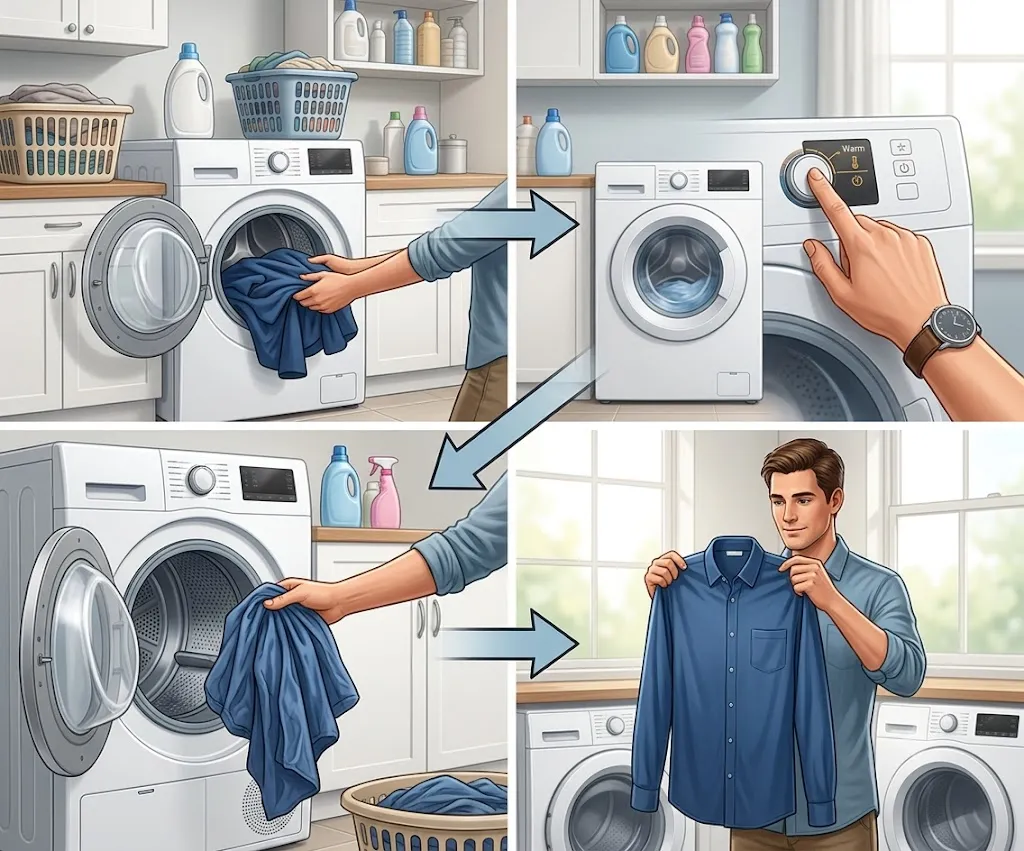
Using a washing machine is one of the safest ways to shrink polyester slightly.
Steps
- Turn the garment inside out.
- Wash it using the hottest water recommended on the care label.
- Select the longest wash cycle.
- Avoid fabric softener during the shrinking process.
- Check the size after washing.
If the garment is still too large, continue with the dryer method below.
Use a Dryer
The dryer is often the most effective way to shrink polyester.
Steps
- Place the damp garment in the dryer.
- Choose a medium or high heat setting.
- Dry for one full cycle.
- Remove the garment and check the fit.
- Repeat only if necessary.
Avoid running multiple high-heat cycles without checking the garment, since too much heat can weaken the fibers instead of shrinking them evenly.
Boil the Fabric
Boiling is sometimes used when maximum shrinkage is needed. This method should only be used on plain polyester garments without delicate prints, coatings, or decorations.
Steps
- Fill a large pot with enough water to cover the garment.
- Bring the water to a gentle boil.
- Place the garment into the hot water carefully.
- Leave it in the water for 20–30 minutes.
- Remove it carefully and let it cool slightly.
- Dry it on medium heat if additional shrinkage is needed.
Warning: Boiling may affect fabric texture, color, or printed designs.
Use an Iron
Ironing can provide a small amount of additional shrinkage, but it should be done carefully, since high heat can melt polyester fibers.
Steps
- Wash the garment first.
- Leave it slightly damp.
- Place a pressing cloth over the fabric.
- Set the iron to the Polyester or Low Heat setting.
- Move the iron continuously without holding it in one place.
Never place a hot iron directly on polyester for long periods.
How to Wash Polyester Properly
Proper washing helps polyester keep its size, color, and appearance for years, and fortunately, polyester is one of the easiest fabrics to maintain.
Follow the Care Label
Always read the care label before washing your clothing. The label tells you the water temperature, washing method, dryer settings, ironing temperature, bleach warnings, and dry cleaning instructions. Following these instructions is the easiest way to prevent accidental shrinkage.
Pretreat Stains
Before washing, inspect the garment for stains, paying extra attention to collars, cuffs, underarms, and food stains. Apply a small amount of stain remover or mild detergent and let it sit for a few minutes before washing. Avoid soaking polyester for long periods, since unnecessary soaking can reduce the fabric’s lifespan.
Wash the Clothes Properly
Wash polyester with similar colors, choosing cold or warm water, mild detergent, and a gentle or permanent press cycle. Avoid using excessive bleach, since it may weaken the fibers or damage the fabric’s finish. Turning garments inside out also helps protect prints and colors.
Does Polyester Shrink in Direct Sunlight?
No, sunlight alone does not usually shrink polyester. Unlike a dryer or hot iron, direct sunlight does not generate enough heat to shrink polyester fibers under normal conditions. However, leaving polyester clothing in strong sunlight for long periods may fade colors and gradually weaken the fabric.
For the best results, air dry polyester in a shaded, well-ventilated area instead of placing it under direct sunlight for several hours.
Dry Your Clothes Carefully
Polyester dries quickly, so it usually doesn’t need long dryer cycles. For the best results:
- Air dry whenever possible.
- Use low heat if using a dryer.
- Remove garments promptly after drying.
- Hang clothing to reduce wrinkles.
Proper drying not only prevents shrinkage but also helps maintain the garment’s original shape.
Can You Reverse Polyester Shrinkage?
Sometimes, but only if the shrinkage is minor. If your polyester garment has shrunk slightly, you may be able to improve its fit by gently stretching the fabric while it’s still damp. Here’s how:
- Wash the garment in cool water.
- Lay it flat on a clean towel.
- Gently stretch the fabric back toward its original shape.
- Let it air dry while keeping it flat.
Keep in mind that this method only works for slight shrinkage. If the fibers have been permanently damaged by excessive heat, the garment usually cannot be restored to its original size.
Polyester vs. Cotton: Which Fabric Shrinks More?
Both polyester and cotton are popular fabrics, but they react very differently to heat and moisture.
Cotton shrinks much more than polyester because it’s a natural fiber. During manufacturing, cotton fibers are stretched, and when exposed to hot water or high dryer temperatures, the fibers relax and return closer to their original size, causing the fabric to shrink.
Polyester, on the other hand, is a synthetic fiber that’s heat-set during manufacturing, which helps it keep its shape. Under normal washing conditions, polyester rarely shrinks.
If you want clothing that keeps its original fit after many washes, polyester is usually the better choice. However, if softness and breathability are your top priorities, cotton may be a better option.
Polyester vs. Cotton Shrinkage
| Feature | Polyester | Cotton |
| Shrink Resistance | Excellent | Moderate to Low |
| Reaction to Hot Water | Slight shrinkage possible | High chance of shrinking |
| Dryer Performance | Safe on low heat | Can shrink on high heat |
| Wrinkle Resistance | Excellent | Moderate |
| Easy to Care For | Yes | Requires more care |
Overall, polyester is far more resistant to shrinking than cotton.
Common Mistakes That Cause Polyester to Shrink
Polyester is durable, but improper care can still damage the fibers. Avoid these common mistakes to keep your clothes looking new.
Washing in Very Hot Water
Hot water is one of the biggest causes of polyester shrinkage. Instead, choose cold or warm water unless the care label says otherwise.
Using High Dryer Heat
Many people automatically choose the highest dryer setting. This may shorten drying time, but it also increases the risk of shrinkage, fabric distortion, and heat damage. Low heat is a much safer option.
Ignoring the Care Label
Every garment is different, and some polyester items contain cotton, rayon, or spandex, which may require special care. Always read the care instructions before washing or drying.
Ironing on High Heat
Polyester does not tolerate excessive ironing temperatures. Using a hot iron directly on the fabric can melt the fibers or leave shiny marks. Always use a low heat setting and place a pressing cloth between the iron and the garment.
Drying Clothes for Too Long
Even low heat can affect polyester if the clothing stays in the dryer longer than necessary. Remove garments as soon as they are dry.
Polyester Care Cheat Sheet
| Do | Don’t |
| Wash in cold water | Wash repeatedly in hot water |
| Dry on low heat | Use extra-high dryer heat |
| Read the care label | Ignore fabric blends |
| Use low iron | Iron on cotton setting |
| Air dry when possible | Leave in hot dryer too long |
References
- Textile Exchange – Materials Market Report
- American Cleaning Institute – Laundry Care Guidance
- FTC – Textile Fiber Products Identification Act
Note: Because polyester fabrics vary by weave, blend, and finishing process, always follow the care instructions printed on your garment’s label.
Frequently Asked Questions
Does polyester shrink after washing?
Usually, no. Polyester keeps its shape after normal washing. However, repeated washing in very hot water may cause slight shrinkage.
Does polyester shrink in the dryer?
Yes. High dryer temperatures can cause polyester to shrink slightly or lose its shape. Using low heat helps prevent this.
Does 100% polyester shrink?
Pure polyester is highly resistant to shrinking. It may shrink slightly under extreme heat, but normal washing and drying rarely change its size.
Does polyester shrink in hot water?
It can. Hot water above normal washing temperatures may cause slight shrinkage, especially after repeated washes.
Does polyester shrink in cold water?
No. Cold water is the safest choice for washing polyester and helps maintain its original size.
Does polyester shrink more than cotton?
No. Cotton shrinks much more than polyester because it is a natural fiber.
Can you intentionally shrink polyester?
Yes. Washing the garment in hot water and drying it on high heat may shrink polyester slightly. However, the results vary depending on the fabric blend and construction.
Does polyester shrink every time you wash it?
No. Once polyester has shrunk slightly, it usually remains stable if washed according to the care instructions.
Can polyester stretch back after shrinking?
Sometimes. A small amount of shrinkage may be improved by gently stretching the damp fabric while it dries. However, permanent shrinkage cannot always be reversed.
Does polyester melt before it shrinks?
At extremely high temperatures, polyester can soften or melt instead of shrinking evenly. This is why direct heat from a hot iron or excessive dryer temperatures should be avoided.
Does polyester shrink during dry cleaning?
Professional dry cleaning usually does not shrink polyester because it avoids the hot water used in regular washing.
Can polyester be ironed?
Yes. Use the lowest heat setting recommended for synthetic fabrics. Placing a pressing cloth between the iron and the garment provides extra protection.
Does polyester wrinkle easily?
No. One of polyester’s biggest advantages is its natural wrinkle resistance. Most wrinkles disappear after hanging the garment or using a garment steamer.
Does polyester absorb water?
Polyester absorbs very little moisture compared to natural fibers. Instead, it moves moisture away from the skin, making it a popular choice for activewear.
How do you keep polyester from shrinking?
To prevent shrinkage: wash with cold or warm water, use a gentle or permanent press cycle, dry on low heat or air dry, avoid overheating when ironing, and always follow the care label.
Final Verdict
So, does polyester shrink? Yes, but only under the right conditions.
After reviewing textile care guidance, manufacturer recommendations, and the way different polyester fabrics respond to heat, one conclusion is consistent: polyester is far more resistant to shrinkage than most natural fabrics, but it isn’t completely immune to excessive heat.
In practical use, most people won’t notice any significant shrinkage if they wash polyester in cold or warm water and dry it on low heat. The problems usually begin when garments are repeatedly exposed to very hot water, high dryer temperatures, or direct ironing without proper care.
If you’re trying to preserve the original fit of your clothes, following the care label is still the simplest and most effective advice. On the other hand, if you intentionally want to reduce the size of an oversized polyester garment, controlled heat can produce slight shrinkage but patience is important because polyester responds much more slowly than cotton.
From a garment care perspective, polyester remains one of the easiest fabrics to own. Its wrinkle resistance, durability, quick-drying nature, and ability to retain its shape make it a dependable choice for everyday clothing, sportswear, and home textiles. In our view, understanding how heat affects polyester is the key to helping your clothes last longer and continue fitting the way you expect.