Who Pays Closing Costs? A Complete Guide for Home Buyers and Sellers (2026)
Buying a home is exciting, but many buyers are surprised by how much money they need beyond the down payment. One of the biggest reasons is closing costs. These fees often catch first-time buyers off guard because they aren’t always discussed early in the home-buying process.
After reviewing hundreds of real estate transactions, one pattern stands out: buyers rarely ask “Who pays closing costs?” until they’re close to signing the paperwork. By then, unexpected fees can create stress, delay the purchase, or even affect the buyer’s budget.
The good news is that closing costs don’t have to be confusing. Once you understand which expenses buyers usually pay, which costs sellers often cover, and which fees are negotiable, it’s much easier to prepare financially and avoid surprises on closing day.
In this guide, you’ll learn:
- What closing costs are
- Who typically pays them
- Which fees belong to buyers and sellers
- How negotiations can change who pays
- Practical ways to reduce your closing costs
By the end of this article, you’ll have a clear understanding of what to expect so you can approach closing day with confidence instead of uncertainty.
Closing Costs at a Glance
| Question | Quick Answer |
| Who pays closing costs? | Both buyers and sellers usually pay different closing costs. |
| How much do buyers pay? | Typically 2%–5% of the home’s purchase price. |
| Are closing costs negotiable? | Yes, many fees and seller concessions can be negotiated. |
| Can sellers help buyers? | Yes, sellers may agree to pay part of the buyer’s closing costs. |
| What documents should buyers review? | The Loan Estimate and Closing Disclosure. |
Quick Answer: Who Pays Closing Costs?
In most real estate transactions, both the buyer and the seller pay closing costs. Buyers generally pay mortgage-related expenses, while sellers usually pay costs related to transferring ownership. The exact breakdown depends on the purchase agreement, state laws, and local practices.
Some closing costs are negotiable, and a seller may agree to pay part of the buyer’s closing costs to help complete the sale. Because every transaction is different, there is no single rule that applies to every home purchase.
According to the Consumer Financial Protection Bureau, buyers should review their Loan Estimate early in the mortgage process to understand their expected closing costs. This document helps buyers compare lenders and estimate how much cash they’ll need before closing.
What Are Closing Costs?
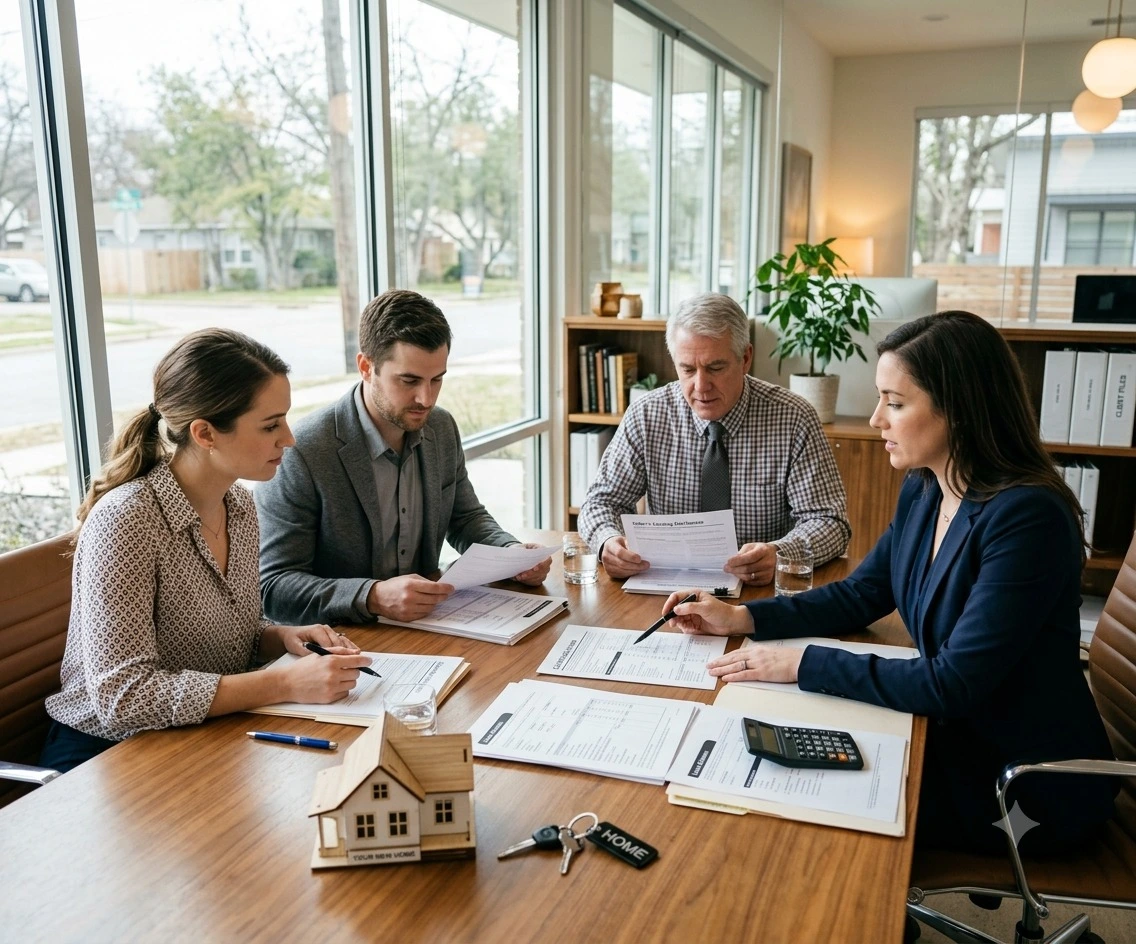
Closing costs are the fees and expenses required to complete a real estate transaction. They are paid at the closing meeting, where ownership of the property officially transfers from the seller to the buyer.
These costs cover the services needed to finalize the sale, including:
- Processing the mortgage
- Appraising the property’s value
- Verifying the property’s title
- Recording legal documents
- Paying certain taxes and insurance
- Completing the settlement process
Closing costs are separate from the home’s purchase price and down payment, which means buyers should plan for these expenses in addition to the money they put toward the home. For most buyers, closing costs typically range from 2% to 5% of the home’s purchase price, while seller closing costs can vary depending on the sale price, negotiated terms, and whether the seller pays real estate commissions or contributes toward the buyer’s costs.
The Consumer Financial Protection Bureau (CFPB) explains that closing costs include lender fees, third-party charges, prepaid expenses, and government fees. While some costs are fixed, others may vary depending on your lender, location, and loan type.
In the next section, we’ll break down who pays each closing cost and explain which expenses are usually the buyer’s responsibility and which are typically paid by the seller.
Down Payment vs. Closing Costs
Many first-time home buyers confuse closing costs with a down payment, but they are actually two different expenses. A down payment is the amount you pay toward the purchase price of the home, while closing costs are the fees required to complete the real estate transaction. These costs cover services such as loan processing, title work, legal paperwork, taxes, and insurance.
Both are paid before you receive the keys, but they serve very different purposes, as shown below.
| Down Payment | Closing Costs |
| Goes toward the home’s purchase price | Covers fees required to complete the transaction |
| Helps build equity in the home | Pays lender, title, legal, and government fees |
| Usually a percentage of the home’s price | Typically 2%–5% of the home’s purchase price |
| Paid by the buyer | Paid by both the buyer and seller, depending on the agreement |
Understanding the difference can help you estimate how much cash you’ll need before closing day and avoid unexpected expenses.
Who Pays Closing Costs?
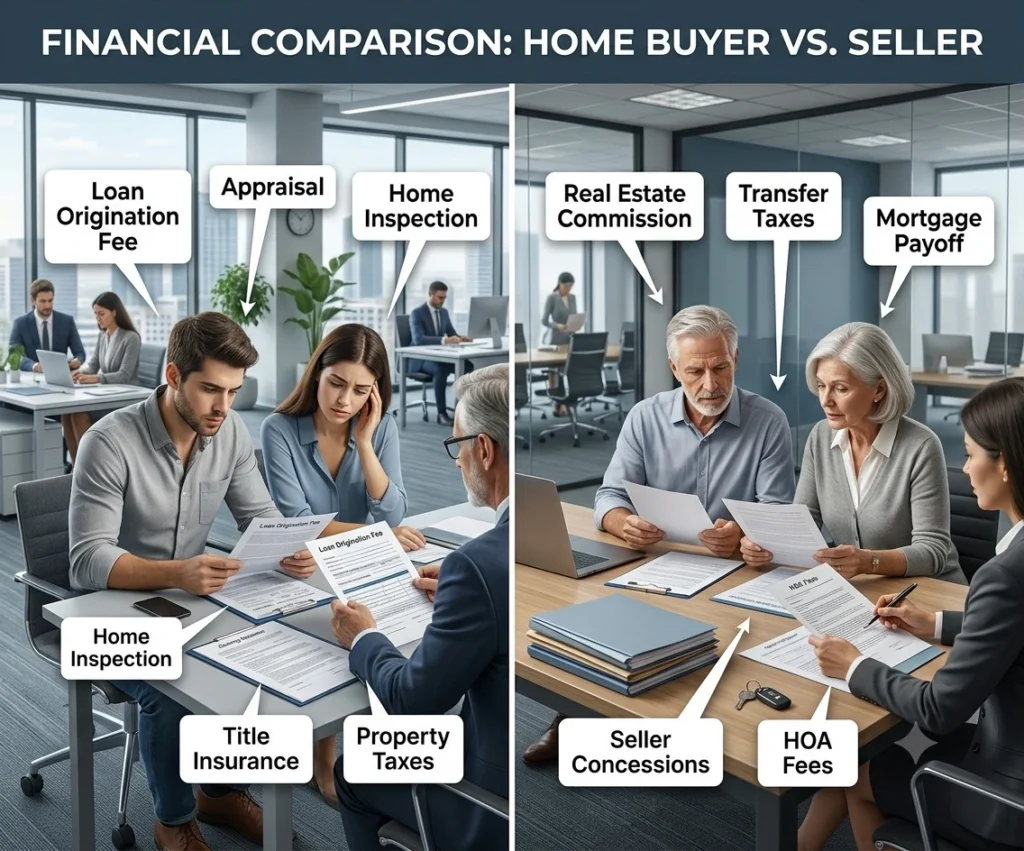
In a typical home sale, both the buyer and the seller pay closing costs, but they are responsible for different fees, and the final breakdown depends on the purchase agreement, state laws, and local real estate customs.
Buyer vs. Seller Closing Costs
| Buyer Usually Pays | Seller Usually Pays |
| Loan origination fee | Real estate agent commission (if agreed) |
| Appraisal fee | Transfer taxes (where required) |
| Credit report fee | Owner’s title insurance in some states |
| Home inspection | Mortgage payoff balance |
| Lender’s title insurance | Seller concessions (if negotiated) |
| Prepaid property taxes | Outstanding HOA fees (if applicable) |
| Homeowners insurance | Other transfer-related fees |
Keep in mind that this is a general guide. Some costs can be negotiated, and local practices may change who pays certain fees.
What Factors Affect Who Pays Closing Costs?
While buyers and sellers usually follow common real estate practices, the final breakdown of closing costs can vary from one transaction to another. Several factors help determine who pays which fees.
- Location: State laws and local customs often decide who typically pays certain costs, such as title insurance or transfer taxes.
- Loan Type: Conventional, FHA, VA, and USDA loans may have different rules regarding allowable fees and seller contributions.
- Purchase Agreement: Buyers and sellers can negotiate who pays specific closing costs before signing the contract.
- Market Conditions: In a buyer’s market, sellers may be more willing to pay part of the buyer’s closing costs, while in a seller’s market, buyers may pay a larger share to make their offer more competitive.
Understanding these factors helps explain why closing costs can vary from one home purchase to another, even if the homes have similar prices.
Closing Costs Buyers Usually Pay
Buyers are responsible for most costs related to financing the home purchase, since these fees help the lender approve the loan and complete the transaction. Common buyer closing costs include:
- Loan origination fee: Charged by the lender for processing the mortgage.
- Appraisal fee: Pays for a professional appraisal to confirm the home’s market value.
- Credit report fee: Covers the cost of checking the buyer’s credit history.
- Home inspection: Helps identify problems with the property before closing.
- Lender’s title insurance: Protects the lender against title issues.
- Prepaid taxes and homeowners insurance: Often collected at closing and placed into an escrow account.
Closing Costs Sellers Usually Pay
Sellers also pay several closing costs before the sale is complete, and these costs are generally deducted from the money they receive after selling the home. Common seller closing costs include:
- Real estate agent commission: Paid according to the listing agreement and any negotiated buyer-agent compensation.
- Transfer taxes: Required in some states when ownership changes.
- Mortgage payoff: Any remaining loan balance must usually be paid at closing.
- Seller concessions: Money the seller agrees to contribute toward the buyer’s closing costs.
- Outstanding HOA fees or property-related charges: These must typically be paid before the property is transferred.
Tips for Home Sellers
If you’re selling your home, ask your real estate agent for an estimate of your closing costs before accepting an offer. Understanding these expenses early can help you calculate your expected proceeds and avoid surprises at closing.
Why Do Buyers and Sellers Pay Different Costs?
The reason is fairly simple: each fee usually benefits one party more than the other. Buyers pay mortgage-related costs because they are borrowing money from a lender, while sellers pay transfer-related costs because they are transferring ownership of the property. Some fees, such as title services or escrow fees, may be shared or negotiated between both parties.
Understanding who pays each closing cost can help you prepare your budget and avoid surprises on closing day.
Are Closing Costs Negotiable?
Yes, many closing costs are negotiable. While some fees are fixed, others can be discussed between the buyer and the seller before closing. For example, a seller may agree to pay part of the buyer’s closing costs to make the offer more attractive, and buyers can compare lenders to find lower loan fees or better mortgage terms.
The final agreement depends on the local housing market, the purchase contract, and each party’s willingness to negotiate.
When Should You Ask for Seller Concessions?
You may have a better chance of negotiating seller concessions when:
- Homes are taking longer to sell.
- The local market favors buyers.
- The property needs repairs.
- The seller wants to close quickly.
In a competitive seller’s market, buyers may have fewer opportunities to negotiate closing costs.
How Much Are Closing Costs?
Closing costs vary based on the home’s purchase price, loan type, lender, and location. For buyers, closing costs typically range from 2% to 5% of the home’s purchase price, as shown in the simple example below.
| Home Purchase Price | Estimated Buyer Closing Costs (2%–5%) |
| $250,000 | $5,000–$12,500 |
| $350,000 | $7,000–$17,500 |
| $500,000 | $10,000–$25,000 |
Seller closing costs can be higher because they may include real estate commissions, transfer taxes, and negotiated seller concessions
Ways to Reduce Closing Costs
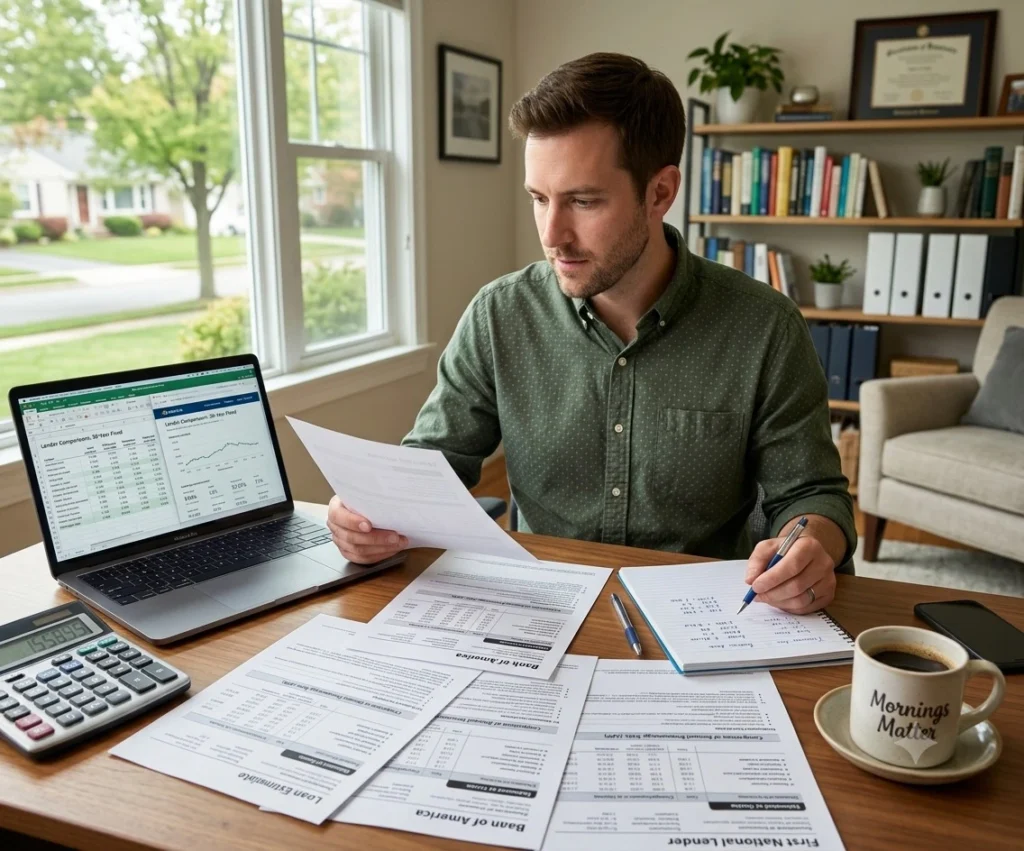
Although closing costs are a normal part of buying a home, there are several ways to lower what you pay. The Consumer Financial Protection Bureau recommends comparing Loan Estimates from multiple lenders, since even if the interest rate is similar, lender fees and closing costs can vary, making it worthwhile to shop around before choosing a mortgage.
If you’re buying a home on a tight budget, start planning for closing costs as early as possible. Many buyers focus only on saving for the down payment and overlook these additional expenses, so creating a complete home-buying budget can help you avoid financial surprises on closing day.
Expert Tip: Request Loan Estimates from at least three lenders before choosing a mortgage. Even if two lenders offer the same interest rate, their lender fees and closing costs may be different, and comparing offers can help you save hundreds or even thousands of dollars over the life of your loan.
Shop Around for Lenders
Not all lenders charge the same fees. Request Loan Estimates from multiple lenders and compare their interest rates, origination fees, and closing costs before making a decision. Don’t compare lenders based only on interest rates, since lender fees, discount points, and other closing costs can vary significantly between mortgage providers.
Ask for Seller Concessions
If the market favors buyers, ask the seller to contribute toward your closing costs. Many sellers agree to this if it helps complete the sale.
Compare Title and Settlement Services
In some states, buyers can choose their own title company or settlement provider, and comparing prices may help reduce title and escrow fees.
Improve Your Credit Score
A higher credit score can help you qualify for better loan terms and lower lender fees, so if you’re planning to buy a home, improving your credit before applying for a mortgage may save you money.
Review Your Loan Estimate Carefully
Always review your Loan Estimate before closing, and if you notice unexpected fees or charges, ask your lender for an explanation. Understanding every cost helps you avoid surprises on closing day.
Example: Who Pays Closing Costs?
Let’s look at a simple example. Imagine you’re buying a home for $400,000, and the buyer’s closing costs total $9,000. During negotiations, the seller agrees to contribute $4,000 toward those costs. In this case:
- The buyer pays $5,000 in closing costs.
- The seller pays $4,000 as a seller concession, along with their own closing expenses.
This example shows how negotiating can reduce the buyer’s upfront costs while helping both parties complete the transaction.
Closing Costs: Myth vs. Fact
There are many misconceptions about closing costs, and understanding the facts can help you make better financial decisions during the home-buying process.
| Myth | Fact |
| The buyer pays all closing costs. | Both the buyer and seller usually pay closing costs, but they pay different fees. |
| Closing costs are the same everywhere. | Closing costs vary by state, lender, loan type, and local real estate practices. |
| Closing costs cannot be negotiated. | Many fees and seller concessions can be negotiated before closing. |
| Cash buyers don’t pay closing costs. | Cash buyers avoid mortgage-related fees but still pay expenses such as title services, recording fees, and settlement costs. |
Common Closing Cost Mistakes to Avoid
- Saving only for the down payment.
- Not comparing Loan Estimates.
- Overlooking prepaid taxes and insurance.
- Assuming all lenders charge the same fees.
- Waiting until closing day to review documents.
People love mistake-based content.
Final Thoughts
If there’s one lesson I’ve seen repeated across real estate transactions, it’s that buyers who understand closing costs early are usually better prepared on closing day. They ask better questions, compare lenders more carefully, and are less likely to be surprised by unexpected expenses.
While the exact breakdown of closing costs varies by state, lender, loan type, and purchase agreement, one thing stays consistent: both buyers and sellers usually share the responsibility. Understanding who typically pays each fee gives you a stronger position when budgeting, comparing offers, and negotiating the terms of a home purchase.
Before closing, take time to review your Loan Estimate and Closing Disclosure, compare offers from multiple lenders, and ask for clarification if any fee seems unclear. A few extra questions today can save money and reduce stress tomorrow.
Whether you’re buying your first home or selling one you’ve owned for years, knowing how closing costs work helps you make informed decisions and move through the closing process with greater confidence.
Key Takeaways
- Both buyers and sellers usually pay closing costs.
- Buyer closing costs typically range from 2% to 5% of the home’s purchase price.
- Buyers mainly pay mortgage-related fees.
- Sellers usually pay transfer-related costs and any negotiated concessions.
- Many closing costs are negotiable.
- Comparing lenders and reviewing your Loan Estimate can help reduce your costs.
Understanding your closing costs before closing day makes it easier to budget and negotiate with confidence.
Frequently Asked Questions About Closing Costs
The questions below answer some of the most common concerns buyers and sellers have before closing day.
Does the Buyer Always Pay the Closing Costs?
No. In most real estate transactions, both the buyer and the seller pay closing costs. Buyers usually pay fees related to their mortgage, while sellers often pay costs associated with selling the property, and the final amount each party pays depends on the purchase agreement and local real estate practices.
Can the Seller Pay the Buyer’s Closing Costs?
Yes, a seller can agree to pay some or all of the buyer’s closing costs through seller concessions. These concessions are often used to make a home more attractive to buyers or help complete the sale, though the amount a seller can contribute may depend on the loan program and the terms of the purchase agreement.
Can Closing Costs Be Included in the Mortgage?
Sometimes. For most home purchases, buyers pay closing costs separately, though some refinance loans allow borrowers to roll eligible closing costs into the new mortgage. Some lenders also offer lender credits, which lower upfront closing costs in exchange for a higher interest rate.
Who Pays Title Insurance?
It depends on where the property is located. In some states, buyers usually pay for title insurance, while in others, sellers commonly pay for the owner’s title insurance policy. The purchase agreement and local customs determine who is responsible.
Do First-Time Home Buyers Pay Closing Costs?
Yes, first-time home buyers generally pay the same types of closing costs as other buyers. However, many state and local programs offer grants or assistance that can help eligible buyers reduce their upfront expenses, so it’s worth asking your lender or local housing agency about programs available in your area.
What Happens If I Can’t Afford Closing Costs?
If you don’t have enough money to cover closing costs, you still have several options. You may be able to:
- Negotiate seller concessions.
- Compare lenders for lower fees.
- Ask about lender credits.
- Apply for a closing cost assistance program.
- Delay your purchase until you have saved more.
Planning ahead gives you more flexibility and helps you avoid financial stress at closing.