Why Is Beef So Expensive? The Real Reasons Behind Rising Beef Prices
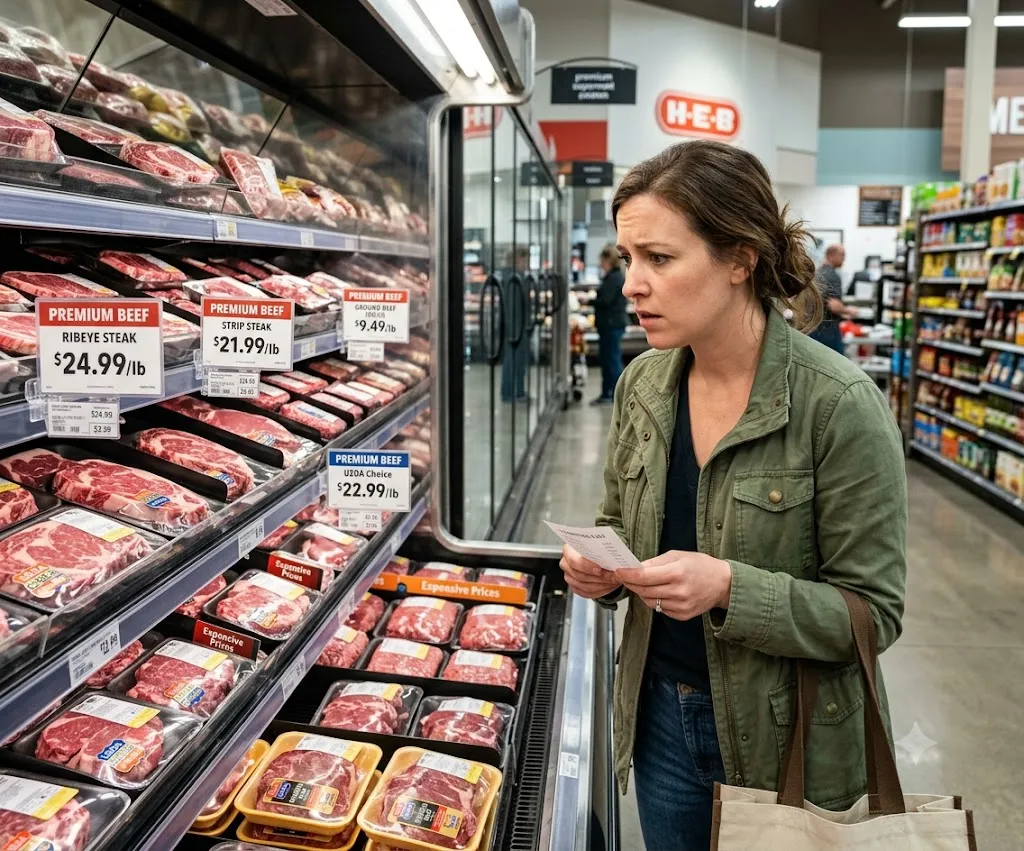
If you’ve recently walked through the meat aisle and felt surprised by the price of beef, you’re not alone.
Many American families have noticed that steaks, burgers, roasts, and even ground beef cost significantly more than they did just a few years ago. What used to be a regular part of the weekly grocery trip now feels like a purchase that requires a second look at the price tag.
For many shoppers, the frustration isn’t just about spending more money. It’s about not understanding why prices keep rising. Is inflation the only reason? Are ranchers charging more? Is there a beef shortage? And perhaps the biggest question of all: will prices ever come back down?
The reality is that today’s beef prices are the result of several challenges happening at the same time. Years of drought reduced cattle herds across major ranching states. Feed, fuel, labor, and transportation costs increased. Processing capacity faced disruptions. Meanwhile, consumer demand for beef remained strong even as supplies became tighter.
Understanding these factors matters because beef is different from most other foods. Unlike chicken or pork, cattle require years to raise, which means supply cannot increase quickly when shortages occur.
In this guide, we’ll break down the real reasons beef is so expensive, explain where your money goes throughout the beef supply chain, and explore whether consumers can expect prices to fall in the years ahead.
Key Takeaways
- Beef prices are high because the U.S. cattle herd is at one of its lowest levels in decades.
- Years of drought forced ranchers to reduce herd sizes.
- Feed, fuel, labor, and land costs have increased significantly.
- Beef production takes years, making supply slow to recover.
- Strong consumer demand continues to support higher prices.
- Beef prices may eventually decline, but herd rebuilding will take several years.
| Metric | Current Trend |
| U.S. Cattle Herd | Multi-decade low |
| Beef Demand | Strong |
| Feed Costs | Elevated |
| Fuel Costs | Higher than historical averages |
| Processing Costs | Increased |
| Beef Prices | Near record highs |
Why Are Beef Prices So High Right Now?
The biggest reason beef prices are going up is that the United States has a much smaller cattle supply than it had in previous years. The U.S. cattle herd has fallen to its lowest level in more than 70 years, with inventory dropping below levels seen in previous decades. Years of drought forced many ranchers to sell cattle because they couldn’t afford to feed them or maintain their herds.
This created a straightforward problem:
- Fewer cattle means less beef supply.
- Consumer demand remains strong. Although beef prices have increased significantly, overall beef consumption has remained relatively resilient. Many households have switched to ground beef or less expensive cuts instead of eliminating beef from their diets altogether.
- Limited supply and steady demand push prices higher.
This is the basic economic reason behind expensive beef, though cattle numbers are only one part of the larger story.
Why Is Beef So Expensive? Quick Answer
Beef is expensive because the U.S. cattle herd is near multi-decade lows while consumer demand remains strong. Years of drought reduced cattle numbers, production costs increased, and beef supply cannot recover quickly because cattle take years to raise. These factors have pushed beef prices higher across grocery stores and restaurants.
How Beef Prices Changed Over Time
Today’s high beef prices didn’t appear overnight; the current situation is the result of several years of pressure building up on the cattle industry.
The COVID-19 pandemic disrupted food supply chains across the country. Meat processing plants faced labor shortages, transportation became more expensive, and production costs increased across the board. At the same time, inflation pushed up the cost of fuel, feed, equipment, and other essential supplies used by ranchers and processors alike.
Meanwhile, severe drought affected major cattle-producing states such as Texas, Oklahoma, and Kansas, and many ranchers reduced their herds because grazing conditions worsened and feed costs became too expensive to sustain.
These challenges created a long-term supply problem, and because cattle take years to raise, the effects of herd reductions are still being felt today. As a result, consumers are paying more for beef at grocery stores and restaurants alike.
Beef Inflation vs. Overall Food Inflation
While inflation has increased the price of many grocery items, beef has risen faster than some other foods because of unique supply issues. Food inflation affects products across the supermarket, but beef inflation is also driven by shrinking cattle inventories, higher feed costs, and limited processing capacity. This is why beef prices have remained elevated even as inflation has slowed in other parts of the economy.
The U.S. Cattle Shortage Is Driving Beef Prices Higher
A major reason behind high beef prices is the shrinking cattle herd. Cattle numbers don’t change quickly. A rancher can’t simply decide today to raise more cattle and send more beef to stores next month.
According to USDA cattle inventory reports, the U.S. cattle herd has fallen to one of its lowest levels in more than 70 years, with total cattle inventory dropping to roughly 86 million head, significantly below levels seen during previous decades.
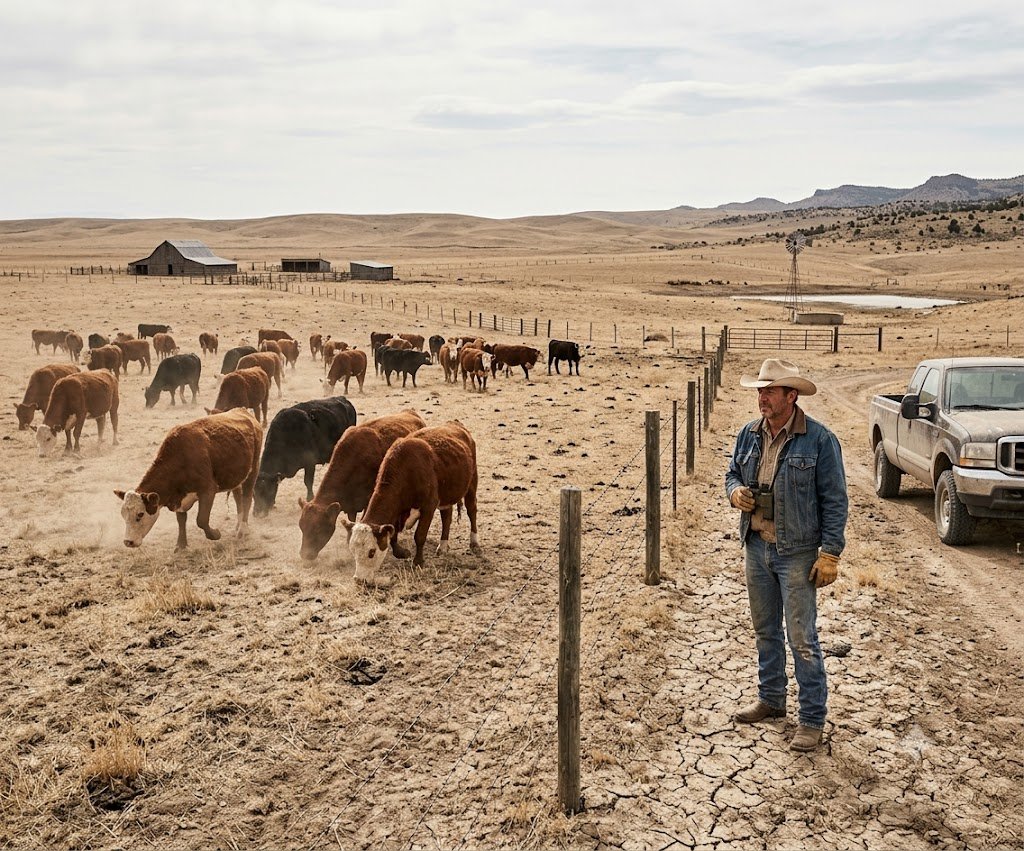
This decline matters because fewer cattle eventually means less beef available for consumers. When supply falls while demand remains strong, prices typically rise, and that’s one of the biggest reasons beef prices remain elevated today.
The cattle industry works on a biological timeline. A typical beef production cycle involves a cow becoming ready for breeding, a pregnancy period of about nine months, a calf being born and raised, and the animal growing until it reaches market weight. The entire process can take several years, which means the cattle shortage happening today actually started with decisions made years ago.
Why Did the Cattle Supply Shrink?
Several major problems reduced the number of cattle in the United States.
Years of Drought Reduced Cattle Herds
Weather has played a major role in rising beef prices. Large cattle-producing areas, especially parts of Texas, Oklahoma, and the Southern Plains, experienced severe drought conditions in recent years.
Drought creates several problems for ranchers all at once:
- Grass does not grow well.
- Water supplies become limited.
- Hay becomes more expensive.
- Cattle require more purchased feed.
When pasture conditions become poor, ranchers often face two choices: spend more money feeding cattle, or sell part of their herd instead. Many ranchers chose the second option, a process known as herd liquidation.
When many ranchers sell breeding cows at the same time, the cattle supply decreases. The impact may not be felt immediately, but several years later, consumers see higher beef prices as a result.
Why Can’t Ranchers Simply Raise More Cattle?
This is one of the most common questions people ask: why don’t ranchers just produce more beef? The answer comes down to time.
The biggest reason is time. Beef production follows a long biological cycle. Even when ranchers decide to expand their herds, it can take years before additional beef reaches grocery stores.
| Stage | Approximate Time |
| Breeding | 0-9 months |
| Calf Growth | 12-18 months |
| Feedlot Finishing | 4-8 months |
| Market Ready Beef | 18-30 months Total |
This timeline explains why ranchers cannot quickly increase beef supply when prices rise.
Most beef production begins with cow-calf operations, where calves are born and raised before being sold to feedlots. Feedlots then finish feeding the cattle until they become fed cattle ready for processing. Because every stage takes time, increasing beef production cannot happen quickly.
The Cost of Raising Cattle Has Increased
Raising cattle is expensive, and before beef reaches the grocery store, many costs must be covered along the way. These costs eventually affect the price consumers pay at checkout.
Feed Costs Are a Major Factor
Feed is one of the largest expenses in cattle production. Cattle need grass, hay, grain, minerals, and supplements to stay healthy, and when drought affects pasture, ranchers must buy more feed to compensate. Higher prices for corn, fertilizer, fuel, and transportation all increase the cost of raising cattle, and those higher costs move directly through the beef supply chain.
Feed costs are heavily influenced by feed grain prices, especially corn and soybean products. When grain prices increase because of weather, fertilizer costs, or global demand, cattle producers face higher production expenses that eventually affect beef prices.
Land and Pasture Costs Are Rising
Cattle require large amounts of land, but farmland is becoming more expensive because of housing development, competition with crop farming, and higher property values overall. Rising values raise tax assessments too, though property tax rates differ sharply from state to state and agricultural land often qualifies for reduced assessments. When ranchers pay more for land, producing beef naturally becomes more expensive too.
Labor, Equipment, and Fuel Costs
Modern cattle operations require trucks, tractors, fencing equipment, water systems, trailers, and machinery to function. Fuel prices and repair costs have increased in recent years, and ranchers also face higher labor costs because skilled agricultural workers are harder to find than before.
Why Is Steak So Expensive?
Many consumers notice that steak prices have increased more than other beef products, and there’s a simple reason for this. A cow doesn’t produce unlimited premium cuts. Popular steaks include:
- Ribeye
- Filet mignon
- New York strip
- Sirloin
These cuts come from specific areas of the animal, and only a small amount of premium steak comes from each cow. Because supply is limited and demand remains high, these particular cuts become more expensive than the rest.
Why Is Ground Beef So Expensive?
Many people assume ground beef should be cheap because it isn’t a premium cut, but ground beef prices have also increased in recent years. Several reasons explain this trend.
Strong Consumer Demand
Ground beef is one of America’s most popular proteins, used for burgers, tacos, meatballs, casseroles, and fast food alike. This high demand keeps prices elevated across the board.
Limited Beef Supply
When fewer cattle are available, every part of the animal becomes more valuable, and this affects steaks, roasts, and ground beef all at once.
Processing Costs
Ground beef requires trimming, grinding, packaging, refrigeration, and transportation, and all of these steps add costs that get passed along to the consumer.
Before looking at where your money goes, it helps to understand the beef supply chain. Every pound of beef passes through several businesses before reaching a grocery store. Each step adds labor, transportation, processing, packaging, and storage costs, which all contribute to the final retail price.
The Beef Supply Chain: Where Does Your Money Go?
Many consumers wonder: if beef is so expensive, who’s actually making the money? The price of beef is divided among many parts of the supply chain, which looks something like this:
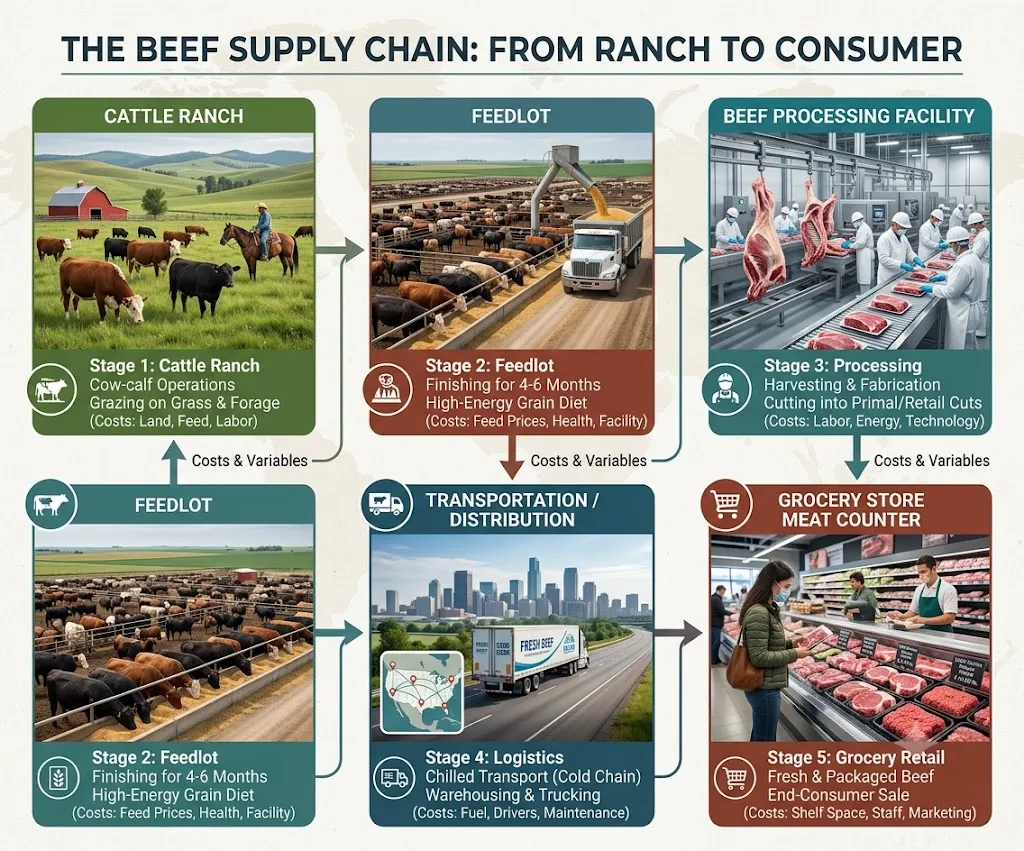
Rancher → Feedlot → Processor → Distributor → Grocery Store → Consumer
Each step along this chain adds its own costs.
Ranchers
Ranchers raise cattle, but their expenses are genuinely high. They pay for land, feed, veterinary care, equipment, and labor, so a high grocery store price doesn’t automatically mean high rancher profits.
Feedlots
Many cattle spend the final stage of their growth in feedlots, which provide grain-based feed, veterinary care, management, and transportation. These costs all affect beef prices further down the chain.
Meat Processors
Processors turn cattle into products consumers recognize, handling slaughter, cutting, packaging, and storage along the way. Processing capacity is another factor affecting beef prices, and when plants experience labor shortages or closures, the entire supply chain can slow down as a result.
Retailers
Grocery stores and restaurants also add costs of their own, covering employees, refrigeration, rent, transportation, and operations. The final price consumers see reflects every single step in this chain.
Example
| Stage | Main Responsibility |
| Rancher | Raises cattle |
| Feedlot | Finishes cattle for market |
| Processor | Slaughtering and packaging |
| Distributor | Transportation and logistics |
| Retailer | Grocery store operations and sales |
| Consumer | Final purchaser |
Every stage adds costs for labor, fuel, equipment, storage, transportation, and overhead. Processing also removes a large share of the animal’s mass, which is why live weight and packaged beef weight are very different numbers. This is why retail beef prices are much higher than the price of live cattle.
Who Really Profits From High Beef Prices?
Many consumers assume ranchers receive most of the money when beef prices rise. In reality, the beef industry is made up of several different businesses, and each one takes a share of the final retail price.
Another important factor is the difference between wholesale beef prices and retail beef prices. Wholesale prices are what distributors and retailers pay processors before beef reaches grocery shelves. Retail prices include additional costs such as transportation, refrigeration, employee wages, and store operations.
A pound of beef passes through multiple stages before reaching a grocery store. Ranchers raise the cattle, feedlots prepare them for market, processors turn them into beef products, distributors move the products across the country, and retailers sell them to consumers. Each stage has its own expenses, including labor, fuel, equipment, transportation, packaging, refrigeration, and facility costs.
This means a high price at the grocery store doesn’t automatically translate into large profits for ranchers. While cattle prices have increased, many producers are also paying significantly more for feed, land, labor, and operating expenses than they did just a few years ago.
The price paid for a live animal is only one part of the final retail price. Beef still needs to be processed, packaged, transported, stored, and sold before reaching consumers. This is why retail beef prices can remain high even when cattle prices fluctuate.
How Processing Problems Affect Beef Prices
The beef industry depends heavily on processing plants, and if processing capacity decreases, problems can appear quickly. Possible causes include worker shortages, plant closures, equipment problems, and transportation issues. When fewer plants process cattle, the supply chain becomes less flexible overall, and this can increase prices for consumers down the line.
Global Trade Also Affects the U.S. Beef Prices
Beef prices aren’t controlled only inside the United States the global market matters too. Countries around the world buy beef from major exporters, including the United States, Brazil, Australia, and Argentina.
Strong international demand can reduce available supply for domestic buyers, and trade policies, tariffs, and import changes can also affect prices significantly. A decision made in another country can eventually influence the price of a hamburger right here in the United States.
The Economics Behind Beef Prices: Supply, Demand, and the Cattle Cycle
The price of beef follows basic economic principles: when supply decreases and demand stays strong, prices increase. The current beef market shows this clearly, with the number of cattle available for beef production having declined while consumer demand for protein remains strong, production costs have increased, and international markets continue influencing domestic prices.
However, beef markets are different from many other food industries because cattle production follows a long biological cycle. A farmer growing crops can often respond within one season, and a poultry producer can increase supply within weeks, but a cattle producer may need several years before additional animals become available. This slow response is one reason beef prices can remain high even after market conditions begin improving elsewhere.
Are GLP-1 Weight Loss Drugs Affecting Beef Demand?
Some market analysts have questioned whether popular weight-loss medications such as Ozempic and Wegovy could eventually reduce beef demand. The theory is simple: if people eat less food overall, they may purchase less beef. However, the impact has been smaller than many expected.
Many nutrition experts note that consumers taking GLP-1 medications often prioritize high-quality protein to help preserve muscle mass during weight loss. This has helped keep overall protein demand stronger than some analysts originally expected.
Many consumers using GLP-1 medications continue to prioritize protein-rich foods to help maintain muscle mass during weight loss, and as a result, overall demand for beef and other protein sources has remained relatively strong. While researchers continue to monitor this trend, current beef prices are still being driven primarily by limited cattle supplies rather than a major decline in consumer demand.
Why Is Beef More Expensive Than Chicken and Pork?
Many shoppers notice that beef costs more than chicken or pork, and the biggest reason is the amount of time and resources required to produce it.
| Protein | Approximate Time to Market |
| Chicken | 6 to 8 weeks |
| Pork | 5 to 7 months |
| Beef | 18 to 30 months |
Chicken producers can respond quickly when demand changes, and pork producers can often increase supply within a matter of months. Beef producers don’t have that same flexibility, since cattle require more land, more feed, and much more time to reach market weight.
Because supply grows slowly, shortages can last far longer, which often keeps beef prices higher than other popular proteins. In addition, cattle production requires significant investments in pasture, feed, equipment, veterinary care, and labor, and these costs all contribute to the higher price consumers pay for beef products.
Why Restaurant Beef Prices Are Rising
Consumers aren’t only seeing higher beef prices at grocery stores, restaurants are also paying more for beef than they did a few years ago. Steakhouses, burger restaurants, and local diners all face rising food costs, though beef is only one part of the equation.
Restaurants are affected by the same market forces that influence retail meat prices at grocery stores. Higher wholesale beef costs, labor expenses, and transportation costs all contribute to more expensive menu prices.
Restaurants must also manage higher labor costs, rent, utilities, insurance, and transportation expenses, and these additional costs often lead directly to higher menu prices. As a result, consumers may notice that burgers, steaks, and other beef dishes have become significantly more expensive than before.
How U.S. Beef Production Could Recover
U.S. beef production is expected to improve only after ranchers begin rebuilding cattle herds and weather conditions support better grazing. Because the production cycle takes several years, increases in cattle numbers today may not noticeably affect beef supplies until future seasons.
Will Beef Prices Go Down?
Beef prices may decrease if cattle numbers increase, weather improves, feed costs fall, and processing capacity expands. However, rebuilding cattle herds takes years rather than months. Even if conditions improve today, any significant decline in beef prices is likely to happen gradually.
What Can Consumers Do to Save Money on Beef?
Although consumers can’t control the market, they can still make smarter buying choices.
Buy Less Expensive Cuts
Instead of expensive steaks, consider chuck roast, flank steak, brisket, skirt steak, or round steak. Many affordable cuts become tender when cooked properly with the right technique.
Buy Beef in Bulk
Buying a quarter, half, or whole cow from a rancher can reduce the cost per pound significantly. However, buyers need freezer space, upfront money, and a trusted supplier to make this work.
Compare Prices and Shop Sales
Beef prices vary between stores, so consumers can save money by comparing prices, buying larger packages, freezing extra meat, and shopping seasonal promotions.
Best Beef Cuts to Buy When Prices Are High
Not every beef cut has increased in price at the same rate. Premium steaks often cost more because they come from limited sections of the cow, but many less expensive cuts can still provide excellent flavor when prepared correctly. Some budget-friendly beef options include the following.
Chuck Roast
Chuck contains more connective tissue, but slow cooking can make it tender and flavorful, making it a good alternative to more expensive steak cuts.
Flat Iron Steak
Flat iron steak is often more affordable than ribeye or filet mignon while still offering good tenderness and flavor.
Brisket
Although popular for barbecue, brisket can provide real value because one cut can feed many people at once.
Ground Beef Alternatives
Consumers can also consider blends with different fat percentages, or use smaller portions combined with vegetables, grains, or other proteins to stretch their budget further.
Choosing different cuts allows shoppers to continue eating beef while managing higher prices along the way.
Frequently Asked Questions
Why is beef so expensive in 2026?
Beef is expensive because cattle supplies are low, production costs are high, and demand remains strong. Drought, feed costs, and supply chain problems have all contributed to the current situation.
Why are beef prices going up?
Beef prices are rising because fewer cattle are available while consumers continue buying beef. Higher costs for feed, fuel, labor, and transportation also increase prices further.
Why is steak so expensive?
Steak is expensive because premium cuts come from limited parts of the cow, and high demand for these cuts increases their price accordingly.
Why is ground beef so expensive?
Ground beef prices have increased because of limited cattle supplies, strong demand, and higher processing costs across the industry.
Why can’t ranchers produce more beef quickly?
Cattle take years to raise. A rancher can’t quickly increase beef production because breeding, growing, and processing cattle requires a long biological cycle that can’t be rushed.
Will beef prices ever go back down?
Beef prices may decline when cattle supplies recover, but rebuilding herds takes several years, so any relief will likely come gradually.
Expert Insight
Expert Insight
After reviewing USDA cattle inventory reports, market data, and long-term cattle production trends, one thing becomes clear: today’s beef prices are not caused by a single event.
The current market reflects years of herd reductions, drought pressure, rising production costs, and strong consumer demand. Because cattle production operates on a multi-year cycle, rebuilding supply will take time even if conditions improve.
Understanding these factors helps consumers see why beef prices remain elevated and why recovery will likely be gradual rather than immediate.
References and Data Sources
The information in this article is based on publicly available data from the U.S. Department of Agriculture (USDA), USDA Economic Research Service (ERS), USDA National Agricultural Statistics Service (NASS), Bureau of Labor Statistics (BLS), and livestock market reports. These sources provide data on cattle inventory, beef production, food inflation, consumer demand, and market conditions affecting beef prices across the United States.
Key references used during research include USDA Cattle Inventory Reports, USDA Livestock, Dairy and Poultry Outlook reports, BLS Consumer Price Index (CPI) data, and agricultural market analyses covering cattle supply, feed costs, drought conditions, and beef trade trends.
Final Thoughts
The answer to why beef is so expensive cannot be traced to a single cause.
After reviewing cattle inventory trends, production costs, drought impacts, supply-chain challenges, and consumer demand patterns, one thing becomes clear: today’s beef prices are the result of years of pressure building throughout the cattle industry.
Lower cattle numbers, higher operating costs, weather-related disruptions, and strong demand have all combined to create a market where supply remains tight and prices remain elevated.
What makes beef unique is that the industry cannot respond quickly. A chicken producer can increase supply within weeks. A pork producer can often adjust production within months. Beef production operates on a much longer timeline, which means the effects of herd reductions can influence prices for years.
For consumers, this helps explain why prices have remained stubbornly high despite improvements in some areas of the economy. For ranchers, processors, and retailers, it highlights the challenges of balancing costs while maintaining a reliable food supply.
While beef prices may eventually moderate as cattle herds rebuild and market conditions improve, meaningful changes are likely to happen gradually rather than overnight.
The next time you see a higher price on steak or ground beef, it’s worth remembering that the number reflects far more than the cost of meat itself. It reflects years of work, significant production costs, weather risks, transportation expenses, and a complex supply chain that stretches from pasture to plate.