
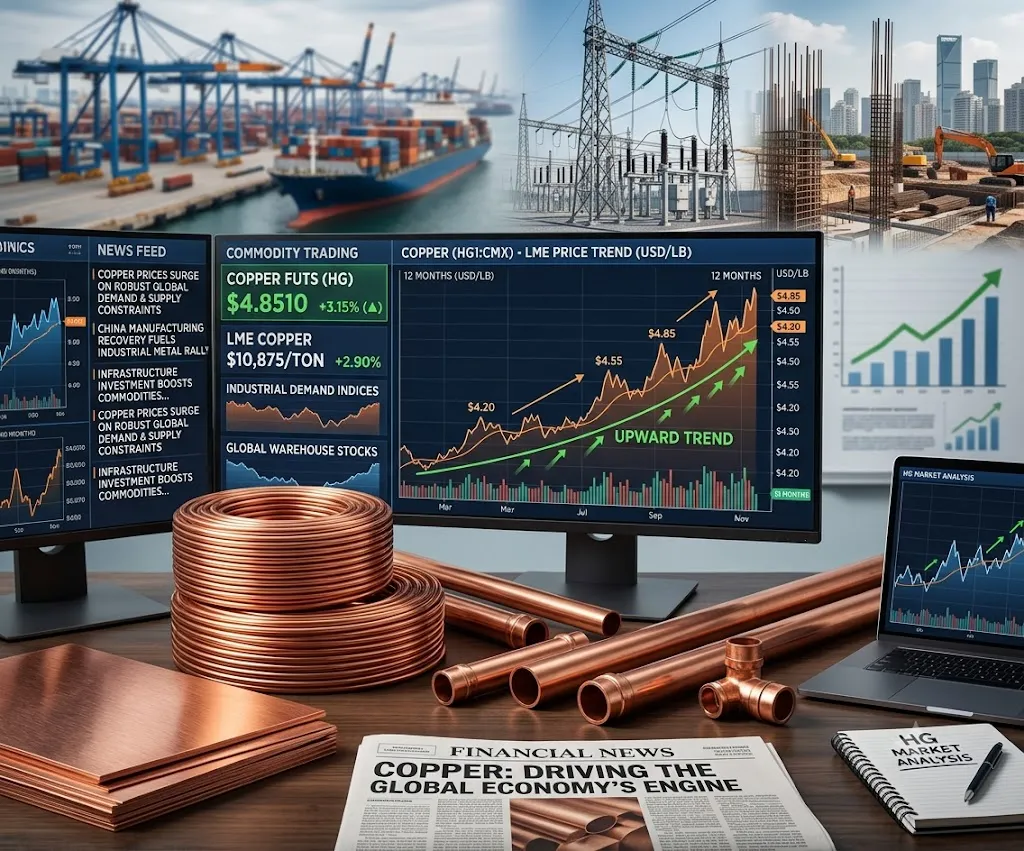
Copper Price Per Pound Today: Live Updates, Trends & Forecast
For many people, finding the real value of copper can be confusing. The price shown on commodity websites is usually the refined copper spot price, while scrap yards may offer different prices based on copper type, purity, location, and market demand. This difference often leaves buyers, sellers, contractors, and recyclers wondering what copper is actually worth.
Copper prices also change constantly. A price that looks accurate in the morning can move higher or lower within hours due to mining disruptions, economic reports, currency movements, industrial demand, and global events. Understanding why these changes happen is just as important as knowing the current copper price.
Copper has become one of the most important metals in the modern economy. It powers electrical systems, supports renewable energy projects, plays a key role in electric vehicles, and is essential for construction, electronics, manufacturing, and artificial intelligence infrastructure.
Because copper is used across so many industries, analysts often view it as a measure of economic health. Strong copper demand can signal expanding industrial activity, while weaker demand may indicate slower economic growth.
In this guide, you will find the latest copper price per pound, the factors affecting copper prices, historical price trends, future copper forecasts, scrap copper values, investment options, and the key market trends shaping copper demand worldwide.
The copper price per pound today is approximately $6.48 per pound. However, this price changes throughout the trading day as global markets respond to supply conditions, mining output, industrial demand, economic trends, and investor sentiment.
Whether you are an investor tracking commodities, a contractor managing project costs, a manufacturer planning expenses, or a recycler selling copper, understanding the factors behind copper prices can help you make better decisions.
Current Copper Price Snapshot
| Question | Answer |
| Current Copper Price Per Pound | $6.48 per pound |
| Copper Price Per Kilogram | Approximately $14.29/kg |
| Copper Price Per Metric Ton | Approximately $14,285 |
| Main Copper Markets | COMEX, LME, SHFE |
| Biggest Copper Producer | Chile |
| Biggest Copper Consumer | China |
Why do copper prices change?
Copper prices move daily because of mining output, global manufacturing demand, energy transition projects, interest rates, currency movements, and geopolitical events.
What Is the Copper Price Per Pound?
The copper price per pound refers to the market value of one pound of copper at a specific moment in time, and this figure changes throughout the trading day as supply, demand, economic conditions, and overall market sentiment evolve.
Copper trades globally through several major commodity exchanges, including COMEX (Commodity Exchange), London Metal Exchange (LME), and Shanghai Futures Exchange (SHFE).
Together, these exchanges help establish the benchmark prices that industries around the world rely on.
Why Copper Is Important
Copper is often called the “metal of electrification,” a nickname that reflects the central role it plays in modern infrastructure and technology.
Copper shows up in:
- Electrical wiring
- Power transmission systems
- Electric vehicles
- Solar panels
- Wind turbines
- Consumer electronics
- Plumbing systems
- Industrial machinery
Because copper is essential to so many industries at once, shifts in copper prices often mirror broader shifts in economic growth.
What Is Copper Used For?
Copper is used across a wide range of industries because of its excellent electrical conductivity, durability, and corrosion resistance.
| Industry | Common Copper Applications |
| Construction | Electrical wiring, plumbing, roofing |
| Automotive | Electric vehicles, motors, batteries |
| Energy | Power grids, transformers, transmission lines |
| Technology | Data centers, networking equipment, electronics |
| Manufacturing | Industrial machinery and equipment |
The diversity of copper applications is one reason demand remains strong across multiple sectors of the global economy.
Copper and Economic Activity
When manufacturing activity picks up, copper demand tends to rise alongside it, and as construction projects expand, copper consumption naturally increases as well. Growing investment in renewable energy adds yet another layer of demand on top of that. For these reasons, many analysts refer to copper as “Dr. Copper,” since its price movements often help forecast broader economic trends before they become obvious elsewhere.
What Drives the Copper Price Per Pound?
Several interconnected factors influence copper prices on any given day.
Supply and Demand
Supply and demand remain the single biggest driver of copper prices. When demand outpaces supply, prices generally rise, and when supply outpaces demand, prices tend to fall back.
Global demand keeps climbing thanks to a handful of fast-growing sectors:
- Electric vehicles
- Data centers
- Renewable energy projects
- Grid modernization
- Artificial intelligence infrastructure
At the same time, new copper mines take years to bring online, and that lag creates persistent supply challenges that demand growth alone can’t solve.
Copper Mine Production
Production levels at major copper mines have a direct and immediate effect on market prices. The world’s largest copper-producing countries include:
- Chile
- Peru
- Democratic Republic of Congo
- China
- United States
Chile remains the world’s largest copper producer by a wide margin, which means any disruption there can ripple through global supply almost immediately.
Major copper producers such as Codelco, BHP, Freeport-McMoRan, Rio Tinto, Glencore, and Anglo American play a major role in global copper supply. Investors and commodity traders closely monitor production updates, mine expansions, labor negotiations, and operational disruptions from these companies because changes in output can influence global copper prices.
Weather Events
Weather can disrupt both mining operations and the transportation networks that move copper to market. Recently, severe storms disrupted operations at several Chilean copper mines and ports, and these disruptions stoked concerns about future supply while helping push copper prices higher. More broadly, heavy rain, flooding, droughts, and earthquakes can all affect production in ways that are difficult to predict in advance.
Geopolitical Risks
Political tensions can move commodity markets quickly, and copper is no exception. Common triggers include:
- Trade disputes
- Military conflicts
- Export restrictions
- Sanctions
- Labor strikes
Whenever uncertainty increases on any of these fronts, commodity markets tend to react fast.
Industrial Demand
Industrial demand continues to be one of the most powerful price drivers in the copper market, with several fast-growing industries leading the way.
Electric Vehicles
Electric vehicles use significantly more copper than traditional gasoline-powered vehicles, with an average EV containing roughly two to four times more copper than a conventional car.
Renewable Energy
Solar farms and wind projects both require extensive copper wiring, and as governments continue investing in clean energy, this source of demand keeps expanding.
Artificial Intelligence Infrastructure
AI data centers require enormous amounts of electrical infrastructure, and power systems, cooling equipment, and networking hardware all depend heavily on copper to function. Many analysts now believe AI-driven growth could become a major long-term demand driver for the metal.
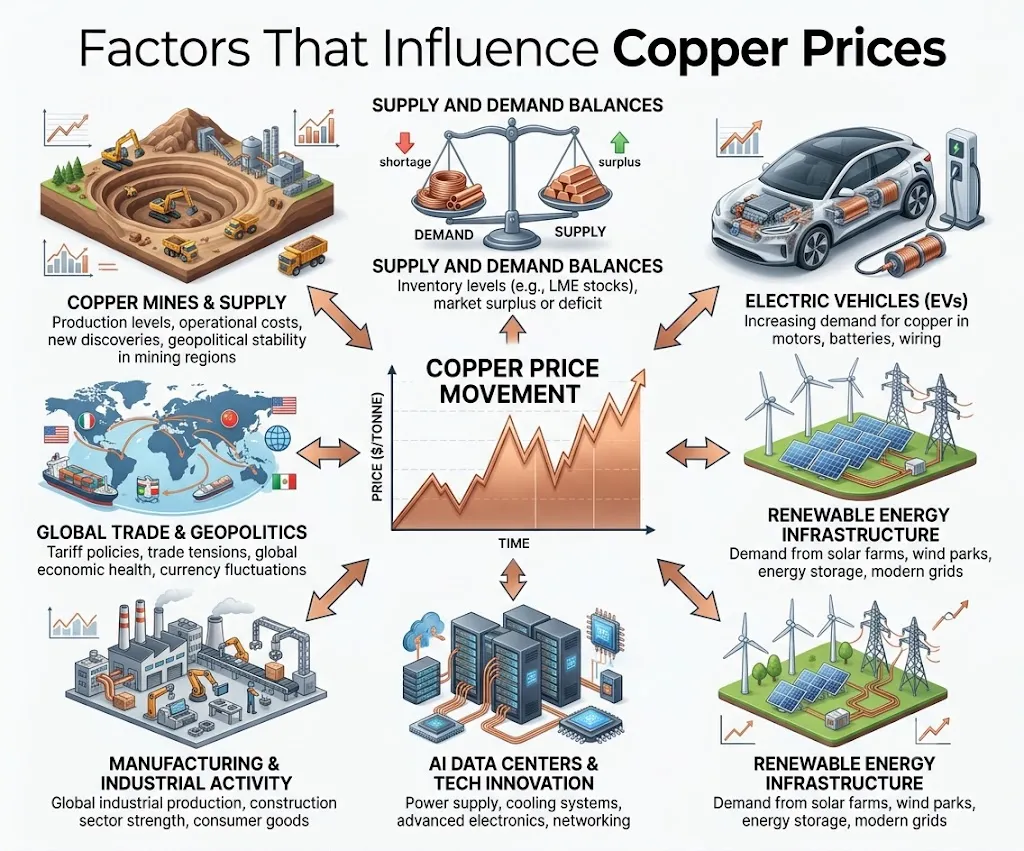
Factors That Influence Copper Prices .
| Factor | Impact on Copper Price |
| Increased EV adoption | Pushes prices higher |
| AI data center growth | Increases electricity infrastructure demand |
| New mine discoveries | Can reduce price pressure |
| Mine disruptions | Usually pushes prices higher |
| Strong US dollar | Can pressure commodity prices |
| China economic growth | Major positive demand factor |
| Global recession | Can reduce demand |
Why Is Copper Going Up?
Copper prices have climbed higher due to a combination of tightening supply and robust industrial demand working in tandem. Several factors are currently supporting the market:
Chile Mine Disruptions
Chile remains the world’s largest copper producer, but weather-related disruptions, labor issues, and declining ore grades continue to weigh on production levels and add uncertainty to global supply chains.
Production Challenges
Several major mining companies have reported lower production recently, citing maintenance work, operational constraints, water shortages, and lower-quality ore. Together, these challenges have contributed to noticeably tighter supply conditions across the market.
AI Infrastructure Demand
The rapid expansion of artificial intelligence infrastructure has driven up demand for electrical equipment, power systems, and copper-intensive data centers, and this emerging demand source is becoming an increasingly important piece of the copper market’s story.
Renewable Energy Growth
Solar farms, wind projects, and battery storage systems all continue to add to global copper consumption, and with governments and private companies investing heavily in clean energy infrastructure, this trend looks set to support long-term copper demand.
Copper Supply Challenges
Copper supply has become one of the biggest concerns weighing on the market today.
Declining Ore Grades
Many copper mines are now producing lower-quality ore, which means companies must process more material just to produce the same amount of finished copper. As a result, costs increase, production efficiency decreases, and overall supply growth slows down.
Mine Development Delays
Developing a new copper mine is a genuinely long process, one that typically requires environmental approvals, government permits, infrastructure investment, and community agreements. All told, the process can take more than ten years, which makes it difficult for supply to respond quickly whenever demand rises.
Production Declines
Several mining companies have reported lower production levels in recent years, driven by water shortages, equipment maintenance, labor issues, lower ore grades, and other operational disruptions. Together, these factors continue to contribute to tighter market conditions overall.
Sulphuric Acid Shortages and Copper Production
Copper production depends on more than mining operations alone, since many copper extraction processes rely on sulphuric acid to process and refine copper ore. Recent disruptions in global sulphur and sulphuric acid supply chains have pushed up production costs and created additional supply risks for copper producers, and industry analysts have warned that tightening sulphuric acid availability could affect copper production in key mining regions if these shortages persist.
Copper Price Trend Over the Last Decade
| Year | Approximate Copper Price Trend |
| 2016 | Lower price environment |
| 2018 | Trade uncertainty pressure |
| 2020 | Pandemic volatility |
| 2021 | Strong recovery |
| 2022 | Supply concerns |
| 2023 | Economic slowdown pressure |
| 2024 | Electrification demand growth |
| 2025 | Supply shortage concerns |
| 2026 | Record-high pricing environment |
Historical Copper Price Trends
Copper prices reached historic highs during 2026 as supply concerns and electrification demand combined to support the market. Trading Economics data shows copper reached an all-time high near $6.67 per pound during 2026, significantly above historical averages. By contrast, copper traded below $1.00 per pound during parts of the late 1980s and 1990s, before industrialization around the world gradually pushed prices upward.
Major milestones along the way include:
| Period | Copper Market Trend |
| 1990s | Relatively low prices |
| Early 2000s | Strong growth from China |
| 2008 | Sharp volatility during financial crisis |
| 2010-2011 | Significant price rally |
| 2020 | Pandemic-related disruption |
| 2021-2022 | Strong recovery |
| 2024-2026 | New record highs and supply concerns |
Highest Copper Price Ever Recorded
Copper reached record highs above $6.60 per pound during 2026, as supply concerns and strong demand from electrification, AI infrastructure, and renewable energy projects combined to support prices. Several factors contributed to this rally, including strong industrial demand, supply shortages, energy transition investments, electrification projects, and AI infrastructure growth, all of which helped push prices to historic highs.
Copper Price Forecast: What Could Happen Next?
Many investors, businesses, and everyday consumers want to know where the copper price per pound might head next. While no forecast is ever guaranteed, analysts closely track supply, demand, economic growth, and global events to estimate likely future price trends, and the long-term outlook for copper remains broadly positive because demand is expected to grow faster than supply.
Why Analysts Remain Bullish on Copper
Several trends support the case for higher copper prices in the years ahead, including growth in electric vehicles, expansion of renewable energy, modernization of power grids, rising demand from data centers, and continued urbanization in developing countries. Many experts believe the world could face a genuine copper supply deficit if production growth fails to keep pace with all of this demand.
Copper Price Forecast Through 2030
The exact price path will ultimately depend on market conditions, but many forecasts point toward continued strength in copper demand, driven by a few key trends.
Expansion of Electric Vehicles
Electric vehicles require large amounts of copper for batteries, motors, wiring systems, and charging infrastructure, and as EV adoption grows worldwide, copper demand is expected to rise right along with it.
Renewable Energy Investments
Solar and wind projects both require extensive copper use: wind turbines rely on copper in their generators and cables, while solar installations depend on copper wiring and electrical systems. Governments around the world continue investing heavily in this kind of renewable energy infrastructure.
Data Center Growth
Artificial intelligence and cloud computing both require massive data centers, and these facilities need power distribution systems, cooling systems, electrical wiring, and network infrastructure, all of which rely on copper in significant ways.
Risks That Could Lower Copper Prices
Although the long-term outlook remains positive, several risks could still pressure prices lower, including global recessions, slower manufacturing activity, weak construction demand, reduced consumer spending, and unexpected increases in mine production. Commodity markets can be genuinely volatile, so investors should always prepare for price fluctuations along the way.

Is Copper a Good Investment?
Copper has attracted growing interest from investors in recent years. Unlike precious metals such as gold, copper is driven primarily by industrial demand, and that distinction creates both unique opportunities and unique risks.
Benefits of Investing in Copper
Copper offers several advantages worth considering.
Strong Long-Term Demand
Copper remains essential for energy systems, transportation, manufacturing, and electronics, and all of these industries are expected to keep growing for years to come.
Limited Supply Growth
New copper mines take many years to develop, so supply growth often lags behind demand growth, and this gap can support higher prices over time.
Global Importance
Few materials can replace copper in many electrical applications, and its conductivity, durability, and efficiency make it genuinely difficult to substitute at scale.
Risks of Investing in Copper
Copper prices can experience large swings, so investors should go in with a clear understanding of the risks involved.
Economic Slowdowns
Copper demand often falls when economic activity weakens, and that pullback in demand can lead directly to price declines.
Market Volatility
Commodity markets react quickly to economic reports, interest rate changes, geopolitical events, and supply disruptions, and price swings can occur within days or even hours.
Ways to Invest in Copper
Investors have several options if they want exposure to copper prices.
Physical Copper
Some investors purchase copper bars, copper rounds, or copper bullion products, which offer direct ownership of the metal. That said, storage and transportation can be genuinely challenging for physical copper.
Copper Mining Stocks
Another option is investing in mining companies, including major global producers. Mining stocks may benefit when copper prices rise, though company-specific risks can still affect performance regardless of where copper prices head.
Copper ETFs
Exchange-traded funds offer another way to gain copper exposure, and copper ETFs may invest in copper futures, mining companies, or broader commodity indexes. For many investors, this route offers a convenient middle ground.
Copper Futures
Professional traders often use copper futures contracts to speculate on future copper prices. Futures involve higher risk than other approaches, though, and may not be suitable for beginner investors.
What Is a Copper Futures Contract?
A copper futures contract is an agreement to buy or sell copper at a future date and a predetermined price, and these contracts trade on commodity exchanges. The standard COMEX copper futures contract represents 25,000 pounds of copper. Futures help producers manage risk, help manufacturers lock in prices, and let traders speculate on market movements, though because futures use leverage, they can magnify both gains and losses.
Copper Spot Price vs Copper Futures Price
Many people confuse spot prices with futures prices, but there are important differences between the two.
Copper Spot Price
The spot price represents the current market value of copper, reflecting immediate buying and selling activity in real time.
Copper Futures Price
The futures price instead reflects expectations about future market conditions, shaped by factors like interest rates, storage costs, supply expectations, and demand forecasts. In most cases, spot and futures prices remain relatively close to one another.
Copper Price Per Pound Conversions
Copper prices are often quoted in several different units, and understanding the conversions can help you compare prices across markets.
Copper Price Per Kilogram
One pound equals approximately 0.4536 kilograms. To convert: Copper Price Per Kilogram = Copper Price Per Pound × 2.2046.
Example: if copper trades at $6.50 per pound, that works out to $6.50 × 2.2046 = approximately $14.33 per kilogram.
Copper Price Per Metric Ton
One metric ton equals 2,204.62 pounds. To convert: Copper Price Per Ton = Copper Price Per Pound × 2,204.62.
Example: $6.50 × 2,204.62 = approximately $14,330 per metric ton.
Copper Price Per Ounce
One pound contains 16 ounces. To convert: Copper Price Per Ounce = Copper Price Per Pound ÷ 16.
Example: $6.50 ÷ 16 = approximately $0.41 per ounce.
How Much Is Copper Worth?
Many users search for the copper price per pound because they want to estimate the value of a specific amount of copper.
How Much Is 10 Pounds of Copper Worth?
At a copper price of $6.48 per pound: 10 pounds × $6.48 = $64.80.
How Much Is 100 Pounds of Copper Worth?
At a copper price of $6.48 per pound: 100 pounds × $6.48 = $648.
How Much Is 500 Pounds of Copper Worth?
At a copper price of $6.48 per pound: 500 pounds × $6.48 = $3,240.
How Much Is 1 Ton of Copper Worth?
One metric ton equals 2,204.62 pounds, so 2,204.62 × $6.48 = approximately $14,285. Actual values will vary as copper prices change throughout the trading day.
Why Copper Is Called “Dr. Copper”
Copper has earned the nickname “Dr. Copper” because many analysts believe its price movements help diagnose the health of the global economy. When economic activity expands, factories increase production, construction projects grow, and infrastructure spending rises, and all of these activities require copper along the way. As demand increases in response, copper prices often rise, while weak economic conditions tend to have the opposite effect. For this reason, investors frequently monitor copper prices alongside other traditional economic indicators.
The Role of China in Copper Demand
China is the world’s largest consumer of copper, and the country’s massive manufacturing sector uses enormous amounts of the metal across construction, consumer electronics, electric vehicles, renewable energy, and industrial machinery. Even small changes in Chinese demand can end up affecting global copper prices.
Why China’s Economy Matters
When China’s economy grows, copper imports often increase, manufacturing activity expands, and infrastructure spending rises, and together these factors can support higher copper prices. When economic growth slows instead, copper demand may weaken and place downward pressure on prices.
How the United States Influences Copper Prices
The United States also plays an important role in the copper market, with demand coming from home construction, commercial development, energy projects, manufacturing, and technology infrastructure. Interest rates can affect copper demand too, since higher rates may slow construction and investment activity, while lower rates often encourage economic growth and stronger commodity demand.
Why Businesses Monitor Copper Prices
Copper prices affect operating costs across a wide range of industries. Manufacturers use copper in machinery, wiring, electronics, and industrial equipment, while construction companies depend on it for electrical systems, plumbing, and infrastructure projects. When copper prices rise, businesses may face higher material costs, and some respond by adjusting budgets, renegotiating supplier contracts, or securing future supply agreements. For this reason, procurement teams, contractors, and manufacturers closely monitor copper market trends when planning projects and managing expenses.
Copper and the Clean Energy Transition
One of the biggest long-term themes in the copper market is the ongoing transition to cleaner energy, and many clean energy technologies require substantial amounts of copper to function.
Solar Energy
Solar systems use copper in wiring, inverters, and electrical connections.
Wind Energy
Wind farms rely on copper for generators, transformers, and transmission lines.
Battery Storage
Battery storage systems also require copper components, and as renewable energy deployment continues to expand, copper demand is expected to grow right alongside it.
Copper Demand From Artificial Intelligence
Artificial intelligence has become an important new source of copper demand, since AI infrastructure requires large data centers, power distribution systems, cooling equipment, and high-speed networking hardware, all of which require significant amounts of copper to build and operate. This trend has become a major topic among commodity analysts and investors alike, particularly because modern data centers require extensive electrical systems, networking equipment, transformers, and cooling infrastructure. Industry analysts now view AI-driven electricity demand as an emerging source of long-term copper consumption.
Copper Spot Price vs Scrap Copper Price
Many people assume that copper spot prices and scrap copper prices are the same, but in reality, they’re quite different. The copper spot price reflects the market value of refined copper traded on commodity exchanges such as COMEX and the London Metal Exchange, while scrap copper prices depend on additional factors, including:
- Copper purity
- Copper grade
- Local demand
- Transportation costs
- Processing requirements
- Scrap yard pricing policies
As a result, scrap copper usually trades below the official spot price.
Common Scrap Copper Grades
| Copper Type | Relative Value |
| Bare Bright Copper | Highest |
| #1 Copper | High |
| #2 Copper | Moderate |
| Insulated Copper Wire | Variable |
| Mixed Copper Scrap | Lower |
Actual prices vary by location, copper purity, and current market conditions.
Copper Scrap Prices by State
Copper scrap prices can vary across the United States due to regional demand, transportation costs, recycling activity, and local market competition. States with active scrap metal markets include:
- Texas
- California
- Florida
- Pennsylvania
- Ohio
- New York
Local scrap yards typically publish current buying prices based on copper grade, purity, and overall market conditions, so checking local pricing remains the best way to determine the value of scrap copper in your area. Many users search for local copper prices before visiting a recycling center, with common searches including copper prices in Texas, California, Florida, Ohio, and Pennsylvania. Local scrap copper prices often differ from national spot prices simply because transportation costs, regional demand, and recycling competition vary so much by location.
Types of Scrap Copper
Not all scrap copper carries the same value, since scrap yards classify copper into different grades based on quality and purity.
Bare Bright Copper
Bare Bright Copper is usually the most valuable type of scrap copper, consisting of clean copper wire, uncoated copper, unalloyed copper, and high-purity copper. Because it contains very few contaminants, it often receives the highest scrap price available.
#1 Copper
#1 Copper is another high-value grade, generally including clean copper pipe, clean copper tubing, bus bars, and thick copper wire. To qualify, the copper must be free of paint, insulation, and excessive corrosion.
#2 Copper
#2 Copper contains impurities that lower its value, such as painted copper, soldered copper, tarnished copper, and lightly contaminated copper. Although it’s less valuable than #1 Copper, it still holds strong recycling value.
Insulated Copper Wire
Copper wire with insulation is usually priced according to copper content, wire thickness, and ease of processing, and higher copper recovery rates often lead to higher prices overall.
How to Get the Best Price for Scrap Copper
If you plan to sell scrap copper, a few simple steps can help increase its value.
Separate Copper by Grade
Scrap yards pay different rates based on copper quality, so separating Bare Bright Copper, #1 Copper, and #2 Copper before selling can often result in a higher payout.
Remove Non-Copper Materials
Removing insulation, plastic, steel fittings, and other contaminants may increase the value of your scrap copper.
Compare Local Scrap Yard Prices
Copper prices can vary between recycling centers, so getting quotes from multiple scrap yards may help you receive a better price overall.
Watch Market Trends
Copper prices change daily, so selling during periods of strong copper demand may help increase your return.
Why Copper Recycling Matters
Copper is one of the most recycled metals in the world, and unlike many materials, it can be recycled repeatedly without losing its properties, which provides several meaningful benefits.
Environmental Benefits
Copper recycling helps reduce mining activity, lower energy consumption, decrease waste, and cut carbon emissions.
Economic Benefits
Recycling also helps support copper supply, since recovered copper can return to manufacturing processes and reduce pressure on mining operations. As global demand grows, recycled copper will likely play an even larger role in the market going forward.
How Copper Prices Affect Different Industries
Copper price movements impact many industries in different ways.
Construction Industry
Construction projects require large amounts of copper for electrical systems, plumbing, roofing, and HVAC equipment, so higher copper prices can directly increase building costs.
Automotive Industry
Modern vehicles contain significant amounts of copper, and electric vehicles require even more of it than traditional vehicles. Rising copper prices can therefore affect manufacturing costs throughout the entire automotive sector.
Renewable Energy Industry
Renewable energy projects depend heavily on copper, since solar farms, wind turbines, and battery storage systems all require extensive copper infrastructure. As renewable energy expands, copper demand is expected to remain strong for years to come.
Electronics Industry
Copper remains essential for electronic products such as smartphones, computers, servers, and networking equipment, which is why technology companies closely monitor copper market trends.
How Copper Prices Affect Contractors and Electricians
Copper is one of the most important materials used in electrical work and construction projects. When copper prices rise, the cost of electrical wiring, copper pipe, grounding systems, and power distribution equipment may increase as well. Contractors often monitor copper market trends when preparing project estimates and purchasing materials, since large price swings can affect project budgets, especially for commercial and industrial construction work.
For electricians specifically, copper pricing can directly influence both material costs and profit margins. Homeowners planning a renovation should budget for more than materials, too, since property taxes can rise after major improvements; once the county reassesses the home.
Factors That Could Push Copper Prices Higher
Several developments could support higher copper prices in the future.
Expanding Electrical Grids
Many countries are upgrading aging electrical infrastructure, and these projects require substantial amounts of copper.
Renewable Energy Growth
The ongoing shift toward clean energy continues to increase copper demand.
Electric Vehicle Adoption
As more consumers switch to electric vehicles, copper consumption is expected to rise accordingly.
AI Infrastructure Expansion
Artificial intelligence is creating new demand for power-intensive data centers, a trend that may become one of the strongest drivers of future copper demand.
Supply Constraints
Supply disruptions remain a major concern, with challenges including mine closures, labor disputes, environmental regulations, weather-related disruptions, and lower ore grades.
Factors That Could Push Copper Prices Lower
Copper prices can also decline under certain conditions.
Economic Recession
A slowdown in global economic activity can reduce industrial demand significantly.
Weak Manufacturing Activity
Lower factory output typically reduces copper consumption in turn.
Stronger Supply Growth
If new mining projects increase production faster than expected, prices may face downward pressure.
Reduced Construction Spending
Housing and infrastructure activity have a major impact on copper demand, so weak spending in these areas can affect prices.
Frequently Asked Questions
What Is the Copper Price Per Pound Today?
The copper price per pound changes throughout the trading day based on market activity, with prices influenced by supply, demand, economic conditions, and investor sentiment.
Why Does Copper Price Change Every Day?
Copper prices respond to changing market conditions, including mine production, economic data, manufacturing activity, global events, and currency movements.
What Is the Difference Between Spot Copper and Scrap Copper?
Spot copper refers to refined copper traded on commodity exchanges, while scrap copper refers to recycled copper sold through scrap yards and recycling facilities. Scrap prices are usually lower than spot prices.
Is Copper a Good Long-Term Investment?
Many investors view copper as a long-term investment because of its importance to global infrastructure and electrification, though copper prices can be volatile and should be evaluated as part of a diversified investment strategy.
What Country Produces the Most Copper?
Chile is the world’s largest copper producer, followed by other major producers including Peru, the Democratic Republic of Congo, China, and the United States.
Why Is Copper Important for Electric Vehicles?
Copper is used in electric motors, battery systems, charging infrastructure, and power electronics, and electric vehicles require significantly more copper than conventional vehicles.
Why Is Copper Called Dr. Copper?
Copper is often called “Dr. Copper” because many analysts believe its price reflects the health of the global economy: strong demand often signals economic growth, while weak demand may indicate slower economic activity.
Can Copper Reach New Record Highs?
Future prices depend on market conditions, but if demand continues to grow while supply remains constrained, copper could potentially challenge its previous highs.
Key Takeaways
Copper remains one of the most important industrial metals in the world, and its role in construction, manufacturing, energy systems, transportation, and technology makes it essential to the global economy. Several major trends continue to support long-term demand, including:
- Electric vehicles
- Renewable energy
- Artificial intelligence
- Data centers
- Grid modernization
- Infrastructure investment
At the same time, supply growth faces real challenges from declining ore grades, mine development delays, and production disruptions. Because of these combined factors, copper remains one of the most closely watched commodities in global markets today.
Copper prices change continuously during market hours, so investors and businesses should verify current prices through official market sources before making any financial decisions.
After analyzing commodity and industrial metal markets for years, one trend consistently stands out: copper demand tends to grow faster than many investors initially expect. Every major electrification project whether it’s an EV factory, renewable energy installation, power grid expansion, or AI data center requires significant amounts of copper. At the same time, bringing new copper supply online can take a decade or more. This combination of growing demand and constrained supply is why copper remains one of the most closely monitored industrial commodities in the world.
Conclusion
The copper price per pound is far more than a number displayed on a commodity chart. It reflects the balance between global supply, industrial demand, infrastructure investment, technological innovation, and economic growth.
Over the past several years, copper has moved from being viewed primarily as an industrial metal to becoming a strategic resource for electrification. The expansion of electric vehicles, renewable energy systems, power grid upgrades, and AI-driven data centers has created new sources of demand at a time when mine supply faces growing challenges.
One pattern that continues to stand out across the copper market is the gap between future demand and future supply. New mines can take years to develop, while demand from energy, technology, and infrastructure projects continues to grow. This imbalance is one of the main reasons analysts, mining companies, investors, and manufacturers closely monitor copper prices.
For businesses, copper remains an important cost indicator. For scrap sellers, it helps determine the value of recyclable materials. For investors, it provides insight into both commodity markets and broader economic conditions. And for policymakers and industry leaders, copper has become a critical component of long-term energy and infrastructure planning.
The most effective way to evaluate copper prices is not to focus solely on today’s market move, but to understand the larger forces driving the market. Supply trends, mining production, industrial demand, renewable energy investment, artificial intelligence infrastructure, and global economic growth will likely remain the key factors shaping copper prices in the years ahead.
As copper continues to play a central role in the world’s transition toward electrification and modern infrastructure, it is likely to remain one of the most important and closely watched commodities in the global economy.