What Is PU Leather? Complete Guide to Polyurethane Leather
Have you ever bought a leather-looking bag, sofa, or jacket and later noticed peeling, cracking, or a different feel than expected?
The reason may be PU leather.
PU leather (polyurethane leather) is a synthetic material designed to look like genuine leather at a lower cost. It is widely used in furniture, fashion products, shoes, and accessories because it offers a leather-like appearance with easy maintenance.
However, many buyers are confused about what they are actually purchasing. Terms like faux leather, vegan leather, synthetic leather, and PU coated leather are often used differently, making it difficult to understand the real quality of the material.
In this guide, we will explain what PU leather is, how it is made, its types, durability, pros and cons, and how it compares with real leather so you can make a better buying decision.
What Is PU Leather? (Quick Definition)
PU leather is a synthetic leather material made by applying a polyurethane coating over a fabric backing, and that coating creates a surface that looks and feels similar to genuine leather. The word PU stands for polyurethane, a flexible plastic polymer that’s widely used in products such as coatings, foam, adhesives, and other synthetic materials.
In PU leather production, manufacturers typically use a base material such as polyester fabric, cotton fabric, nylon, or microfiber, and a polyurethane layer is then added to the surface. This layer creates the material’s color, texture, shine, softness, and overall leather-like appearance. Unlike real leather, PU leather does not have natural collagen fibers, doesn’t come from animal skin, and is instead produced through an industrial coating process.
Is PU Leather Real Leather?
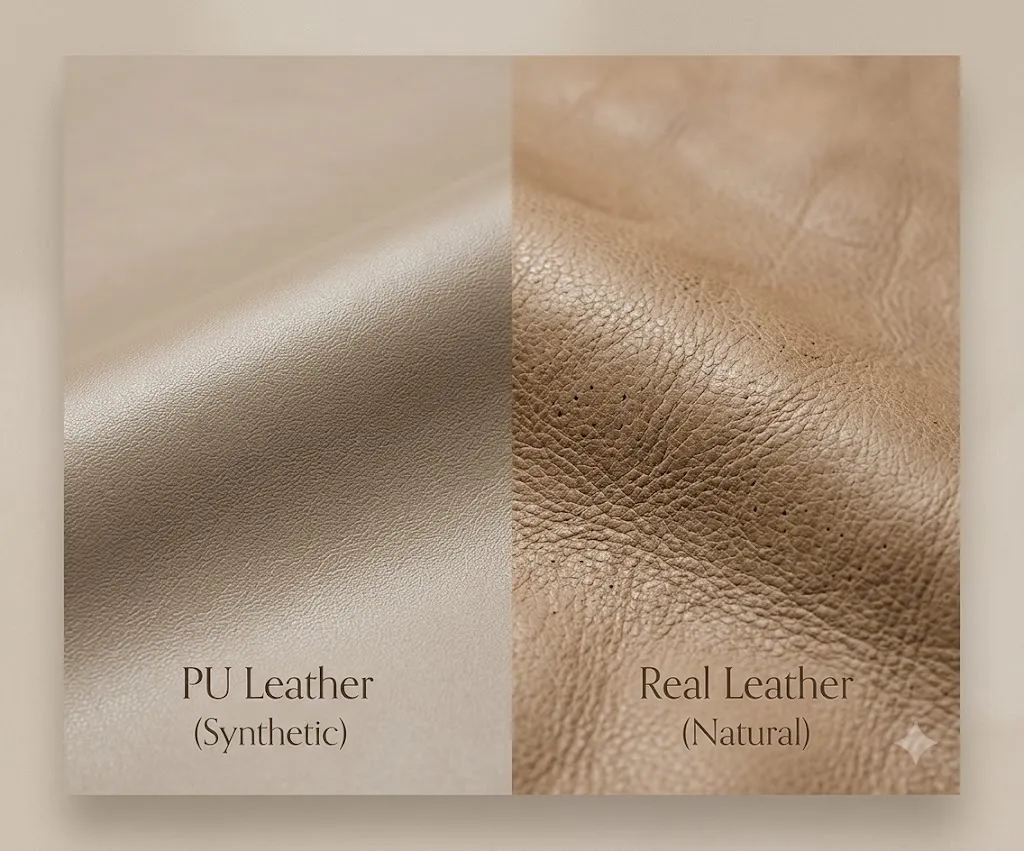
No, 100% PU leather is not real leather. Genuine leather comes from animal hide, while PU leather is made by coating a fabric base with polyurethane. It is classified as synthetic or faux leather because it does not contain natural leather fibers.
What Is PU Leather Made Of?
PU leather usually contains two main parts.
1. Fabric Backing Layer
The backing provides strength and structure, and common backing materials include the following.
Polyester. Polyester is widely used because it’s affordable, strong, flexible, and resistant to moisture, and because polyester holds its shape under heat far better than cotton or rayon backings.
Cotton. Cotton provides a softer feel but is less common in modern PU leather production.
Microfiber. High-quality PU leather may use microfiber backing, which often feels closer to natural leather because the structure is softer and more flexible.
2. Polyurethane Coating Layer
The polyurethane layer creates the leather-like surface, controlling texture, smoothness, color, shine, and water resistance. Manufacturers can adjust this coating to create different finishes, including matte finish, glossy finish, soft-touch finish, textured finish, and embossed grain finish.
How Is PU Leather Made?
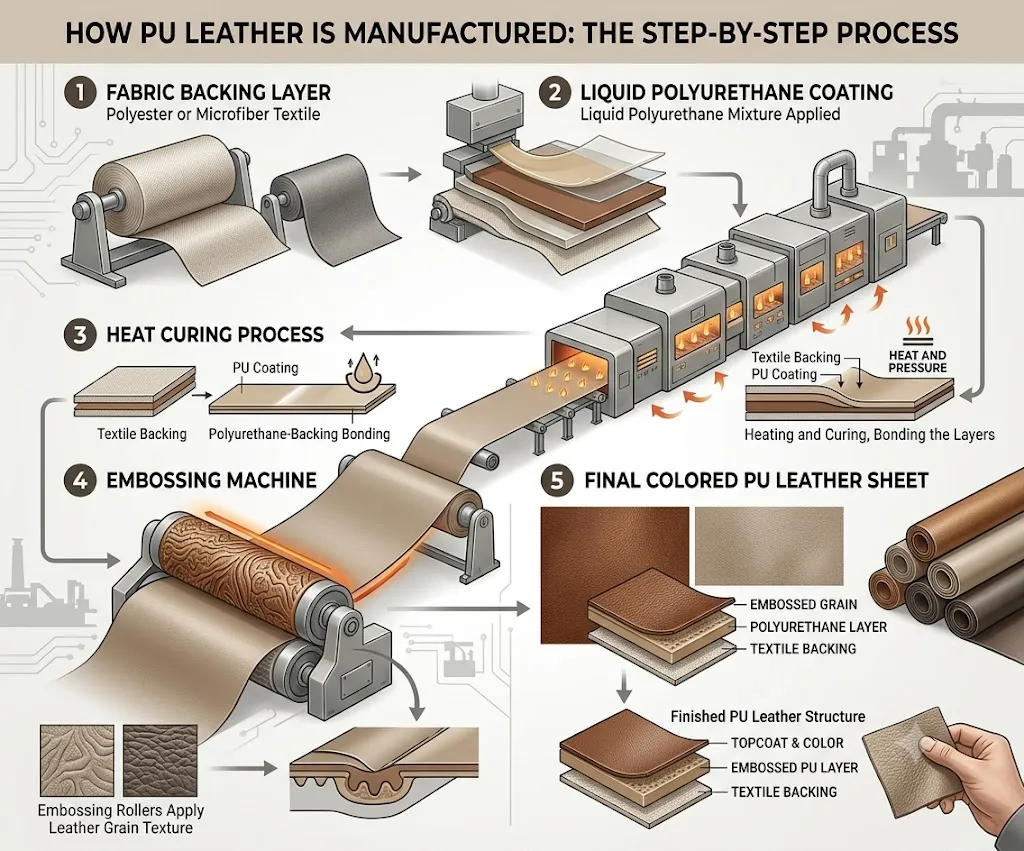
PU leather is produced through a controlled manufacturing process with one simple goal: create a material that looks like leather while using synthetic materials. The main steps are outlined below.
Step 1: Selecting the Fabric Base
The process begins with choosing a backing material, and manufacturers select fabrics based on the final use. For example, bags may need flexible material, furniture may need stronger backing, and shoes may need more resistance to bending. The fabric is prepared before coating begins.
Step 2: Applying Polyurethane Coating
Liquid polyurethane is applied over the fabric surface, forming the outer layer of the material. Manufacturers may apply multiple layers to improve strength, appearance, flexibility, and protection, and the material is then cured using heat to help the polyurethane bond with the fabric.
Step 3: Adding Leather Texture
Natural leather has a unique grain pattern, and to copy this appearance, manufacturers use embossing machines that press patterns into the polyurethane surface. Common textures include smooth leather, pebbled leather, crocodile patterns, snake patterns, and wrinkled leather styles, all of which help make PU leather look more realistic.
Step 4: Adding Color and Finishing Layers
After embossing, manufacturers add color pigments and protective coatings, which improve color consistency, scratch resistance, water resistance, and overall surface appearance. This is exactly why PU leather can be produced in almost any color.
How Polyurethane Coatings Are Applied in Synthetic Leather Manufacturing
Synthetic leather manufacturing involves coating a textile substrate with polymer materials to create a leather-like surface. Manufacturers commonly use coating methods such as dry processing and wet processing, depending on the desired texture, thickness, and performance characteristics.
During production, manufacturers can control several factors, including coating layers, surface embossing, color application, and finishing treatments. These adjustments allow PU leather to imitate different leather styles, including smooth leather, grain leather, and textured finishes.
Why Is PU Leather Popular? Benefits Explained
PU leather became popular because it solves several problems for both manufacturers and buyers.
Lower Cost
Real leather requires animal hides and complex tanning processes, while PU leather is cheaper to produce. This makes it common in affordable furniture, fashion accessories, budget footwear, and consumer products.
Animal-Free Alternative
Many people choose PU leather simply because it doesn’t use animal hide, and for consumers looking for animal-free materials, PU leather is often considered a vegan leather option. However, it’s important to understand that vegan does not always mean environmentally friendly, PU leather is still a plastic-based material.
More Design Options
Manufacturers can easily control the appearance of PU leather, producing it in different colors, different textures, and different finishes. This flexibility makes it especially popular in fashion and interior design.
Easy Maintenance
PU leather has a sealed surface, which means dust is easier to remove, spills are easier to clean, and it doesn’t need leather conditioning. A simple damp cloth is often enough for regular cleaning.
PU Leather vs Faux Leather vs Vegan Leather: What Is the Difference?
Many people use the terms PU leather, faux leather, synthetic leather, and vegan leather as if they mean the same thing, but these terms actually describe different categories of leather alternatives. Understanding the difference can help buyers choose the right material.
What Is PU Leather?
PU leather is a specific type of synthetic leather made by applying a polyurethane coating over a fabric backing. The polyurethane layer creates the texture, color, shine, and leather-like appearance, and PU leather does not contain animal hide.
What Is Faux Leather?
Faux leather is a general term used for materials designed to imitate genuine leather, and it doesn’t describe one specific manufacturing method. Different types of faux leather include PU leather, PVC leather, and other synthetic leather materials. In simple terms, PU leather is a type of faux leather, but not all faux leather is PU leather.
What Is Vegan Leather?
Vegan leather refers to leather alternatives that don’t use animal leather, and PU leather is often considered vegan because fully synthetic PU leather doesn’t contain animal hide. However, buyers should be careful, since some products labeled as vegan leather may contain mixed materials, animal-based adhesives, or leather backing layers. If vegan certification is important to you, always check the complete material composition.
What Is Synthetic Leather?
Synthetic leather is another broad term for artificial leather materials, including those made using polyurethane (PU), polyvinyl chloride (PVC), or other synthetic coatings. PU leather is one of the most common types of synthetic leather available today.
Types of PU Leather Explained
The term PU leather covers different materials and finishes, and manufacturers create different types based on appearance, texture, and intended use. Understanding these types helps buyers avoid confusion when shopping for leather products.
What Is Calf PU Leather?
Calf PU leather is a synthetic material designed to copy the appearance of calfskin leather, which is known for its fine grain, smooth surface, soft texture, and premium appearance. Calf PU leather tries to recreate these qualities using polyurethane, and the word “calf” does not mean it comes from a calf hide, it only describes the style and texture.
Calf PU leather is commonly used for handbags, wallets, shoes, and fashion accessories, offering a luxury appearance at a lower price. However, it does not have the same natural structure or aging ability as genuine calf leather.
What Is PU Coated Leather?
PU coated leather can create confusion because the term is used for different materials. It usually refers to a material that has a polyurethane layer on the surface, and there are two common meanings.
Fully Synthetic PU Leather. This type contains a fabric backing and a polyurethane coating, with no real leather involved.
Leather With PU Coating. Some products use a real leather base with a polyurethane coating, often called bicast leather. The polyurethane layer creates a smooth appearance, glossy finish, and uniform texture, but the coating also reduces some of the leather’s natural qualities, the material becomes less breathable, less natural feeling, and less capable of developing patina.
What Is Bicast Leather?
Bicast leather is a material made from split leather covered with a polyurethane coating. To understand bicast leather, it helps to understand leather layers: a natural hide has a full-grain layer, a top-grain layer, and a split leather layer, with split leather being the weaker, lower part of the hide. Manufacturers apply PU coating to improve its appearance, resulting in a material that looks smooth and polished.
Bicast leather is often used for budget sofas, shoes, furniture, and accessories. Compared with genuine full-grain leather, bicast leather has lower durability, less breathability, and a higher risk of surface cracking.
What Is Natural PU Leather?
The name “natural PU leather” can be misleading, since despite the word “natural,” it’s still synthetic and doesn’t come from nature. Instead, manufacturers use this term to describe PU leather that tries to feel more like real leather.
Natural PU leather may have a softer texture, more flexible structure, better surface finishing, and more realistic grain patterns, and it’s designed to reduce the plastic feeling found in cheaper synthetic leather.
What Is Wrinkled PU Leather?
Wrinkled PU leather is a type of PU leather with a textured, aged appearance, created through embossing, surface treatment, and controlled texture processing to imitate vintage or distressed leather. It’s commonly used in jackets, bags, and fashion accessories. Unlike real aged leather, though, these wrinkles are created during manufacturing rather than developed naturally over time.
PU Leather vs Real Leather: Complete Comparison
Many buyers compare PU leather and real leather before purchasing, and both materials have their own advantages and disadvantages. The right choice ultimately depends on your budget, usage, durability expectations, and personal preferences.
PU Leather vs Real Leather Comparison Table
| Feature | PU Leather | Real Leather |
| Material source | Synthetic polyurethane coating | Animal hide |
| Animal content | Usually none | Yes |
| Price | Lower cost | Higher cost |
| Durability | Moderate | High |
| Breathability | Lower | Higher |
| Maintenance | Easy cleaning | Requires conditioning |
| Water resistance | Better surface resistance | Depends on leather type |
| Aging | Does not develop patina | Develops natural patina |
| Texture | Uniform appearance | Natural variations |
| Lifespan | Usually shorter | Can last decades |
Durability and Lifespan
Durability is one of the biggest differences between PU leather and real leather. Real leather has natural fibers that create strength and flexibility, and high-quality leather can last 10 years, 20 years, or sometimes even longer with proper care. PU leather usually has a shorter lifespan, with many products lasting around 3 to 5 years with regular use.
However, quality makes a major difference, a high-quality PU product may last longer than a cheap one. Factors that affect PU leather lifespan include material quality, thickness of coating, heat exposure, sunlight, humidity, and frequency of use.
Breathability and Comfort
Real leather is naturally breathable, and its fiber structure allows for air movement, moisture control, and temperature adjustment. This makes it comfortable for shoes, jackets, car seats, and furniture. PU leather, by contrast, has a plastic coating and doesn’t breathe as well, so during long periods of contact it may feel warmer, less breathable, and slightly sticky. This difference tends to be more noticeable in hot environments.
Appearance and Texture
PU leather has one major advantage: it can closely copy the appearance of real leather, and manufacturers can create smooth finishes, grain patterns, luxury textures, and different colors. However, natural leather has small imperfections, natural grain changes, small marks, and unique texture patterns, and these differences are exactly what give real leather its character.
Aging and Patina
One of the most important differences between these materials is how they age.
Real Leather. Real leather develops a patina, a natural change that happens over time and can include darker color, softer texture, natural marks, and more character. Many leather enthusiasts consider patina a sign of quality.
PU Leather. PU leather does not develop patina and usually keeps its original appearance until the surface begins to fail. Over time, low-quality PU leather may crack, peel, become sticky, or lose its finish.
Maintenance and Cleaning
PU leather is easier to maintain, with regular cleaning usually requiring only a soft cloth, mild soap, and water, you don’t need leather conditioners, and in fact, traditional leather oils and waxes may actually damage PU coating. Real leather needs more care, often requiring conditioning, moisture control, and protection from drying, though proper maintenance can greatly extend its lifespan.
Environmental Impact of PU Leather vs Real Leather
The environmental discussion around leather is complex, and both materials have their own advantages and disadvantages.
PU Leather Environmental Concerns
PU leather is petroleum-based, synthetic, difficult to recycle, and not biodegradable. Its production uses chemical processes, and the material can contribute to plastic waste after disposal.
Real Leather Environmental Concerns
Real leather comes from animal hides, and its production involves animal agriculture, water use, and tanning chemicals. However, leather products can last much longer, and a longer lifespan may reduce the need for frequent replacement.
Which One Should You Choose?
Choose PU leather if you want:
- Lower cost
- Easy cleaning
- Modern designs
- Animal-free materials
Choose real leather if you want:
- Longer lifespan
- Natural aging
- Better breathability
- Premium feel
How to Identify PU Leather vs Genuine Leather
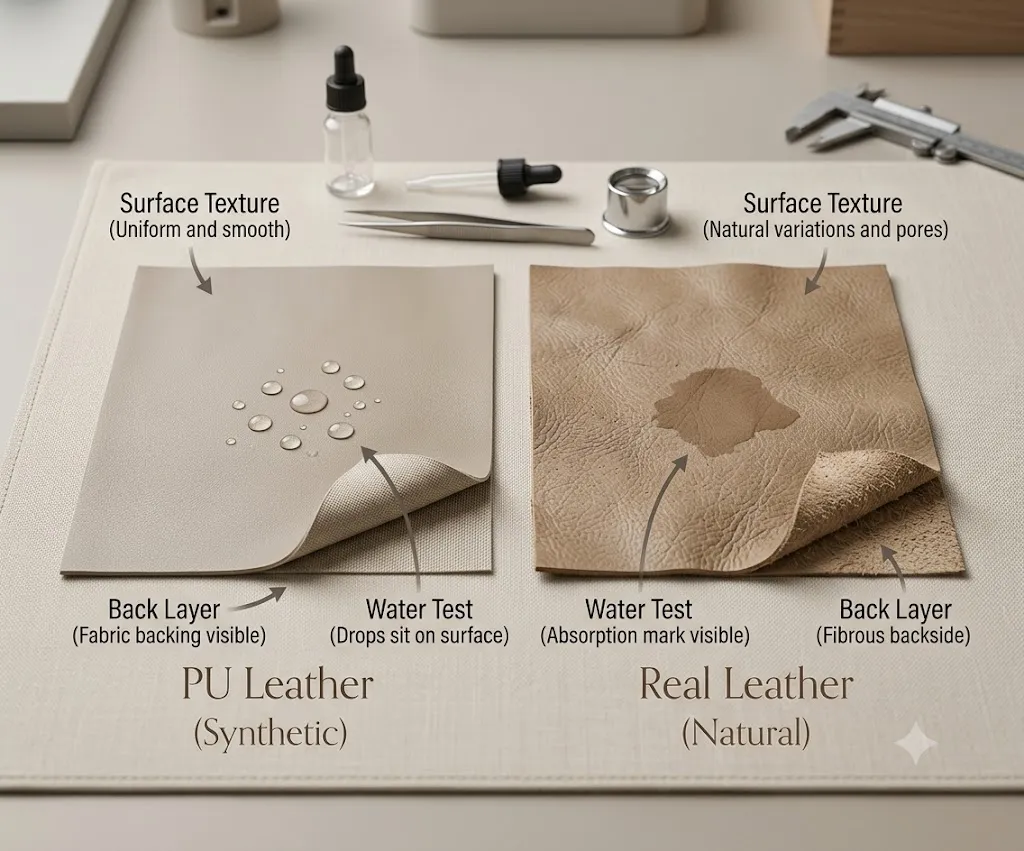
Many people struggle to tell the difference between PU leather and real leather. The following tests can help.
1. Smell Test
One of the easiest methods is checking the smell. Real leather usually has a natural leather smell, an earthy scent, and a tanned hide aroma, while PU leather usually smells like plastic, chemicals, or synthetic materials. However, smell alone isn’t always enough, since some treated leather products may have a reduced natural smell.
New PU leather products often have a plastic or chemical smell because of polyurethane coatings. The smell usually decreases after ventilation.
2. Touch and Surface Test
Feel the material with your hand. Real leather usually feels warm, soft, flexible, and slightly irregular, since natural leather has small differences in texture. PU leather usually feels smooth, cooler, and more uniform, and the grain pattern often looks too perfect.
3. Water Absorption Test
This test can help identify the material, simply place a small drop of water on the surface. Because leather is porous, real leather may absorb the water slowly and the area may become darker. With PU leather, the water usually stays on the surface and forms small droplets because the coating prevents absorption.
4. Edge and Back Test
Look closely at the edges. Real leather usually shows a fibrous structure, a rough backside, and natural layers, while PU leather usually shows fabric backing, a smooth plastic coating, and layer separation. Checking the back side is often one of the most reliable methods.
5. Label Test
Always check the product label. Common PU leather labels include PU, polyurethane, synthetic leather, faux leather, vegan leather, and man-made material, while real leather labels may include full-grain leather, top-grain leather, or genuine leather. A label provides the clearest information about the material.
PU Leather Quality, Pros and Cons, Uses, Lifespan, Environmental Impact, and Care Guide
How to Evaluate PU Leather Quality Before Buying
Not all PU leather products have the same quality, some feel soft and realistic, while others feel thin, stiff, and plastic-like. The quality depends on several factors, including polyurethane coating quality, fabric backing strength, manufacturing process, surface finishing, and intended use. Before buying a PU leather product, check these important factors.
1. Check the Surface Texture
High-quality PU leather usually has a realistic texture, so look for natural-looking grain patterns, a soft surface feel, consistent coloring, and flexible movement. Low-quality PU leather often looks too artificial, with warning signs such as an extremely shiny plastic appearance, very flat texture, uneven coating, or a cheap synthetic feel.
2. Check Material Flexibility
Good PU leather should bend without immediately showing damage, so try gently folding the material. High-quality PU leather should bend smoothly, return to its original shape, and feel flexible, while poor-quality PU leather may crack at folds, feel stiff, or show surface stress quickly.
3. Check the Thickness
Thickness affects durability, and a thicker PU coating often provides better resistance against scratches, wear, and daily use. However, thickness alone doesn’t guarantee quality, a thick but poorly made coating can still peel, since the overall construction matters more.
4. Check the Backing Material
The backing layer supports the polyurethane coating, and better backing materials include microfiber, strong polyester, and quality fabric blends. A weak backing can cause stretching, separation, and early damage.
5. Check Stitching and Construction
For finished products such as bags, furniture, shoes, and jackets, the stitching quality matters a great deal. Look for even stitching, strong seams, clean edges, and proper finishing, since a good material can still fail if the product construction is poor.
Understanding PU Leather Grades and Quality Levels
Not all PU leather products have the same quality, and two products may both be labeled “PU leather” while performing very differently. The quality depends on polyurethane coating quality, backing material, manufacturing process, surface finishing, and intended use.
Low-Quality PU Leather. Low-quality PU leather usually has a thin coating, strong plastic smell, stiff texture, and artificial appearance. These products are more likely to experience early cracking, surface peeling, color fading, and loss of flexibility, and this grade is commonly found in very cheap furniture and accessories.
Medium-Quality PU Leather. Medium-quality PU leather offers a better balance between price and performance, usually providing better flexibility, improved texture, more realistic appearance, and better surface protection. It’s commonly used for bags, wallets, fashion accessories, and budget furniture.
Premium PU Leather. Premium PU leather often uses advanced backing materials such as microfiber, providing a softer feel, better flexibility, more realistic grain patterns, and improved durability. High-quality microfiber PU leather can closely imitate the feel of genuine leather while remaining fully synthetic.
Pros and Cons of PU Leather
PU leather has become popular because it offers a balance between appearance, price, and convenience, though it also has real limitations. Understanding both sides helps you decide if it’s the right material for you.
Advantages of PU Leather
1. More Affordable Than Real Leather. One of the biggest benefits of PU leather is its lower price. Real leather requires animal hides, tanning, and extensive processing, while PU leather is manufactured using synthetic materials, making it more affordable for furniture, fashion products, accessories, and automotive interiors.
2. Animal-Free Material. Most fully synthetic PU leather does not contain animal hide, making it popular among people looking for vegan materials, cruelty-free alternatives, and animal-free products. However, buyers should check product details, since some coated materials may contain leather layers.
3. Easy to Clean. PU leather has a protective surface coating, which makes cleaning simple, common methods include a soft damp cloth, mild soap solution, and gentle wiping. It doesn’t require regular conditioning like genuine leather.
4. Available in Many Colors and Designs. Manufacturers can easily customize PU leather, producing it with different colors, different textures, and different finishes, which is part of why it’s so popular in modern fashion and interior design.
5. Water Resistant Surface. The polyurethane coating creates a surface barrier, so small spills usually stay on the surface instead of absorbing immediately. This makes PU leather practical for dining chairs, office furniture, bags, and accessories, though it’s worth noting that it is not completely waterproof, water can still damage the backing or seams.
Disadvantages of PU Leather
1. Shorter Lifespan Than Real Leather. The biggest weakness of PU leather is durability. Over time, the polyurethane coating may break down, leading to common problems such as peeling, cracking, flaking, or a sticky surface. The lifespan depends on quality, usage, climate, and maintenance.
2. Less Breathable. Because PU leather has a plastic coating, air cannot pass through easily, which can make it less comfortable for jackets, shoes, car seats, and sofas, especially during hot weather.
3. Does Not Develop Patina. PU leather maintains its original look for most of its life and doesn’t develop the natural aging process found in genuine leather. Instead, it may eventually just show damage.
4. Difficult to Repair Once Damaged. When PU leather starts peeling, repair options are limited, since the polyurethane layer cannot usually be restored. Repair products may improve appearance temporarily, but they cannot recreate the original coating.
5. Environmental Concerns. PU leather is a synthetic, plastic-based material, which creates concerns related to petroleum use, chemical processing, waste disposal, and recycling challenges. Although it avoids animal hide, it is not completely free of environmental impact.
How Long Does PU Leather Last?
A common question buyers ask is how long PU leather actually lasts. The average lifespan is around 3 to 5 years with regular use, though this can vary quite a bit, a high-quality PU leather product with proper care may last longer, while a low-quality product exposed to harsh conditions may fail much sooner.
Factors That Affect PU Leather Lifespan
Heat Exposure. High temperatures can damage polyurethane, whether from direct sunlight, hot cars, or proximity to heaters, causing drying, cracking, and peeling.
Sunlight. UV rays can weaken synthetic coatings, and long exposure may cause color fading, surface breakdown, and material brittleness.
Friction. Frequent rubbing damages PU surfaces, with common problem areas including sofa armrests, chair seats, jacket elbows, and bag handles.
Skin Oils and Sweat. Body oils can slowly affect PU coatings, which is why products used regularly on skin contact areas, such as car steering wheels, watch straps, and handbag handles, may wear faster.
Common Uses of PU Leather
PU leather is used across many industries because it combines appearance with affordability.
PU Leather for Furniture
PU leather is common in sofas, office chairs, dining chairs, and headboards. Its benefits include easy cleaning, affordability, and a modern appearance, though the drawback is that high-contact areas may peel after years of use.
Is PU Leather Good for Sofas and Furniture?
PU leather is a popular choice for sofas, office chairs, dining chairs, and other furniture because it offers the appearance of leather at a lower price. However, whether it’s the right choice depends on how the furniture will be used.
For furniture with occasional use, PU leather can be a practical option because it is affordable, easy to clean, available in many designs, and resistant to small spills. For heavily used furniture, durability becomes more important, areas that receive constant contact, such as sofa seats, armrests, and headrests, may experience faster wear because friction, body oils, and heat can weaken the polyurethane coating.
Before buying PU leather furniture, consider the quality of the PU coating, the thickness of the material, stitching quality, sunlight exposure, and expected daily use. A high-quality PU leather sofa can provide good value, but it will usually not last as long as a well-maintained genuine leather sofa.
PU Leather for Bags and Wallets
Many affordable fashion products use PU leather, including handbags, backpacks, wallets, and purses. Benefits include being lightweight, offering many designs, and lower cost, though edges and handles may show wear first.
Is PU Leather Good for Fashion Products?
PU leather is widely used in fashion products because it provides the appearance of leather without the higher cost, commonly showing up in handbags, wallets, shoes, jackets, and belts. For fashion items, PU leather offers a lightweight feel, a wide range of colors, smooth finishes, and a lower price.
However, durability depends heavily on usage, and products that experience repeated bending or friction may wear faster. Shoe toe areas may crack from repeated movement, jacket elbows may show damage from folding, and bag handles may peel because of constant hand contact. For occasional fashion use, PU leather can be a practical choice, but for everyday items expected to last many years, genuine leather usually performs better.
PU Leather for Shoes
PU leather is widely used in casual shoes, boots, sneakers, and fashion footwear. Its benefits include water resistance, easy maintenance, and affordable production, though the drawback is that repeated bending can cause cracks.
PU Leather for Jackets
PU leather jackets are popular because they offer a leather-like appearance without the cost of genuine leather. Advantages include being lightweight, affordable, and animal-free, while disadvantages include being less breathable, having a lower lifespan, and potentially peeling over time.
PU Leather for Automotive Interiors
Some vehicles use synthetic leather materials for seats, steering wheels, and door panels. Advantages include easy cleaning, consistent appearance, and lower manufacturing cost, though sunlight and heat exposure can accelerate damage.
Is PU Leather Vegan?
Yes, fully synthetic PU leather is generally considered vegan because it doesn’t use animal hide. However, there are important details to keep in mind, not every material called “PU leather” is automatically vegan, since some products may contain leather backing, animal-based adhesives, or mixed materials. If vegan certification is important to you, check the complete material composition.
Is Vegan Leather the Same as Sustainable Leather?
The terms vegan leather and sustainable leather are often used together, but they don’t mean the same thing. Vegan leather simply means the material doesn’t use animal leather, and PU leather is commonly considered vegan because fully synthetic PU leather doesn’t contain animal hide. However, vegan does not automatically mean environmentally friendly, since PU leather is still a synthetic material made using polyurethane, which is a plastic-based polymer.
When evaluating environmental impact, consider how the material is produced, how long the product lasts, whether it can be recycled, and how it’s disposed of. A vegan product avoids animal materials, but sustainability really depends on the complete lifecycle of the product.
Is PU Leather Toxic?
This is another common concern, and the answer depends on the manufacturing quality and exposure level. Finished PU leather products are generally considered safe for normal everyday use, though production may involve chemicals. One chemical sometimes discussed is dimethylformamide (DMF), which is used in some polyurethane manufacturing processes. Poor manufacturing practices can increase chemical concerns, so for consumers, choosing products from reputable manufacturers is the safer option.
Are Chemicals Used in PU Leather Production Safe?
During polyurethane manufacturing, certain chemicals may be used as processing agents, one example being dimethylformamide (DMF), which has been used as a solvent in some polyurethane production processes.
Regulations in different countries control the use and exposure limits of certain chemicals during manufacturing. For finished consumer products, safety depends on factors such as production standards, chemical control, and ventilation during manufacturing. Consumers buying PU leather products should choose products from reliable manufacturers that follow material safety regulations.
How to Care for PU Leather Properly
Although PU leather requires less maintenance than genuine leather, proper care can meaningfully increase its lifespan. The polyurethane surface protects the material, but it can still weaken over time, and following the right cleaning and storage methods helps prevent early damage.
1. Clean PU Leather Regularly
Dust and dirt can slowly damage the surface, so for regular cleaning, use a soft microfiber cloth, wipe away dust gently, remove spills quickly, and avoid harsh scrubbing. For deeper cleaning, use mild soap, warm water, and a soft cloth, and always test cleaning products on a hidden area first.
2. Avoid Harsh Chemicals
Some cleaning products can damage polyurethane coatings, so avoid bleach, alcohol-based cleaners, strong detergents, acetone, and solvents. These chemicals may cause color fading, surface cracking, and coating breakdown.
3. Do Not Use Regular Leather Conditioner
Many people make this mistake. Traditional leather conditioners are designed for natural leather and contain oils and waxes that absorb into real leather fibers. PU leather does not absorb these products, so oils may leave a greasy layer or damage the coating instead. Use products specifically made for synthetic leather, PU leather, or faux leather surfaces.
4. Protect PU Leather From Heat
Heat is one of the biggest causes of PU leather damage, so avoid placing PU leather products near radiators, fireplaces, direct sunlight, or hot car windows. High temperatures can cause dryness, cracking, peeling, and loss of flexibility.
5. Store PU Leather Correctly
Proper storage prevents unnecessary stress. For PU leather bags, jackets, or accessories, store them in a cool, dry place, avoid folding for long periods, keep them away from moisture, and allow air circulation. Do not store PU leather items in sealed plastic bags for long periods.
6. Prevent Scratches and Surface Damage
The polyurethane layer is the visible surface, and once damaged, it cannot fully regenerate. Avoid contact with sharp objects, rough surfaces, and excessive friction, careful handling can extend the product’s useful life considerably.
Can Peeling PU Leather Be Repaired?
Once PU leather starts peeling, the damage is usually permanent, since the polyurethane coating separates from the backing material. Common signs of PU failure include flaking surface, sticky texture, cracked areas, and missing coating.
Repair kits and paints may improve the appearance temporarily, but they cannot restore the original polyurethane layer. The best approach is prevention through quality selection, proper cleaning, heat protection, and regular care.
How to Prevent PU Leather From Peeling
Although PU leather eventually wears down, proper care can slow the aging process. The polyurethane coating is sensitive to heat, chemicals, and repeated friction, so follow these steps to extend its lifespan.
Keep PU Leather Away From Heat
Heat accelerates polyurethane breakdown, so avoid placing PU leather products near direct sunlight, radiators, fireplaces, and hot car windows.
Clean the Surface Regularly
Dust and dirt can create friction and damage the coating, so use a soft microfiber cloth, mild soap solution, or synthetic leather cleaners, and avoid aggressive scrubbing.
Avoid Harsh Cleaning Products
Do not use bleach, acetone, alcohol-based cleaners, or strong detergents, since these products can weaken the polyurethane layer.
Reduce Friction
Areas with frequent contact usually wear faster, including sofa armrests, bag handles, jacket elbows, and car seats. Gentle use can increase the lifespan of PU leather products.
PU Leather Buying Guide: Is It Worth It?
Whether PU leather is worth buying depends on your needs, it’s not automatically a bad material, since it serves a specific purpose.
PU Leather Is a Good Choice If You Want:
Affordable Leather-Like Appearance. PU leather gives you the visual style of leather without the higher cost.
Easy Maintenance. It’s simple to clean and doesn’t require regular conditioning.
Animal-Free Material. Fully synthetic PU leather works for consumers who prefer alternatives to animal leather.
Modern Designs. PU leather offers many colors, different textures, and consistent appearance.
PU Leather May Not Be the Best Choice If You Want:
Maximum Durability. If you need a product that lasts decades, genuine leather may perform better.
Natural Aging. PU leather does not develop the character and patina of real leather.
High Breathability. For products touching skin for long periods, such as shoes, jackets, and car seats, real leather may feel more comfortable.
Frequently Asked Questions About PU Leather
What Does PU Leather Stand For?
PU leather stands for polyurethane leather. It’s a synthetic leather material made by coating a fabric base with polyurethane, and it’s designed to look similar to genuine leather but does not come from animal hide.
Is PU Leather Real Leather?
No. 100% PU leather is not real leather, it’s a synthetic material made from fabric backing and polyurethane coating. Some products called PU coated leather may contain a real leather base, such as bicast leather.
Is PU Leather Good Quality?
The quality of PU leather depends on how it’s made. High-quality PU leather can feel soft, realistic, and durable, while low-quality PU leather may feel plastic-like and peel quickly. Important quality factors include coating thickness, backing material, flexibility, and surface finishing.
How Long Does PU Leather Last?
PU leather usually lasts around 3 to 5 years with normal use, and its lifespan depends on quality, maintenance, heat exposure, and frequency of use. Furniture and car interiors may wear faster because of constant contact and sunlight.
Does PU Leather Peel?
Yes, PU leather can peel over time. Peeling happens when the polyurethane coating breaks down and separates from the fabric base, and common causes include heat, UV exposure, friction, poor-quality coating, and lack of care.
Is PU Leather Waterproof?
PU leather is water-resistant, but it is not completely waterproof. The polyurethane coating prevents water from absorbing quickly, but water can still enter through seams, cuts, or damaged areas, and long exposure to moisture may damage the backing material.
Is PU Leather Better Than PVC Leather?
Both are synthetic leather materials, but they use different coatings. PU leather is generally considered softer and more flexible, while PVC leather is usually more plastic-like, less breathable, and stiffer. Many manufacturers prefer PU because it provides a more leather-like feel.
Should You Choose PU Leather?
| Your Need | Best Choice |
| Affordable furniture | PU leather |
| Fashion accessories | PU leather |
| Easy cleaning | PU leather |
| Luxury items | Genuine leather |
| Long-term furniture | Genuine leather |
| Hot climate seating | Genuine leather or breathable materials |
| Animal-free option | PU leather |
Final Thoughts: Is PU Leather Worth Buying?
PU leather is not a replacement for genuine leather, but it can be a practical alternative depending on your needs.
It works well if you want an affordable, easy-to-clean material with a leather-like appearance. However, it may not be the best choice if you need long-term durability, natural aging, or high breathability.
Before buying a PU leather product, always check the material quality, construction, and intended use. A well-made PU product can provide good value, while a low-quality one may show wear much faster.
The best choice depends on your priorities: affordability and convenience with PU leather, or durability and natural character with genuine leather.